· 9 min read
AI Lets You Reset the Board. EOS Got You Ready.
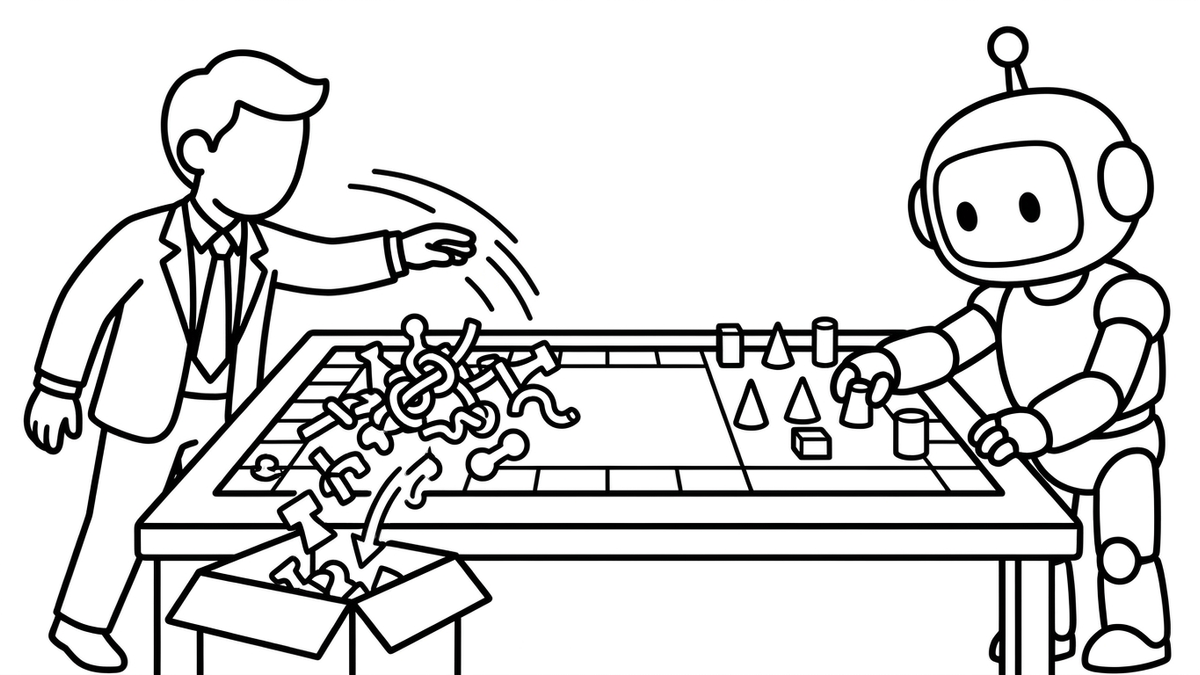
Most companies I see are adding AI to the way they already work. A chatbot on the website. A tool that summarizes meetings. Copilot in everyone’s inbox. Each one saves a few minutes, and the company runs the way it did five years ago.
That’s a small win on top of a big opportunity. AI gives owners a chance to reset the board: to ask how you’d build this company if you started it today, with today’s tools, and then build it that way. You get to drop the workarounds, hand-offs, double entry and reports that exist only because of how the work used to get done.
The companies that take that chance will pull away from the ones that don’t. And if your company runs on EOS® (the Entrepreneurial Operating System), you’ve spent years getting ready for it.
What does it mean to reset the board with AI?
Resetting the board means redesigning how part of your company works from a blank page, assuming today’s AI tools, instead of adding AI to the steps you have. You keep your vision, your core values and your people. You question how the work gets done.
Take quoting, which almost every company does. This is an illustration, not a client’s numbers. In the bolt-on version, a salesperson writes up the client meeting from memory, re-keys the job details from the CRM into a pricing sheet, waits on the estimator, waits on a manager’s approval, then has AI polish the email at the end. The quote takes four days. AI saved ten minutes.
The reset version starts with what the customer needs: a fast, accurate quote for what they asked for. AI reads the transcript of the client meeting (recorded with the client’s OK) and the job details in the CRM, so the quote answers the needs the customer named, in their words. It prices the work from your price book and drafts the quote. The estimator checks it against the transcript. A manager sees only quotes above a set dollar amount, and the customer has the quote the same day. Same people and same price book, with a different process.
Why doesn’t adding AI to old processes pay off?
Your old process was built around old limits, and AI can’t remove a limit you keep designing around. Factory owners learned this a century ago.
Thomas Edison started selling electricity in the early 1880s, and electric motors were driving factory machinery soon after. Yet by 1900, electric motors supplied less than 5% of the mechanical power in American factories, as the economics writer Tim Harford tells it for the BBC.
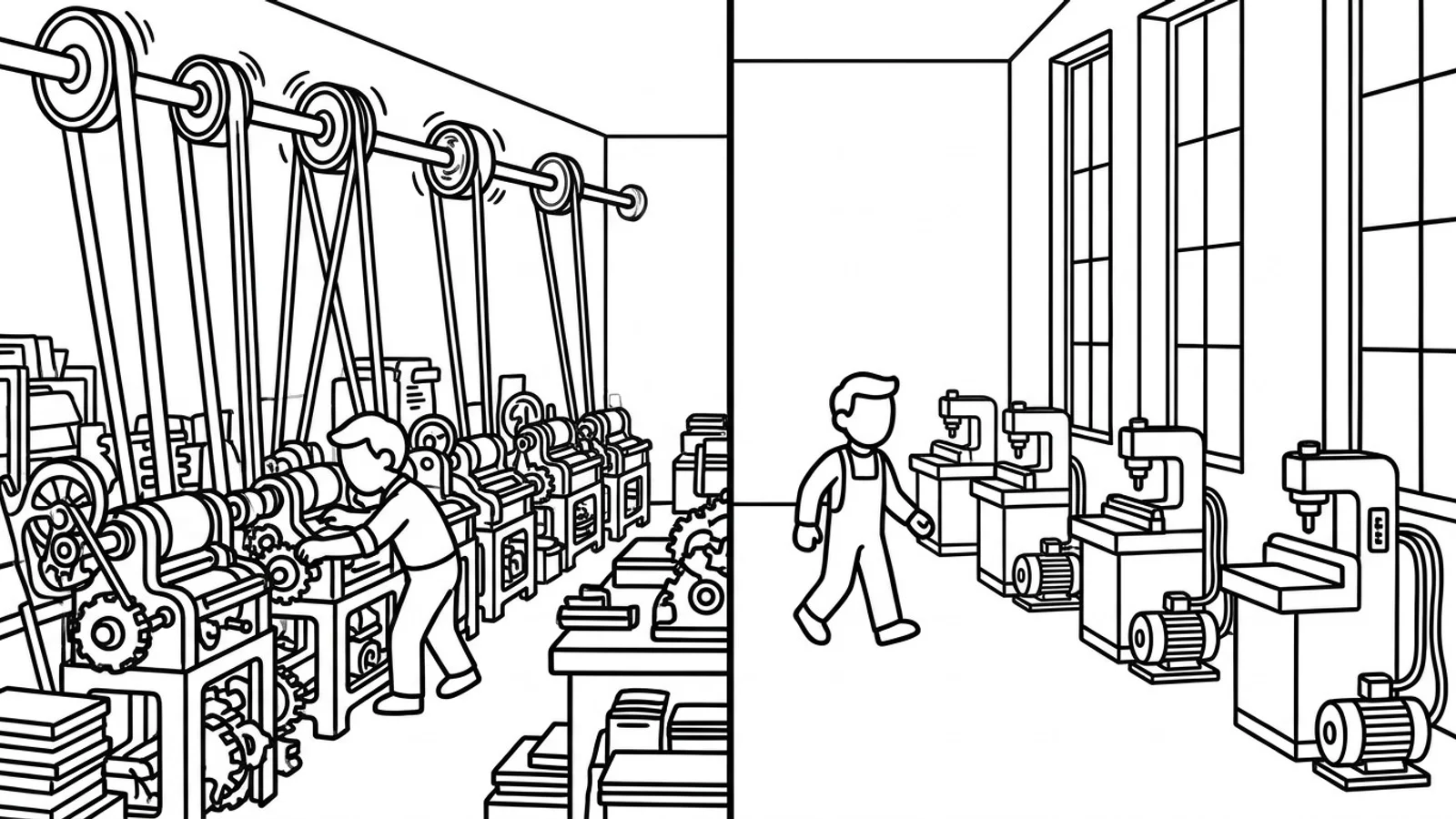
Steam factories were built around one huge engine turning a drive shaft that ran the length of the building, with belts carrying power to each machine. Owners who swapped the steam engine for an electric motor and kept everything else were often disappointed with the savings.
The payoff came when owners rebuilt their factories around what electricity made possible. Every machine got its own small motor. Buildings no longer had to carry heavy shafts, so they became lighter and more open, laid out in the order the work flowed instead of the order the shaft ran. Owners changed how they hired, trained and paid people too. In the 1920s, American manufacturing productivity soared. The economic historian Paul David credits much of it to manufacturers learning, at last, to use a technology nearly 50 years old.
Today’s numbers rhyme. In McKinsey’s 2026 State of AI survey of 1,719 people in 97 countries, fielded in May and June 2026, 80% say AI has improved their own productivity. Only 37% say it has added anything to their company’s earnings, about the same share as a year earlier. Your people may be doing the old work faster while the company stays the same.
The roughly 6% of companies McKinsey calls AI high performers (they attribute at least 5% of their operating earnings to AI) work differently. Nearly three-quarters of them have fundamentally redesigned workflows because of AI, compared with about a quarter of everyone else. In McKinsey’s words, they “fundamentally redesign workflows rather than layer AI onto existing ones.”
Redesigning work is management work, and that makes it the hard part.
Why are EOS companies ready to reset the board?
Companies running on EOS practice the habits a rebuild demands: know where you’re going, design the structure before the people, document how the work gets done, measure it every week and change in 90-day steps. Most companies trying to rebuild around AI have to learn all of that first.
Your vision tells you what to rebuild toward. A reset without a destination is churn. Your core values, core focus, 10-year target and 3-year picture stay put. They’re the filter for each new design: does this version of the process move the company closer to the 3-year picture?
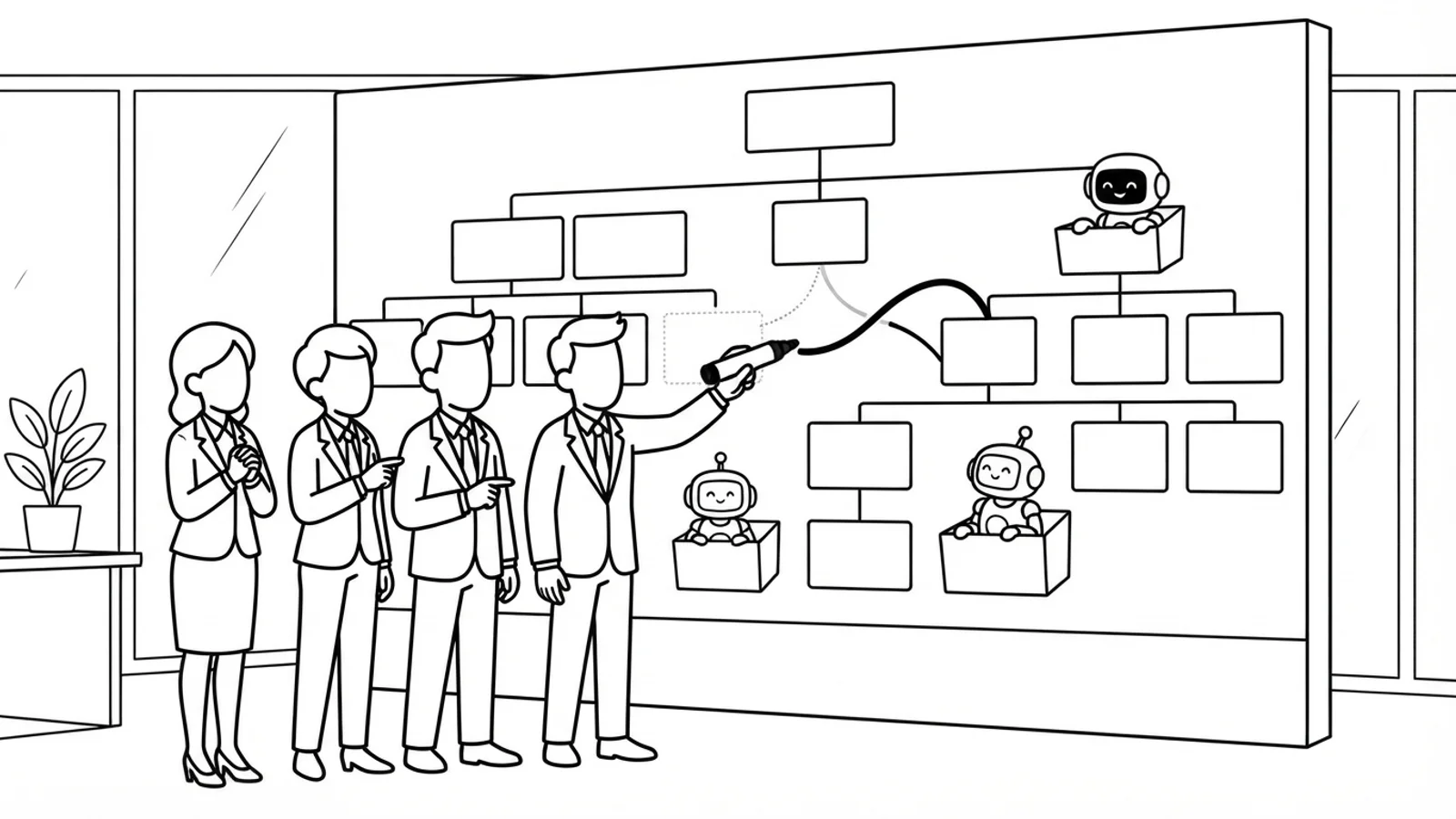
The Accountability Chart puts structure before people. EOS teaches you to design the right seats for the next stage of the company, then decide who sits in them. AI calls for the same exercise. Redraw the chart assuming AI does a share of the work in each seat. Some seats’ roles will change, and some will grow. One rule stays: each function has one person accountable. AI can do the work. It can’t be accountable for it.
Documented core processes are AI’s instructions. If your core processes are documented and followed by all, you have what AI needs to do the work well: the steps, the standard and the exceptions. Companies without them ask AI to copy what lives in someone’s head. When you document for a reset, write down the outcome first, then ask which steps exist only because of an old limit. I covered the order of operations in How to Clear a Bottleneck.
The Scorecard tells you whether the rebuild worked. Pick the number the new process should move: quote turnaround, days to invoice, response time. Track it weekly. McKinsey found high performers twice as likely as others to have defined ways to measure AI’s impact, and EOS teams have kept that weekly habit for years.
Rocks and IDS keep the reset from turning into chaos. You don’t blow up the company over a weekend. Rebuild one core process per quarter and make it a Rock, one of the company’s 90-day priorities. Put the problems that surface on the Issues List and solve them in the weekly meeting with IDS (identify, discuss, solve). McKinsey’s own commentary names the real constraint: “the organization’s ability to absorb change.” EOS gives a company a steady rhythm for absorbing it.
GWC decides who fits the new seats. When seats change, people need to grow into them. Ask the same three questions: does this person get the new seat, want it and have the capacity to do it? Factory owners in the 1920s faced the same test when they rethought how they hired and trained, and great managers make the difference here.
How do you start resetting the board?
Pick one core process, redesign it from a blank page with AI in mind, and run the new version as a Rock next quarter. The sequence I’d run with a leadership team:
- Pick the process with the most waiting. Old limits hide in hand-offs, approvals and re-keying. Quoting, onboarding a new customer, month-end close and hiring are common choices.
- Write down the outcome, not the steps. What does the customer or employee on the other end need, and how fast?
- Ask the blank-page question. In your leadership meeting: “If I started this company today, with today’s tools, how would this work?” Then ask AI the same thing (prompt below).
- Cross out the steps that exist only because of old limits. Re-keying data between systems. Waiting on the one person who has the information. Approvals nobody reads. Reports nobody uses.
- Name one owner and one number. One person accountable for the new process, and one Scorecard measurable that shows whether it works.
- Run it for 90 days, then pick the next one. Keep what works, IDS what doesn’t, and document the new version so everyone follows it.
A prompt for step 3, ready to paste into Claude or ChatGPT:
Here is how my company handles [process] today: [paste the documented steps]. The outcome my customer needs is [outcome]. If you were building this process from scratch today, with AI that can read my CRM, email, meeting transcripts and accounting software, how would you design it? List the current steps that exist only because of old limits, what AI could do, and where a person still needs to decide or check.
Once you know what AI should handle, connect it to the software where the work lives instead of feeding it one task at a time. I covered how in Stop Being a Conveyor Belt for AI.
My take: why should owners reset the board now?
AI tools are cheap and open to everyone, so the advantage goes to the companies that change how they work. Your company carries habits you’d never choose if you started today: the weekly report nobody reads, the approval added after one mistake years ago, the job split across three people because two systems couldn’t share data. Most owners never get a natural moment to clear those out. AI gives you one.
Factory owners took decades to rebuild around electricity. I don’t think owners get decades this time. The companies that rebuild now will run with fewer hand-offs, answer customers faster and get more from the same team, with people doing work that matters more.
The companies with the most great managers will win this, as they win most things. AI rollouts stall when leaders treat them as a software problem, which I wrote about in AI Adoption Is a Management Problem. A reset is leadership work: deciding what the company should become, redrawing who owns what, and holding steady while people learn new seats.
If you’ve spent years getting clear on your vision, your structure and your processes, you were preparing for this moment.
Common questions
Does resetting the board mean cutting staff? It might, but I’d put growing output ahead of cutting headcount. The friction I’ve seen comes when employees don’t embrace AI tools or rethink their role in the company. AI requires great management. The aim is more output from the team you have, with people moving from re-keying and chasing approvals to work that needs judgment. In McKinsey’s 2026 survey, two-thirds of respondents reported little or no AI-related change in total headcount over the past year.
Do you need EOS to reset the board? No, but you need what EOS builds: a clear vision, one owner per function, documented processes and weekly numbers. Without them, a reset is a guess. If you don’t have them yet, start now. This isn’t crypto. This is electricity: an opportunity for the companies that embrace it unlike anything seen in decades, maybe a century. And it’s moving faster than anything that came before it, so the first movers will have the advantage. I’ve lived it. I built my company with no employees and used AI to increase my output 4x. I’m here to guide your leadership team through every step of the reset, in Oregon, Southwest Washington or Seattle, through EOS® implementation and AI integration.
Sources
- Tim Harford, “Why didn’t electricity immediately change manufacturing?”, BBC News, August 20, 2017.
- Paul A. David, “The Dynamo and the Computer: An Historical Perspective on the Modern Productivity Paradox,” American Economic Review 80, no. 2 (May 1990): 355–361.
- Dan Tinkoff, Lieven Van der Veken and Michael Chui, with Tara Balakrishnan, “The state of AI in 2026: On the road to ROI”, McKinsey & Company, August 25, 2026.
- Gino Wickman, Traction: Get a Grip on Your Business (BenBella Books), the book behind EOS®.