
Predicting the Storm: Using Your Scorecard to Navigate Internal Price Shocks

Business leaders often operate under the illusion of a clear sky until the first drops of a financial downpour hit the windshield. In the world of entrepreneurship, these storms frequently take the form of price shocks: sudden, aggressive increases in the cost of raw materials, labor, or overhead that threaten to erode margins and destabilize growth. For many, the first sign of trouble appears in the rearview mirror: a monthly Profit & Loss statement that shows a devastating dip in profitability.
But by the time a price shock hits your P&L, the damage is done. You are no longer managing a business; you are performing an autopsy.
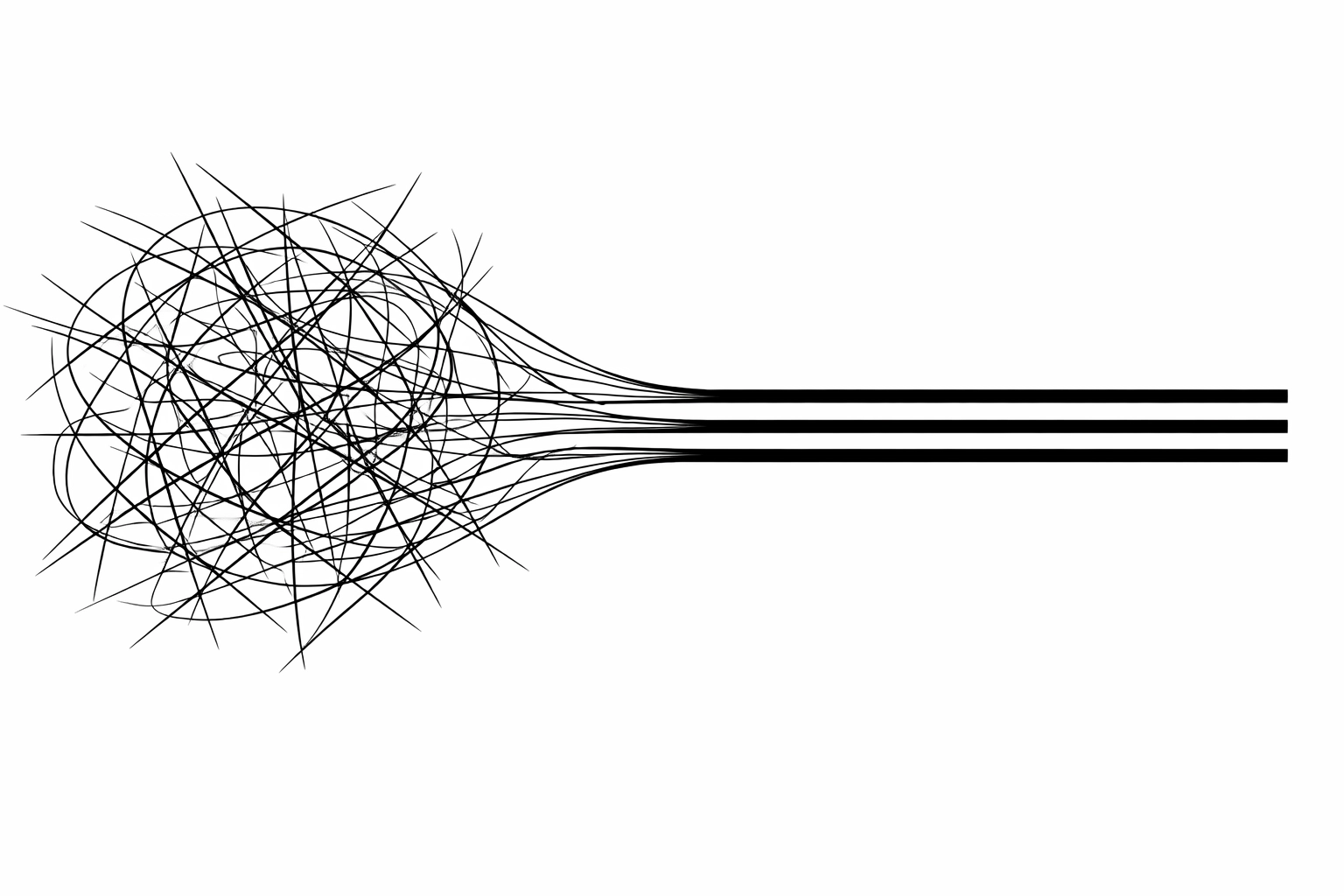
To navigate these volatility-heavy cycles, leadership teams must shift from reactive accounting to proactive forecasting. Within the framework of the Entrepreneurial Operating System (EOS), the primary tool for this shift is the Scorecard. By identifying and tracking the right leading indicators, we can transform the Scorecard from a historical record into a weather radar, allowing us to adjust internal operations before the storm makes landfall.
The Lagging Indicator Trap: Why Your P&L Is Lying to You
Most businesses are managed through lagging indicators. Metrics like net profit, total revenue, and year-over-year growth are essential, but they are reflections of past performance. As Jim Collins notes in Great by Choice, the most successful leaders: the "10Xers": don’t necessarily have better intuition or more luck; they have better disciplines for managing uncertainty. They prepare for the "SMaC" (Specific, Methodical, and Consistent) recipe even when the sun is shining.
When a price shock occurs: perhaps a 20% spike in freight costs or a sudden labor shortage driving up wages: relying on lagging indicators is like trying to drive a car by looking only at the odometer. You know how far you’ve gone and how fast you were traveling, but you have no idea that there’s a brick wall fifty yards ahead.

To maintain operational health, we must distinguish between the "what happened" and the "what is about to happen." This is where the Flagline Strategy approach to business coaching becomes vital. We help teams move beyond the surface-level numbers to find the pulse of their operations.
Designing the Radar: Leading Indicators for Price Shocks
A leading indicator is a measurable variable that changes before the company’s performance follows a particular pattern or trend. In the context of price shocks, these indicators provide the "early warning" needed to tighten internal belts or shift resources.
The threat of internal instability from price shocks is often twofold: a sudden increase in the cost of goods sold (COGS) and a simultaneous decrease in operational efficiency as teams scramble to compensate. To predict these shifts, consider adding the following metrics to your weekly Scorecard:
1. Raw Material Lead Times and Futures
If your business relies on physical inputs, the first sign of a price shock isn't the invoice; it’s the lead time. When supply chains tighten, lead times extend. This is a primary leading indicator that a price hike is imminent. Monitoring the spread between order and delivery allows you to see the "clog" in the system weeks before it impacts your margins.
2. Labor Utilization vs. Capacity
In service-based or manufacturing industries, labor is often the highest cost. A "shock" here isn't always a minimum wage hike; it’s often "hidden labor inflation" caused by inefficiency. If your "Revenue per Full-Time Equivalent (FTE)" begins to wobble while your "Overtime Hours" are climbing, you are looking at a labor price shock in the making. Your cost per unit of output is rising, even if your hourly rates remain stagnant.
3. Energy and Freight Indices
Many businesses treat utility or shipping costs as "fixed" or "uncontrollable." They aren't. By tracking specific commodity indices relevant to your industry: whether it's the Baltic Dry Index for shipping or regional industrial power rates: you can see the ripple effect before it hits your internal accounting.
Internal Operational Adjustments: The "Process" Shield
Once the Scorecard signals an incoming shock, the leadership team must move into the "Identify, Discuss, and Solve" (IDS) phase of their Level 10 Meeting. The goal isn't just to acknowledge the cost increase; it’s to adjust internal operations to absorb the blow without passing every penny of pain to the customer immediately.
This involves a deep dive into the Process Component of your business. As emphasized in Traction by Gino Wickman, "Nothing can be fine-tuned, modeled, or even automated until it is first documented."
Tightening the "20/80" of Processes
When margins are squeezed by external costs, internal efficiency must become your primary lever. This is the time to look at your "Core Processes" and identify where waste exists. If a raw material price increases by 10%, can you find a 5% efficiency gain in the production process to offset it?
We often see businesses find "hidden gold" in their operational workflows during these periods. By re-evaluating the steps of a service delivery or manufacturing line, teams can often eliminate redundant approvals or streamline handoffs: effectively lowering the internal "cost of doing business" to neutralize the external "cost of materials."
Re-prioritizing Rocks for Resilience
Every quarter, your leadership team sets "Rocks": the 3 to 7 most important things the company must achieve in the next 90 days. When a price shock is detected via your leading indicators, your Rocks may need to shift.
If your original Rock was "Expand into a New Territory," but the Scorecard shows a massive spike in logistics costs, a more prudent Rock might be "Optimize Supply Chain Routes to Reduce Fuel Spend by 12%." This isn't a retreat; it’s a strategic pivot. It’s about ensuring the foundation is solid before you continue building upward. You can learn more about aligning your team’s focus on our blog.
The Psychological Component: Maintaining Team Health
Price shocks don't just strain bank accounts; they strain people. As Patrick Lencioni argues in The Advantage, organizational health is the greatest differentiator in business. When costs rise, the "crushing pressure" can lead to "cascading dysfunction" within a team if not managed correctly.
Internally, transparency is your best ally. When the leadership team sees the leading indicators moving in the wrong direction, they should share the why behind operational changes. If you are asking a team to increase their billable efficiency or tighten their travel budget, they need to see the Scorecard data that justifies the request.
This builds a culture of collective responsibility. Instead of the "boss cutting costs," it becomes the "team protecting the margin." This distinction is subtle but profound for maintaining morale during lean cycles.
Checklist: Navigating the Internal Shock
To ensure your business is prepared for the next market volatility, follow this framework for internal operational adjustment:
Audit Your Scorecard: Identify at least three leading indicators that correlate with your highest costs (e.g., lead times, labor efficiency, commodity trends).
Establish "Trigger Points": Define what numerical value on the Scorecard requires an emergency IDS session. Don't wait for the monthly P&L.
Review Core Processes: Map out the three processes most impacted by cost increases. Identify "waste" steps that can be eliminated to improve internal margins.
Adjust Resource Allocation: Look at your current Rocks. Are they still the most important things in light of the new price reality? If not, pivot.
Communicate the "Why": Use your weekly meetings to connect the Scorecard data to the operational changes you are asking your team to make.
Synthesis: The Proactive Path
The difference between a business that thrives during economic shifts and one that merely survives: or fails: is the speed of its feedback loop. By the time the world knows there is a price shock, the prepared leader has already adjusted their internal gears.
Using your EOS Scorecard as a predictive tool allows you to move from a defensive crouch to an offensive stance. It gives you the "clarity and structure" represented by the Flagline Strategy geometric mountain. You aren't just reacting to the market; you are mastering your internal response to it.
Internal price shocks are an inevitability in the modern business landscape. However, by focusing on leading indicators and operational efficiency, you ensure that while the storm may rage outside, your internal house remains in order.
If you're looking to refine your Scorecard or need guidance on implementing these disciplines within your leadership team, we invite you to explore our about page or reach out for a consultation. Building a resilient business is a journey: one that is best traveled with a clear map and a reliable radar.



rr88 nghe mọi người nhắc vụ “trang chủ chính thức 2026” nên mình cũng hơi bán tín bán nghi, kiểu sợ vào sẽ rối hoặc nhồi chữ choáng ngợp. Nhưng mở ra lướt thử thì thấy họ trình bày khá gọn, các khối nội dung xếp thẳng hàng nên kéo xuống vẫn theo mạch, mắt mình không bị hụt nhịp (mình hay ngán mấy trang đặt lung tung). Có đoạn họ ghi rõ nền tảng tham gia thị trường từ 2018 và đặt trụ sở ở Philippines, đọc lướt qua thấy ít nhất cũng đưa mốc thời gian cụ thể chứ không nói chung chung. Menu nằm ngay chỗ dễ nhìn, tiêu đề từng box tách rõ nên mình biết…
du doan mb mình vào xem thử thì thấy đọc được, dù ban đầu cũng hơi nghi ngờ kiểu mấy trang soi cầu hay rối mắt. Lướt một vòng thì nội dung họ bày theo ngày khá rõ, mình kéo xuống là gặp ngay phần “Soi cầu MB ngày 3 9 2026” đặt riêng thành một khối nên không phải đoán xem đang nói tới hôm nào. Chữ với khoảng cách dòng ổn, nhìn nhanh vẫn bắt được ý chính chứ không bị dồn dập như vài chỗ khác. Mình không bàn chuyện chốt số hay chuẩn không, chỉ xem cách họ sắp xếp thôi. Có đoạn “Dự đoán XSMB hôm nay” cũng để ngay ngắn, nên đổi qua đọc…
Mình lâu nay cũng hay xem cầu cho vui thôi, chứ không dám đặt niềm tin tuyệt đối vì xổ số vẫn phụ thuộc may mắn. Có thời gian mình thử ghi chú lại mấy con số hay thấy trong mơ, hoặc tình cờ bắt gặp ngoài đường, rồi đem đối chiếu với vài cách bắt cầu khác nhau để xem kiểu nào hợp tính mình. Đọc tới đoạn nhắc Soi cầu 7777 thì mình thấy cách giải thích khá rõ ràng, đặc biệt là ý hạn chế nhiễu và đừng để cảm xúc kéo đi. Trước đây mình từng ham mấy chuỗi nhìn “đẹp”, càng theo càng rối rồi mất kiểm soát, nên giờ tự đặt mức dừng, trúng…