· 7 min read
Run Your Company Like a Scientist Runs a Test
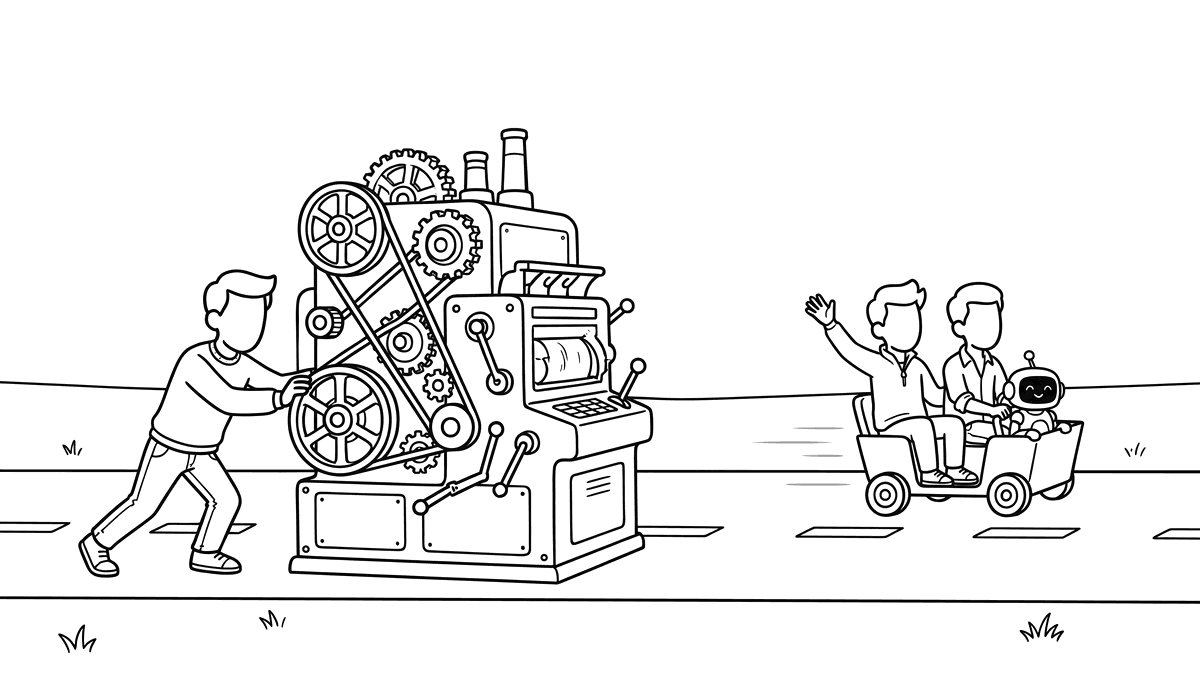
You probably run a process you would never design today: a report nobody reads, a second signature on every quote, a Tuesday meeting created to fix a problem from years ago. Ask your team why it’s still there and you’ll hear, “We’ve always done it this way.” They’re telling you nobody has checked.
Adam Grant, an organizational psychologist at Wharton, gives owners a better way to handle it in Think Again: The Power of Knowing What You Don’t Know (2021). The simple lesson: treat how you run your company as a hypothesis to test instead of a belief to defend.
The research backs that up, and its most useful finding sits well below the headline number.
What does it mean to think like a scientist at work?
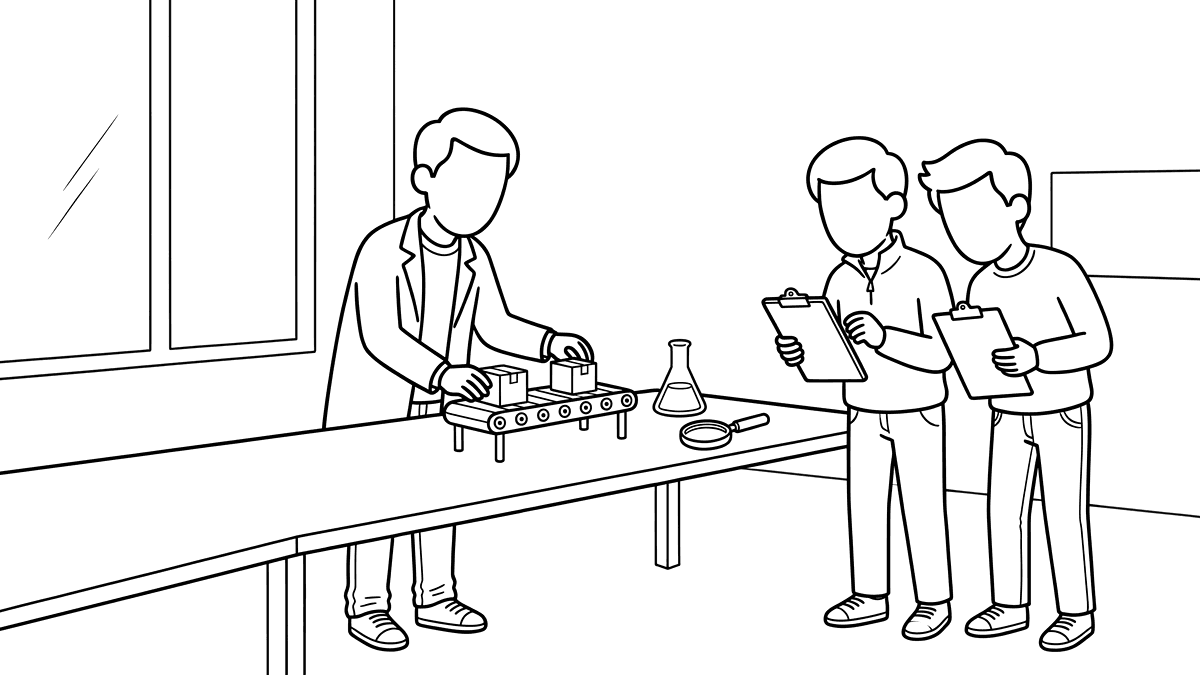
Thinking like a scientist means treating your strategy and processes as theories, then running small experiments to see whether they hold up. You need a prediction, a test and the willingness to act on the result.
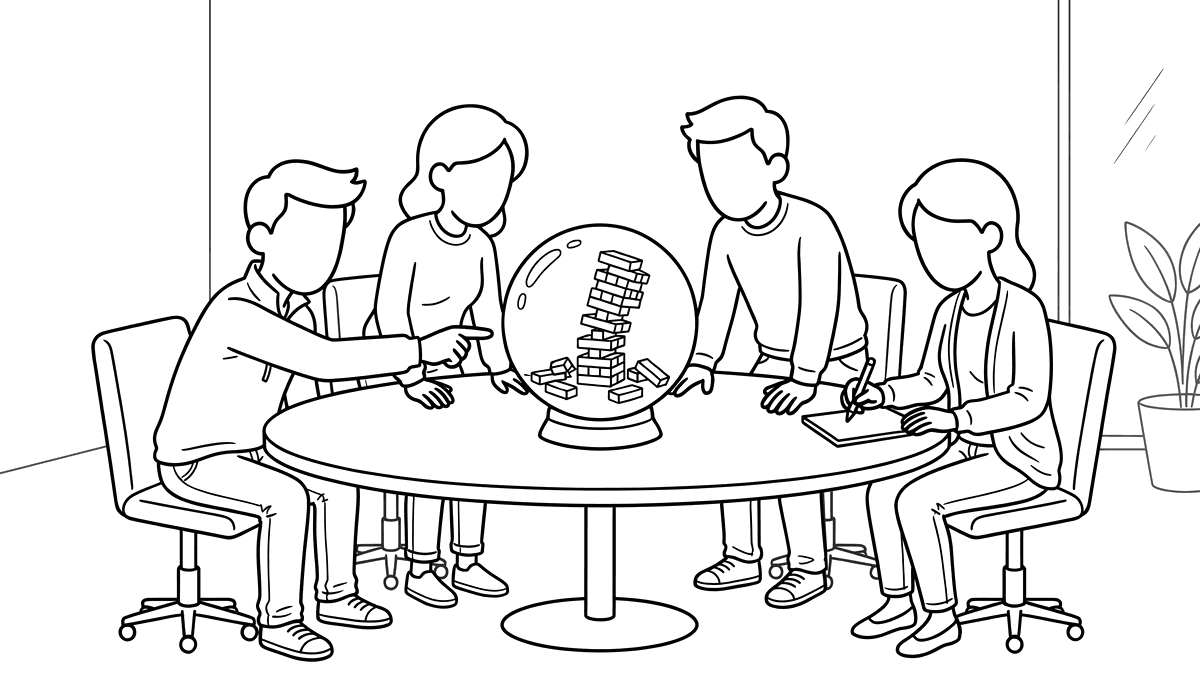
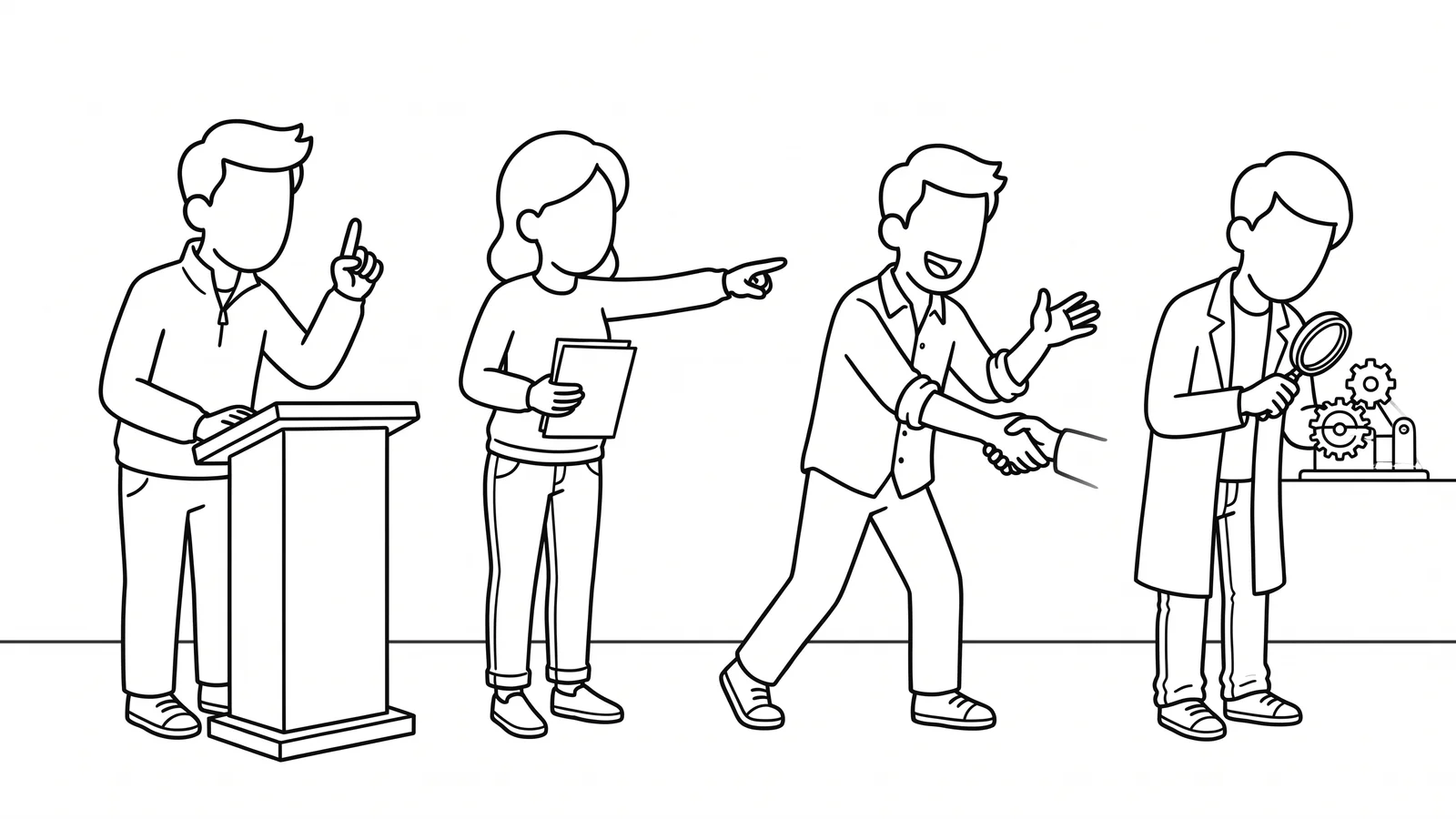
Grant builds on work by his colleague Phil Tetlock, who found that people slip into three mindsets when they think and talk. You’ll recognize all three from your last leadership meeting:
- Preacher: You defend what you hold sacred. “Our customers love how we do this.”
- Prosecutor: You attack the other person’s reasoning. “That would never work here.”
- Politician: You work for approval, so you back the idea the owner seems to like.
Grant’s alternative is scientist mode, where your job is finding out what’s true.
Owners have the hardest time with this, because they built many of the processes in question. Defending the old quoting process can feel like defending the years you spent building the company. Grant’s fix, from a McKinsey interview, is to keep your ideas separate from your identity. He’s also wary of the phrase “best practices,” which he says “creates this illusion that there’s an end point.” A process that worked best five years ago may be slowing you down now.
Does thinking like a scientist make a company more money?
For startups, the evidence says yes, though the famous number overstates how much.
Grant’s main example is a randomized trial of 116 Italian startups run by Arnaldo Camuffo and colleagues at Bocconi University in Milan. Every founder received the same 10 training sessions. The researchers also taught half of them to build a theory of how their business would work and test it with rigorous experiments. In the book, Grant reports that this scientific group averaged more than $12,000 in revenue over the next year, while the control group averaged under $300.
That number comes with a catch. Only 17 of the 116 startups earned any revenue: nine in the scientific group and eight in the control group. One startup in the scientific group earned about €437,000, roughly 70% of its group’s total. When the researchers capped the extreme results, the averages came to about €2,800 and €225. That’s still a big gap, but it rests on a handful of companies.
The better evidence came later. In a 2024 study in the Strategic Management Journal, Camuffo and a larger team combined four randomized trials covering 759 startups, including the original 116. Founders trained to think like scientists earned about €7,000 more on average. For an owner, their behavior matters more. Compared with the control group, they were:
- 9.8 percentage points more likely to shut down a project
- about 2.7 weeks faster when they did shut one down
- 8.3 points more likely to make one major change of direction
- 3.7 points less likely to make more than two
The first study suggested that scientific founders change direction more. The larger one found something more useful: they drop weak ideas sooner, make one focused change and avoid thrashing.
The researchers studied young startups, and I’m the one applying this to established companies. I think it holds, because a 20-year-old process rests on assumptions just as a startup’s plan does, and your team may no longer remember making them.
Doesn’t testing slow you down?
No. Testing replaces the debate that never ends. You can argue about a process for six months or find out in two weeks, and the founders in the 2024 study got out of weak projects sooner because they had learned to test.
I’d push back on one part of the book here. Grant points to research in which the best strategists in pricing competitions were slow and unsure, and he wonders whether we give decisiveness too much credit. I wouldn’t tell an owner to slow down right now. Be decisive about the test and humble about the answer. Pick the process today, set the end date and commit to acting on what you learn.
AI makes this cheaper than it has ever been. You can rough out a replacement for a process in an afternoon and run it on real work that week. Give the test an end date, though, or you’ve found a polite way to avoid the decision.
How do you test a process in two weeks?
Write down what you believe the process delivers, decide what would prove you wrong and run the smallest real test you can. Take a common example: the owner who reviews every quote before it goes out.
- Pick the process people defend. Listen for “we’ve always done it this way.” Choose one that eats time every week.
- Turn the belief into a prediction with a number. “My review catches a pricing mistake on at least one quote in 10.”
- Write the kill line before you start. “If I catch fewer than one in 25, I stop reviewing quotes under $10,000.”
- Run it for two weeks on real work. Log every review: what you changed, why and how long the quote waited on you. Keep a person checking anything that could hurt a customer.
- Decide on day 14. Keep it, change it or kill it, and name one owner for what happens next. “Let’s keep watching it” isn’t an option.
Your numbers will differ. Write them down first, because after the test everyone will remember predicting whatever happened.
Keep it honest with one rule: whoever owns the old process doesn’t grade the test. If that’s you, hand the log to someone else and speak last when the team reviews it.
To find the belief worth testing, paste this into Claude or ChatGPT:
Here is a process in my company: [paste the steps]. We’ve done it this way for [how long]. List the beliefs this process depends on, including what each step is supposed to prevent or produce. Rank them by how much we rely on them and how little evidence we probably have. For the top one, write a prediction with a number, the result that would prove it wrong and the smallest two-week test I can run without putting a customer at risk.
How does this help you reset the board?
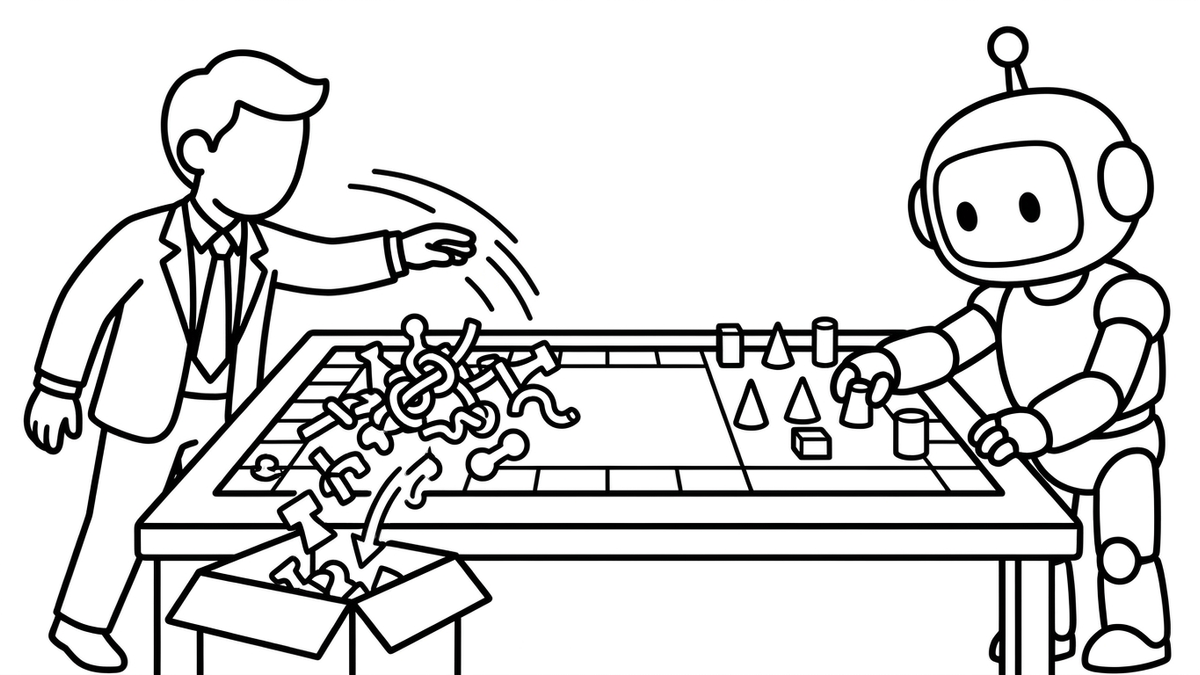
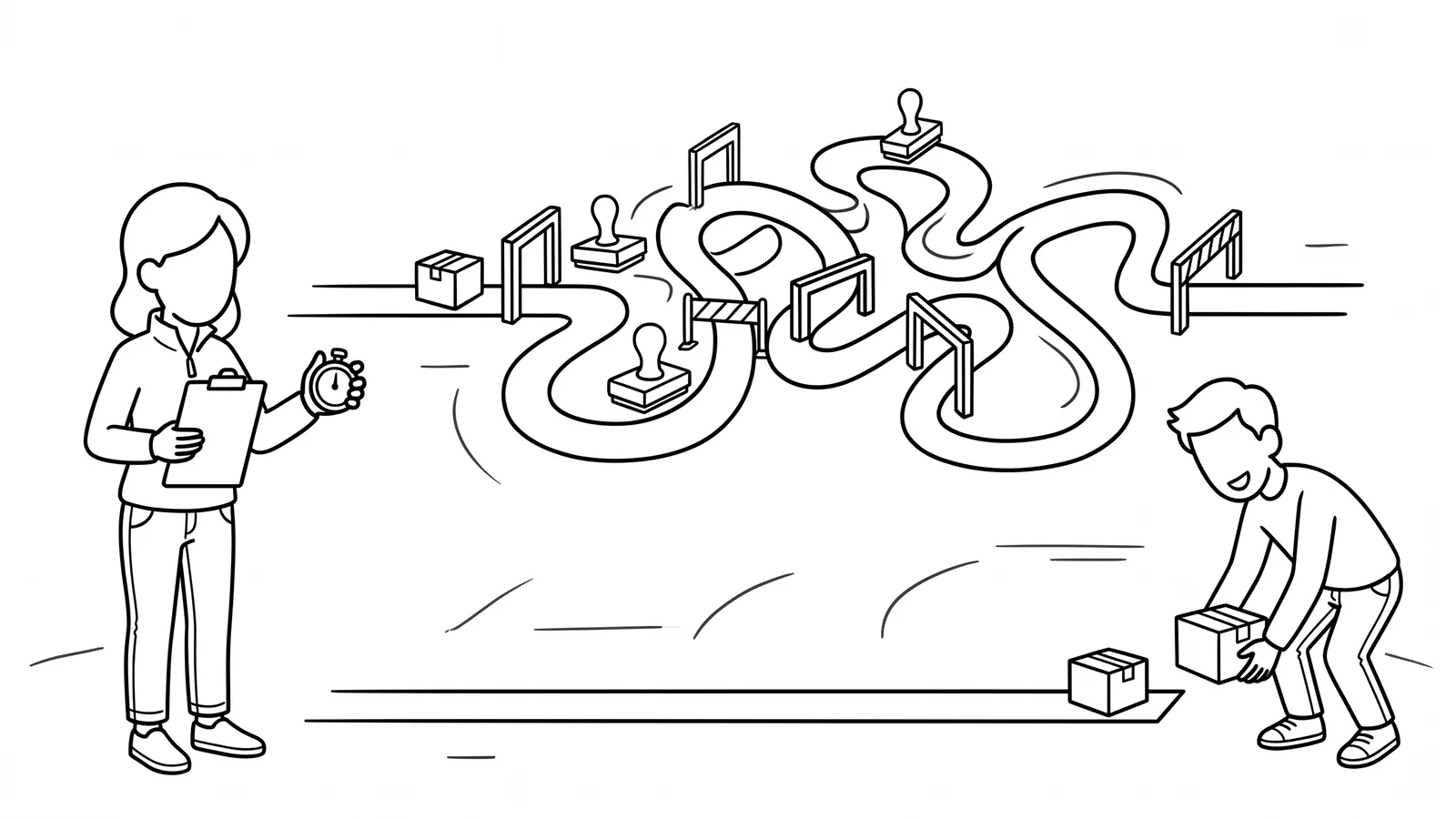
You can’t rebuild from a blank page while you’re still defending the old way. In AI Lets You Reset the Board, I argued that owners should redesign how work gets done around what AI can do today. Two-week tests get your team ready for that. Every time you test and retire a process, your people learn that “how we do it here” can change.
New competitors built on AI have no old processes to defend, so they start where you’re trying to get to.
If you run EOS®, you already have the tools. Put the prediction on your Scorecard for two weeks, bring the result to your Issues List and solve it with IDS. If the test points to a bigger rebuild, make it a Rock next quarter and run a premortem before you commit.
Watch Adam Grant on thinking again
In this TED talk, Grant explains how tunnel vision around our goals, habits and identities keeps us stuck, and how to widen the view.
Pick one process this week
Find the process your team defends hardest. Write the prediction today and put the day-14 decision on the calendar.
Great managers make this normal. They ask “how do we know?” without making anyone feel attacked, and they change their own minds in front of the team. If you want help building that kind of leadership team in Oregon, Southwest Washington or Seattle, that’s the work I do through executive coaching and EOS® implementation.
Sources
- Adam Grant, Think Again: The Power of Knowing What You Don’t Know (Viking, 2021). Excerpt: “I Rethink, Therefore I Am”, Literary Hub.
- Arnaldo Camuffo, Alessandro Cordova, Alfonso Gambardella and Chiara Spina, “A Scientific Approach to Entrepreneurial Decision Making: Evidence from a Randomized Control Trial”, Management Science, 2020.
- Arnaldo Camuffo, Alfonso Gambardella, Danilo Messinese, Elena Novelli, Emilio Paolucci and Chiara Spina, “A scientific approach to entrepreneurial decision-making: Large-scale replication and extension”, Strategic Management Journal, 2024.
- McKinsey & Company, “Adam Grant on leadership, emotional intelligence, and the value of thinking like a scientist”, May 24, 2021.
- Adam Grant, “What frogs in hot water can teach us about thinking again”, TED@BCG, April 2021.