
· 9 min read
Your Next Competitor Will Be Built on AI
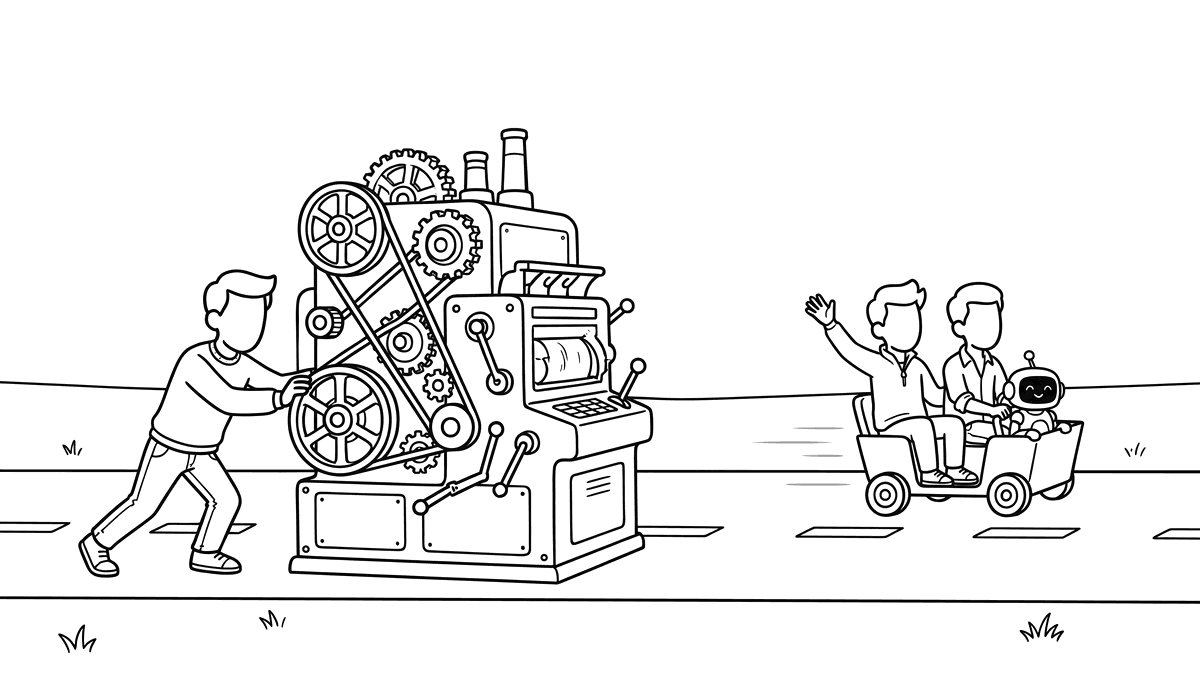
Erik Brynjolfsson visited a company that had held a big AI hackathon. Everyone was excited. The winning project used AI to make lunch menus.
His reaction, in an interview with Marina Mogilko on her Silicon Valley Girl channel: fun, but “is that really like the core value of your company?”
I’ve seen plenty of versions of that lunch menu. A team tries AI, makes something clever, and the business runs the same way it did last year. Brynjolfsson directs the Stanford Digital Economy Lab and has spent 30 years measuring what technology does to work. His interview, posted in July 2026, explains why that happens and what to do about it. I pulled out the lessons for owners. Then I’ll tell you where I disagree: his timeline is too slow, and the competitor to worry about may not exist yet. The full video is at the end.
One note: Brynjolfsson also co-founded Workhelix, a startup that helps companies put AI to work, so he has a stake in companies taking this seriously.
Why isn’t AI showing up in company results yet?
AI’s abilities have raced ahead of how companies use them. Brynjolfsson’s summary: “the raw capabilities are skyrocketing, but the economic impact is pretty muted right now.” He calls that gap a big opportunity, and he expects businesses to close it over the next few years.
Two things hold companies back, in his telling. Some point AI at work that doesn’t matter, like the lunch menus. And nearly all of them underestimate the change required. To get real value, he says, you have to change your business processes, retrain your people and sometimes invent new products and services.
He has seen this before. His PhD work covered how electricity rolled out in American factories, where about 30 years passed between the first electric motors and significant productivity gains. I told that story in AI Lets You Reset the Board: the payoff came when owners rebuilt their factories around the new power source. Brynjolfsson expects AI to move faster, more like three to five years.
That gap is an opening. In McKinsey’s 2026 survey, only about a quarter of companies outside its top AI performers had fundamentally redesigned workflows because of AI. Just don’t assume the opening will stay there for years. I’ll explain why in my take.
What will people do when AI handles the work?
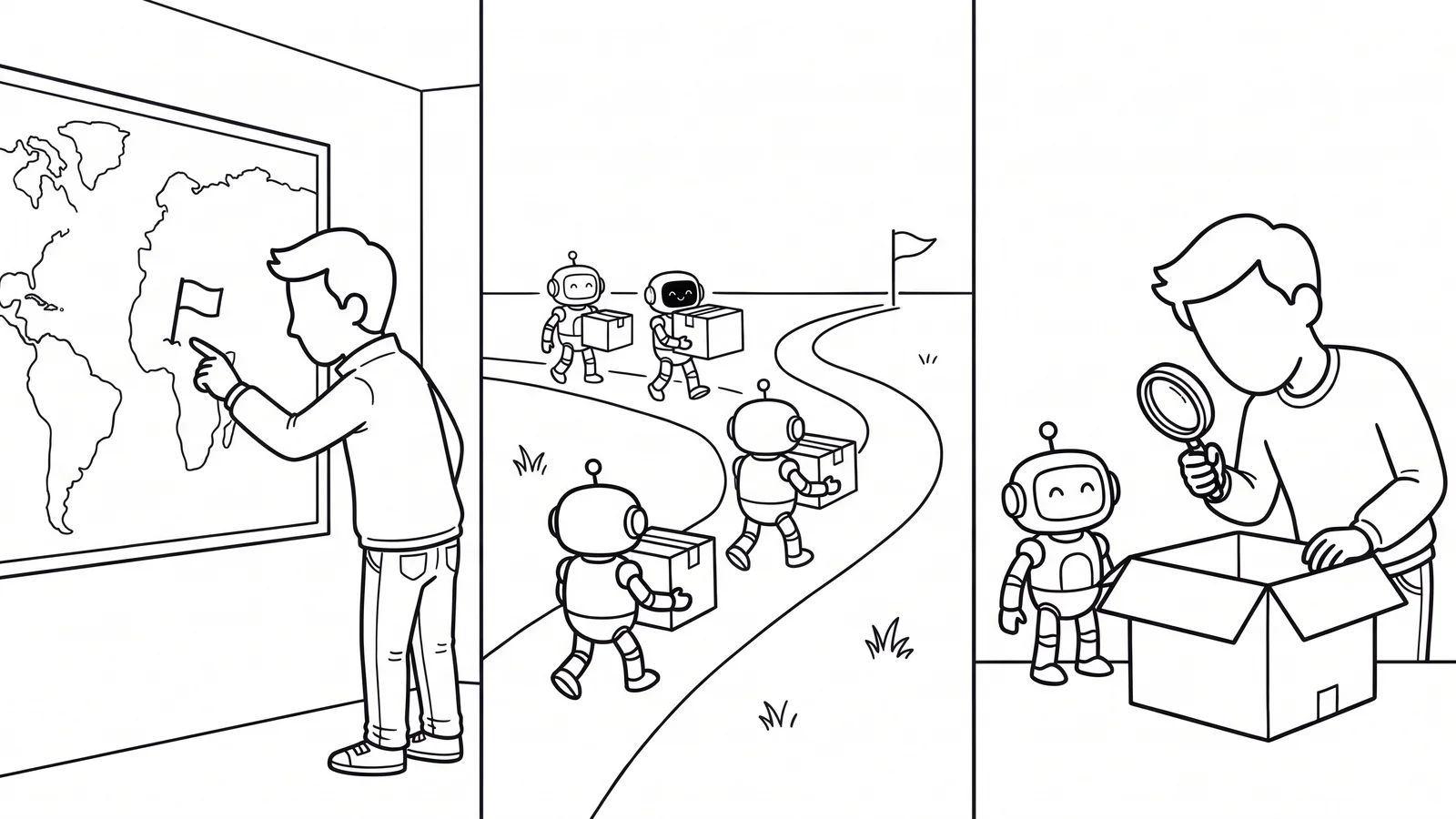
They’ll define the problem and judge the result. Brynjolfsson splits almost every project into three parts:
- Define the question. What problem needs solving, and what would a good answer look like?
- Execute. Do the work once it’s defined.
- Evaluate. Did you get what you wanted? What needs to change?
People used to do all three. AI agents, which are AI tools that carry out multi-step work on their own, are getting good at the middle one. So he expects most people’s jobs to shift toward managing several agents at once, with “each person” becoming “kind of like the CEO of a bunch of agents.”
He’s candid about why the third part matters. Agents make things up. They also do what you literally asked when you meant something else. You look at the result, see the miss, change the question and go again.
His own work shows the payoff. He used to assign graduate students an analysis and review it a week later. Now he sits with Claude Cowork, Anthropic’s desktop AI tool, and has an answer in five or 10 minutes. He says it’s worse than his students in some ways and better in others, and he still does the defining and the judging.
Read that list again as an owner. Defining the work and judging the result is management. I think that’s good news if you’ve invested in your managers, and a warning if you haven’t.
Will AI mean fewer jobs at your company?
It depends on the work, and on whether customers would buy more if you could deliver more. Brynjolfsson doesn’t sugarcoat the losses. His “Canaries in the Coal Mine” research with Bharat Chandar and Ruyu Chen uses ADP payroll data on millions of U.S. workers. Its August 2026 revision finds that employment for workers ages 22 to 25 in AI-exposed occupations is 19% below where it would be if it had kept pace with less-exposed peers.
The same paper adds three facts owners should know:
- The authors find no evidence of widespread, economy-wide job displacement, and experienced workers show no comparable gap.
- The gap comes mainly from companies hiring fewer young workers, more than from letting people go.
- Where people use AI mainly to complement their work, employment is flat or rising.
The authors describe these as early signals, and they don’t claim to have proved cause and effect.
Then Brynjolfsson makes the point I’d want every owner to hear. When AI makes a person more productive, some companies hire more of them. The deciding factor is demand. If a lower price or faster delivery brings in a lot more business, efficiency creates work. He estimates that about half the economy behaves this way.
His favorite example is radiology. Years ago, AI pioneer Geoffrey Hinton predicted that AI reading scans would end the need for radiologists. Brynjolfsson says the country now has more radiologists than ever. Reading images is one of more than two dozen tasks in the job, and cheaper scans led people to get more of them.
So ask this about each part of your business: if you could do this twice as fast at a lower cost, would customers buy more? Where the answer is yes, AI is a growth plan. A reset might still mean fewer people in some seats, and I won’t pretend otherwise. I’d put growing output ahead of cutting headcount.
What happens when you stop hiring junior people?
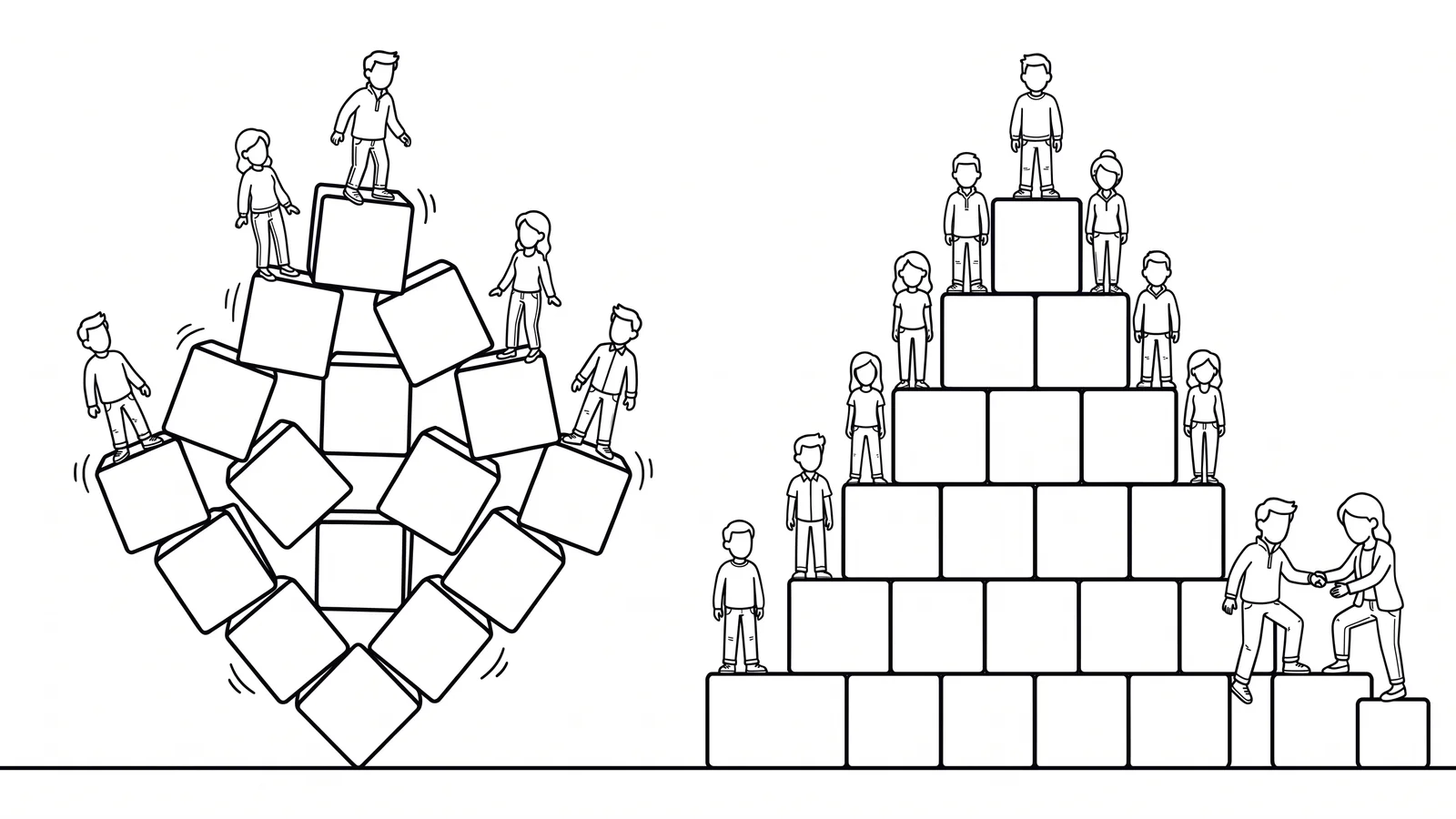
You lose your future managers. Most companies are shaped like a pyramid, with many junior people at the base and a few of them rising. Remove the base and you get a diamond, and Brynjolfsson asks the obvious question: where will your middle managers and senior people come from?
He points to Infosys, which he says is hiring as many junior people as before but changing what they do. Less of the routine work AI can handle, and more explicit training in project management and the big picture, skills people used to pick up by hanging around.
You don’t need Infosys’s budget to copy the idea. Keep hiring people early in their careers, and redesign the seat. Let AI take the first draft. Have the new hire check it, learn why it’s right or wrong and spend time with your best people on the judgment calls.
My take: who is the competitor you aren’t watching?
The one starting from AI. I think Brynjolfsson’s three to five years is too long. That estimate fits established companies, which have to unwind old processes, retrain people and get everyone to agree. A new company skips all of that. It opens on the blank page you’d have to fight your way back to.
That’s the blind spot. Most owners measure themselves against the competitors they already know, and if the company across town hasn’t changed, they relax. The company to watch may not exist yet. It will start with no old software, no old org chart and no process built for 2015. It can move faster and charge less than established companies, including yours if you don’t get moving.
You can already see it. In 2025, regulators in England and Wales authorized Garfield.Law, an AI-based firm that helps small businesses collect unpaid debts. Clients approve each step and named solicitors stay accountable, and its chaser letter costs £2. Try matching that from a traditional law office. In software, Stripe found the top 100 AI companies reached $5 million in annualized revenue in 24 months, compared with 37 months for the top 100 SaaS companies in 2018. Those are standouts, but the direction is clear. I’ve seen it from the inside too: I built my company with no employees and used AI to increase my output 4x.
So answer the question your future competitor is already answering: if you were building this part of the company from scratch today, how would it work?
Brynjolfsson told his Stanford students that when they hear “AI” they should think “amplifying intention, not artificial intelligence.” If you have no plan, AI won’t do much for you. If you have a clear one, it multiplies your effort. That’s why I believe the companies with the most great managers will win: they know what matters, define it clearly and hold the work to a standard.
If you run EOS®, you already have the machinery: a vision that says which problems are worth solving, documented processes that show AI how the work gets done, a Scorecard that shows whether the rebuild moved a number and Rocks that give one person 90 days to get it done.
The friction I see comes from people who won’t rethink their role, and from managers who don’t help them do it. Brynjolfsson’s three-part split gives you a useful way to start that conversation: in this seat, what should you define, what should AI execute, and how will you judge the result?
What should you try this week?
Pick one real business problem, and use AI to rethink how you solve it.
- Attack your own company. Ask Claude or ChatGPT: “Pretend you’re launching a company to win my best customers, built on AI from day one with no old systems. Here’s what I sell, how I price it and how I deliver it: [details]. How would you deliver it faster and cheaper, and which of my habits would you skip?”
- Choose work that matters. Look for something that limits growth or costs you customers: slow quotes, missed follow-ups, a long month-end close. How to Clear a Bottleneck will help you find it.
- Let AI interview you. This is Brynjolfsson’s tip for anyone unsure where to begin. Tell Claude or ChatGPT: “Tell me how you can be useful to me. Keep asking me questions, one at a time, about my job and the problems I worried about last week. Then recommend 10 ways to use you.”
- Pick one number. Track quote turnaround, response time or days to invoice, and compare it after 30 days.
If you want a step-by-step way to hand off the work, start with How to Automate Your Own Work With AI (and Trust It).
Watch the interview
Marina Mogilko talks with Erik Brynjolfsson on Silicon Valley Girl. The lunch-menu story comes just before the eight-minute mark, and the three parts of every project come at about 13 minutes.
Start before a new competitor does
If you want help deciding what to rebuild and getting your managers ready to lead it in Oregon, Southwest Washington or Seattle, that’s the work I do through AI integration and EOS® implementation.
Sources
- Silicon Valley Girl (Marina Mogilko), “Stanford’s Top AI Economist: The Next 10 Years Will Be the Best AND the Worst in History”, interview with Erik Brynjolfsson, YouTube, July 21, 2026.
- Erik Brynjolfsson, Bharat Chandar and Ruyu Chen, “Canaries in the Coal Mine? Six Facts about the Recent Employment Effects of Artificial Intelligence”, Stanford Digital Economy Lab, revised August 12, 2026.
- Solicitors Regulation Authority, “SRA approves first AI-driven law firm”, May 6, 2025.
- Garfield.Law, pricing and services, checked November 18, 2026.
- TechCrunch, “Stripe says AI startups are growing faster than SaaS ever did”, February 27, 2025.
- Dan Tinkoff, Lieven Van der Veken and Michael Chui, with Tara Balakrishnan, “The state of AI in 2026: On the road to ROI”, McKinsey & Company, August 25, 2026.