· 9 min read
The Premortem: Find Out Why Your Plan Failed Before It Does
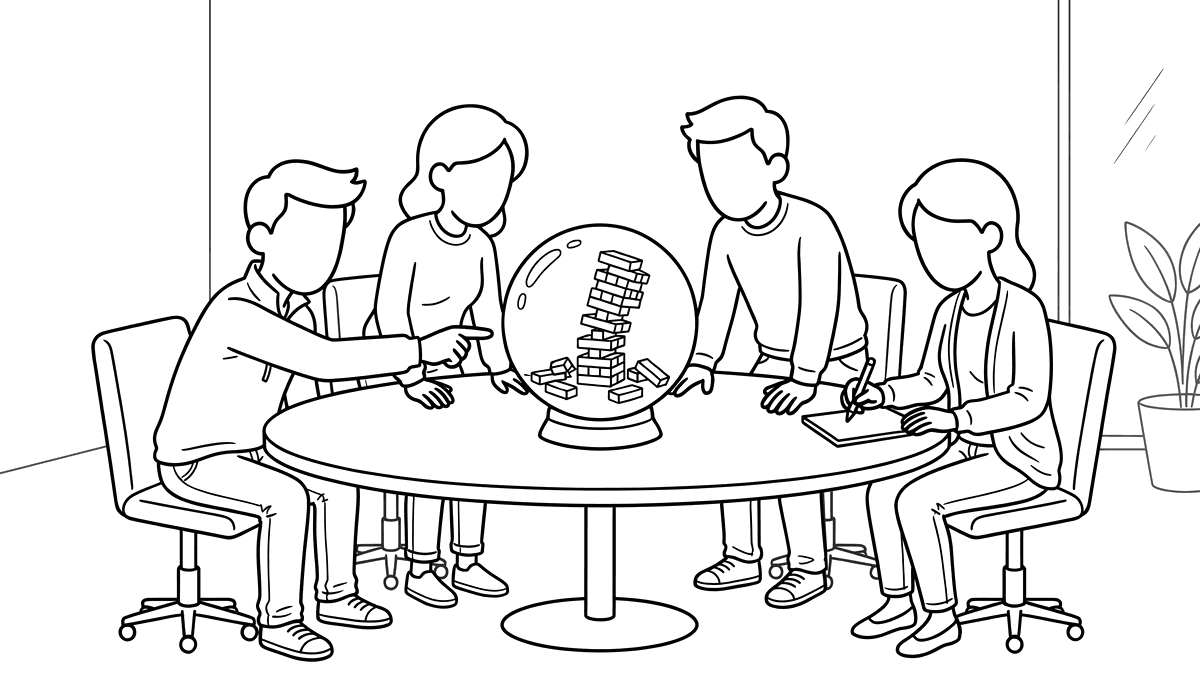
Picture the last plan your leadership team approved. Everyone nodded. Somebody in that room had a doubt and kept it to themselves, because the owner liked the plan and the meeting was running long.
You can get that doubt on the table in about 30 minutes. Before you commit, tell the team the plan has already failed and ask each person to write down why.
The exercise is called a premortem. The psychologist Gary Klein developed it, and Daniel Kahneman, the Nobel Prize-winning author of Thinking, Fast and Slow (2011), gave it a wide audience. In the book, Kahneman calls it the best idea he knows for taming optimism inside an organization, and he gives Klein the credit.
What is a premortem?
A premortem is a planning exercise in which your team assumes a project has already failed and writes down the reasons. A medical postmortem tells you why the patient died. A premortem gives you that list while you can still save the patient.
The wording carries the method. In a normal risk review you ask, “What could go wrong?” People hedge, and they protect the plan and each other. In a premortem you say the failure already happened, so the only question left is how. Klein describes it as “a sneaky way to get people to do contrarian, devil’s advocate thinking.” Nobody has to volunteer as the critic, because you just assigned the job to everyone.
Why won’t your team tell you what’s wrong with the plan?
Teams go quiet as a decision takes shape. Kahneman explains that as a group moves toward a decision, people gradually stop voicing doubts, and the doubts that remain start to look like disloyalty. By the end, only the supporters are talking, and the group’s confidence climbs with nobody left to check it.
He says the premortem’s main virtue is that it “legitimizes doubts.” It also pushes the plan’s supporters to look for threats they hadn’t considered.
Owners have an extra problem here. Your people know which projects you care about. If you’ve spent 20 minutes selling the plan, you’ve told them what answer you want. I wrote about this habit in Are You a Multiplier or an Accidental Diminisher?: when the boss speaks first, the debate turns into agreement with the boss.
Klein’s own example shows what that silence costs. In his 2007 Harvard Business Review article, a team was building planning software for military air campaigns. One member had said nothing through a long kickoff meeting. During the premortem he pointed out that one algorithm wouldn’t fit well on the laptops used in the field, so the software would take hours to run when users needed quick answers. The developers turned out to have a shortcut they hadn’t mentioned. The team swapped it in, and the project succeeded.
How do you run a premortem?
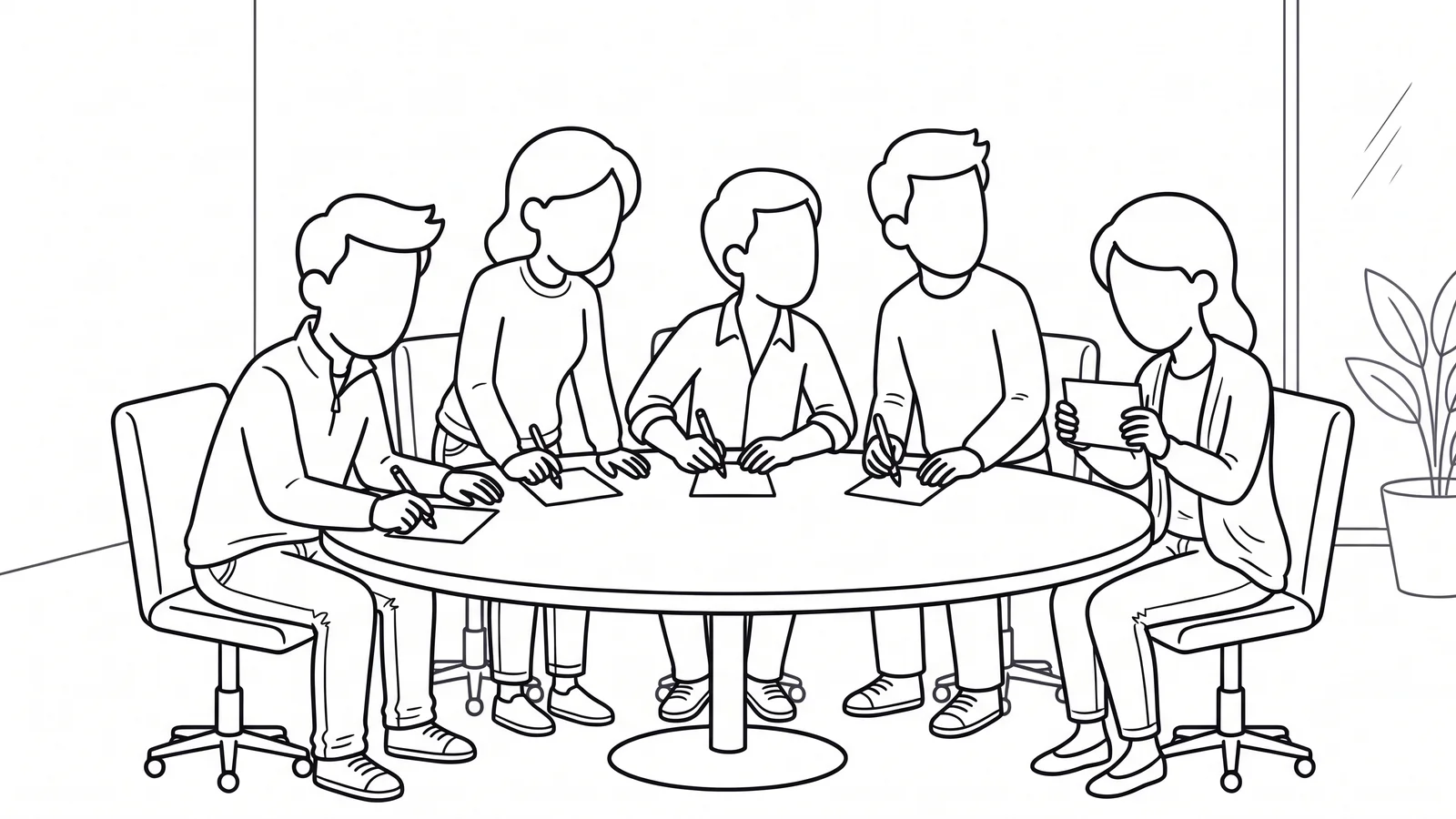
Run it after the team knows the plan and before you commit to it. Kahneman’s timing is the moment an organization has almost decided but hasn’t locked anything in. Klein says the whole session can take as little as 20 to 30 minutes.
- Brief the plan. Make sure everyone in the room understands it. Include the people closest to the work, because they know where it will break.
- Announce the failure. Say it plainly: “It’s a year from now. We ran this plan exactly as written, and it was a disaster.” Don’t soften it to “might fail.”
- Write in silence. Give people a few minutes to write down every reason on their own. Klein uses as little as two minutes. Kahneman suggests five to 10. Silence matters, because it keeps the first loud voice from setting the direction.
- Go around the room. Each person reads one reason, then the next person offers a different one, until you’ve captured them all. Klein starts with the project manager, which shows everyone that the plan’s owner can take a hit.
- Fix the top two or three. Pick the reasons that are most likely and would hurt most. Change the plan, name one owner for each fix and set a date.
Klein warns about two common mistakes: asking “what can go wrong?” instead of stating that the plan has failed, and letting people talk through each item at a slow pace. Keep it moving. You can discuss the fixes once the list is complete.
As the owner, speak last and take notes. If a reason stings, thank the person who said it. The next premortem depends on how you act during this one.
Does a premortem work?
The evidence is encouraging and limited. Klein and two colleagues tested the method in a 2010 study with 178 college students, who critiqued a university’s plan for a flu outbreak. Students who ran a premortem showed the greatest drop in overconfidence, compared with those who ran a simple critique or listed pros and cons.
That tells you the premortem changes how people judge a plan. It doesn’t prove your project will succeed, and Kahneman says the method won’t fully protect you from nasty surprises.
I still like the odds, because the cost is half an hour. Kahneman guessed that a premortem usually won’t kill a plan that’s about to be adopted. It will get the plan tweaked in ways everyone agrees are better. He called it “a low-cost, high-payoff kind of thing.”
What should a manager do on Monday?
Pick the next real commitment on your calendar and put 30 minutes in front of it. Good candidates are a new hire you’re about to approve, a software switch, a price change, a new location or next quarter’s priorities.
Send the team the plan ahead of time. Open the meeting with the failure statement. Collect the reasons, pick the top two and leave with an owner and a date for each fix. Then keep the full list, because it tells people what to watch for once the work starts.
If you run EOS®, your quarterly Rocks are a natural place to start. Before the team commits to a Rock, take five minutes on the one that worries you most: it’s the end of the quarter and this Rock is off track, so why? Anything worth solving goes on the Issues List.
How do you run a premortem with AI?
Have your team write its reasons first. Then give AI the plan, tell it the plan has already failed and use the answer to widen the list. Your people still decide what’s real.
Gary Klein has weighed in himself. In a 2025 article, he says AI can produce a strong, thorough list of risks. It still misses what only your team knows, like who is overloaded, and it can’t build the candor people develop by speaking up in the room. In one of his own sessions, a colleague flagged that Klein might not be open enough to suggestions. A chatbot wasn’t going to catch that.
The failure framing may matter even more with AI. A Stanford study in Science found that 11 AI models endorsed users 49% more often than people did. It covered personal advice, not business plans, but the warning carries over: ask AI whether your plan is good and you may get applause. I haven’t seen a study proving the failure framing fixes that, so check what comes back.
The best guides I found point to this sequence:
- Run the human round first. Collect your team’s list before anyone opens AI, so the machine doesn’t set the direction.
- Give AI the real context. Include the budget, the dates, what customers have told you and what went wrong last time. A July 2026 guide from Wyndo, Dheeraj Sharma and Hodman warns that without this context you get generic risks.
- Sort the answer. Steve Tan’s one-prompt version splits risks into real, fake and unspoken. The fake pile tells you what to stop worrying about. The unspoken pile holds the people problems.
- Turn the list into a test. Sharma found that AI made almost every idea look dangerous. Use the output to choose what to watch and what small test to run, and don’t treat it as a verdict on the plan.
- Take it back to the team. Let the people closest to the work say which new items are real. Then pick the top two and name an owner for each.
A prompt you can paste into Claude or ChatGPT:
Here is my plan: [paste it, with the owner, budget, dates and what customers have told you]. My team has already listed these risks: [paste the list]. It is one year from now and this plan failed. Don’t repeat my team’s list. Give me the five most likely reasons it failed that my team missed, with the assumption behind each one and an early warning sign. Then tell me which of my team’s worries probably won’t matter and what people may be avoiding saying. End with the smallest test I could run in the next 30 days.
Working alone? Ethan and Lilach Mollick of Wharton published a premortem coach prompt that makes AI ask the questions instead of supplying the answers. They wrote it for students, but an owner can use it too. For a second check, have a fresh AI session try to prove the plan wrong, the habit I covered in Stop Being a Conveyor Belt for AI.
Should you run a premortem before an AI project?
Yes, especially if you’re rebuilding how part of the company works. In AI Lets You Reset the Board, I argued that owners should redesign a process from a blank page instead of adding AI to the old steps. A rebuild like that is a big bet on a new way of working, and your team will have doubts about it.
Run the premortem before the rebuild starts: “It’s next December, and the new quoting process failed. Why?” You’ll hear about the bad data, the skipped training and the person who never bought in while you still have time to deal with them.
For a worked example, the Thomson Reuters Institute imagined a 2028 AI agent pilot that failed at a law firm. Workflows were never documented, key knowledge lived in one long-tenured employee’s head and nobody was rewarded for making it work. Every cause was organizational.
Watch Gary Klein explain it
Klein walks through the method in this talk, hosted by the Federal Reserve Bank of New York.
Common questions
How is a premortem different from a risk assessment? A risk assessment asks what might go wrong. A premortem states that the project has already failed and asks why. That shift gives people permission to raise problems they would otherwise keep to themselves.
How long does a premortem take? Klein says as little as 20 to 30 minutes. The writing takes a few minutes, and most of the time goes to hearing each reason and choosing what to fix.
Build a team that tells you the truth
Plans get better when people can say what worries them, and that comes from how you lead the room. If you want help building that kind of leadership team in Oregon, Southwest Washington or Seattle, that’s the work I do through executive coaching and EOS® implementation.
Sources
- Daniel Kahneman, Thinking, Fast and Slow (Farrar, Straus and Giroux, 2011). Premortem passage also available in a condensed excerpt: “Bias, Blindness And How We Truly Think”, Financial Advisor, October 25, 2011.
- Gary Klein, “Performing a Project Premortem”, Harvard Business Review, September 2007.
- Gary Klein, “The Pre-Mortem Method”, Psychology Today, January 14, 2021 (method, common mistakes and the Veinott, Klein and Wiggins 2010 study).
- Gary Klein, “Can AI Do Pre-Mortems for Us?”, Psychology Today, updated April 23, 2025.
- Stanford Report, “AI overly affirms users asking for personal advice”, March 2026, on Myra Cheng and colleagues’ study in Science.
- Wyndo, Dheeraj Sharma and Hodman, “How to Run a Pre-Mortem on Your Next Product Decision”, July 26, 2026.
- Steve Tan, “Stress-Test Any Plan in 60 Seconds With Claude”, June 11, 2026.
- Ethan Mollick and Lilach Mollick, “Assigning AI: Seven Approaches for Students, with Prompts”, Wharton, 2023.
- Bryce Engelland, “Premortem: Your 2028 agentic AI pilot program failed”, Thomson Reuters Institute, February 18, 2026.
- Federal Reserve Bank of New York, “Success Through Failure: The PreMortem Method with Gary Klein”, YouTube, December 7, 2023.