· 6 min read
How to Use Constraints to Get Better Results

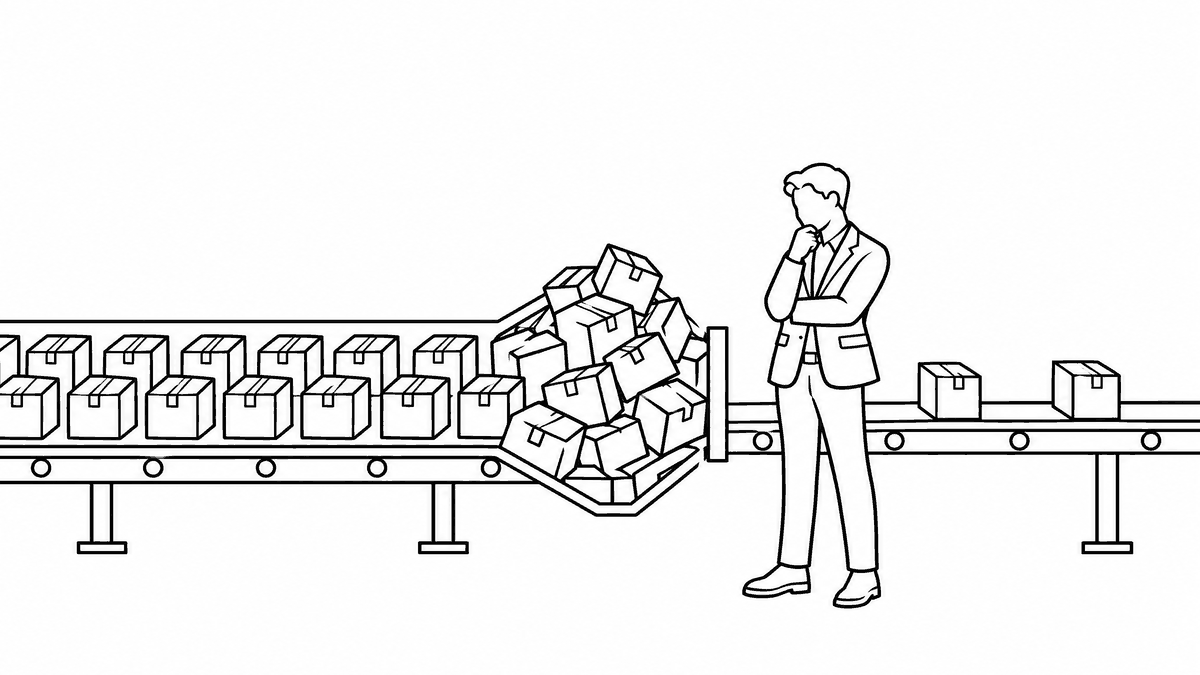
When a project stalls, most owners ask for more. More time, more people, more budget. Sometimes that’s the answer. Usually it isn’t. Give a team more room and the work tends to grow to fill it.
To use constraints well, start with one outcome and name what keeps going wrong. Then block the easy path with one of five levers: time, resources, work in progress, format or commitments. Pair what you rule out with what you require, make it tight but possible, and review it at the end of the quarter.
I’ve written twice about Inside the Box: How Constraints Make Us Better (Riverhead, 2026), the latest book from David Epstein, author of Range: first in The Freedom of the Firewall and then in Why More Resources Rarely Solve Problems. This post turns the idea into something you can use with your leadership team this quarter. I call it Building Better Boxes, and there’s a free worksheet at the end.
What is a productive constraint?
A productive constraint is a limit that blocks the first convenient path, so a team can’t fall back on the familiar answer and has to look for a better one. That’s how Epstein describes it. More freedom does the opposite: it lets people take the easy path every time.
His clearest warning is General Magic, a tech company from the early 1990s with money, talent and almost no limits. In an interview on WBUR’s On Point, he describes how one calendar app’s date range grew from 1904–2096 to the Big Bang onward. Nobody could say who the product was for. The company never shipped a focused product.
I see a smaller version of this in owner-led companies all the time. Ten priorities and no deadlines. A project with no budget cap that keeps adding features. A team that says yes to every request and finishes very little. None of that is a people problem. It’s a missing box.

The five types of constraints
Every constraint a leader can set pulls one of five levers: time, resources, work in progress, format and rules, or commitments. If you run on EOS®, you already pull all five. The difference is doing it on purpose.
| Lever | What you limit | Example | Where EOS already does it |
|---|---|---|---|
| Time | Deadlines, timeboxes | Tony Fadell gave the iPod team nine months | 90-day Rocks, the 90-minute Level 10 Meeting |
| Resources | Budget, people, materials | NASA’s LCROSS team, on a smaller budget, borrowed sensors from NASCAR | The 1-Year Plan budget, one name per seat |
| Work in progress | How much is open at once | The Broad Institute barred new projects until others finished | 3–7 Rocks per person, the top three issues first |
| Format and rules | Shape, length, method | Dr. Seuss wrote Green Eggs and Ham on a 50-word bet | The two-page V/TO, 5–15 Scorecard measurables |
| Commitments | What you keep doing at all | Epstein’s “subtraction audit”: list commitments, cut some | Delegate and Elevate |
The Building Better Boxes framework page has an animated model of all five. Switch them on one at a time and watch scattered work turn into a steady stream.
How to design a constraint in six steps
- Name the outcome and the failure. What result do you want, and what keeps going wrong? Sprawl, slowness, sameness or too many priorities.
- Find the easy path. Name the habit or default the team keeps falling back on. That’s what the constraint should block. Epstein’s test: what would you do if the usual approach weren’t available?
- Pick the lever. Match it to the failure. Sprawl calls for a cap on work in progress. Slowness calls for time. Sameness calls for format.
- Rule one thing out, and require another. A ban on its own leaves a hole. Pair it: “No new projects until two close, and every proposal fits on one page.”
- Make it tight but possible. It should hurt a little, not look impossible. Give it an end date.
- Review it. At the end date, keep it, tighten it, loosen it or drop it. In EOS, that happens at the Quarterly.
Here’s what that looks like in a real situation. Say your sales team quotes every job from scratch, and quotes take nine days. The failure is slowness. The easy path is custom work on every quote. The lever is format: every quote uses one of three templates, and anything off-template needs the integrator’s OK. Add a time lever if you need it: quotes go out within three business days. Review both at the Quarterly.
Good box or bad box? When constraints backfire
Constraints backfire when they dictate the answer, add pressure without focus, or never end. Epstein is clear that a limit that spells out exactly what to make kills creativity, and a deadline that only adds pressure makes people rush and multitask. Run any new constraint through five tests before you roll it out.

| Test | Good box | Bad box |
|---|---|---|
| Purpose | Tied to a named outcome | A limit for its own sake, or a cost cut called focus |
| Room | Rules out a path and leaves the “how” open | Spells out exactly what to make and how |
| Time pressure | Forces focus on one task | Forces rushing and multitasking |
| Load | Fewer open commitments | One more rule on top of everything already open |
| Lifespan | Has a review date | Stays forever by default |
The last test matters most. A constraint without an end date turns into bureaucracy. A constraint with one is an experiment.
Try it this quarter
Pick one outcome. Build one box for it. Give it an owner and a review date, and put it on the quarterly plan like any other Rock.
The Your Box This Quarter worksheet walks your leadership team through it in about 20 minutes: the outcome, what keeps going wrong, the easy path to block, the lever, the rule and the review date. It also has the five levers and the good-box checklist on one page.
If you’d like help building better boxes with your leadership team in Oregon, Southwest Washington or Seattle, that’s part of the work I do through EOS® implementation and executive coaching.
Common questions
What is Inside the Box by David Epstein about?
Inside the Box: How Constraints Make Us Better (Riverhead, 2026) argues that the right limits make people and teams more creative and focused than more freedom does. Epstein draws on examples like Dr. Seuss’s 50-word bet, the failure of General Magic and Pixar’s habit of requiring several story pitches before committing to one.
Do constraints always make a team better?
No. A constraint that dictates exactly what to make, piles on pressure or never ends tends to make work worse. That’s why every box in this framework gets a named outcome, room to decide the “how,” and a review date.
How do constraints fit with EOS?
EOS already runs on them: 90-day Rocks, a 90-minute weekly meeting, a two-page V/TO and a Scorecard of 5–15 measurables. Building Better Boxes makes those limits deliberate and adds new ones where a team keeps getting stuck, reviewed at each Quarterly.
What’s one constraint I can try this week?
List everything you’re committed to right now. Then answer Epstein’s question: “If I had to cut one of these things out in the next 90 days, which would it be?” Cut it, and see what the extra room lets you finish.
Sources
- David Epstein on Inside the Box, On Point (WBUR), May 8, 2026
- David Epstein, “5 Ways Constraints Make You More Productive and Creative,” Next Big Idea Club
- The Power of Constraints: Rethinking Choice with David Epstein, Cresset
- Why More Freedom Is Making You Miserable, with David Epstein, the Michael Easter podcast