
AI Integration and the Evolution of Leadership

The most profound shift happening in business leadership right now has nothing to do with new software or automation tools. It has everything to do with identity.
Leaders who built their careers on being the best executor: the person who could outwork, out-strategize, and out-deliver everyone else: are discovering that AI is rendering that entire playbook obsolete. The future belongs not to leaders who do more, but to leaders who guide better. This is not a technology challenge. This is a leadership evolution challenge.
The Doing Trap
For decades, effective leadership meant demonstrating competence through execution. You proved your worth by being the person who could solve the hardest problems, make the toughest calls, and deliver results others could not. The badge of honor was staying late, knowing every detail, and having your hands in everything that mattered.
AI is dismantling this model at its foundation.
When machine learning algorithms can analyze market trends faster than any human, when predictive analytics can flag operational issues before they surface, and when automation handles routine decision-making with greater consistency than even the most disciplined manager: the leader who derives identity from doing faces an existential crisis.
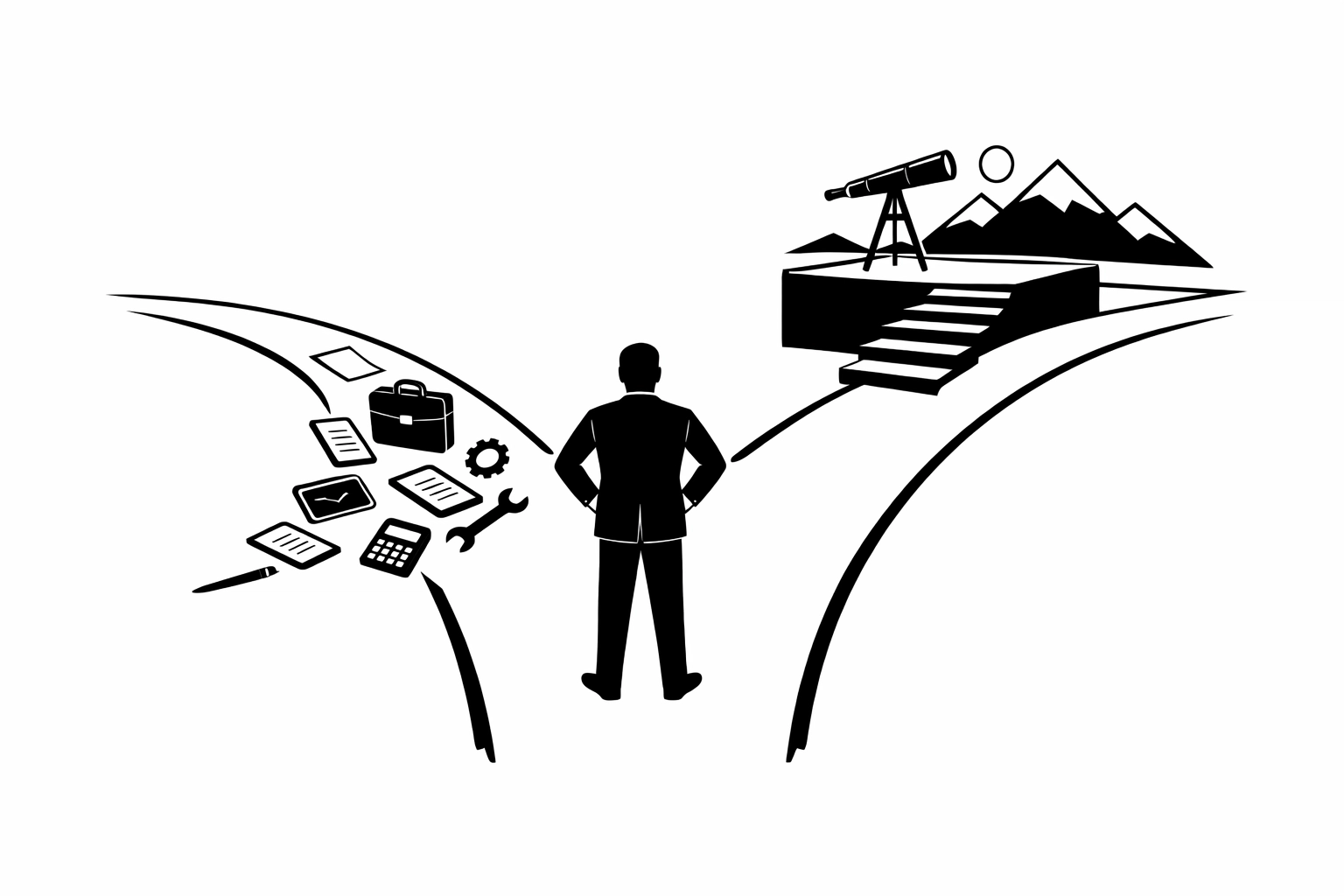
The threat here is twofold: First, leaders who cannot let go of the doing become bottlenecks in their own organizations. Second, and more insidious, they prevent their teams from developing the capabilities necessary to thrive in an AI-augmented environment. This creates cascading dysfunction: a leadership team stuck in execution mode while the organization starves for strategic direction.
Three Levels of AI Leadership Maturity
The evolution from doing to guiding does not happen overnight. Research on AI integration in leadership identifies three distinct stages of maturity, each requiring fundamentally different mindsets and capabilities.
Awareness represents the entry point. At this level, leaders grasp what AI can and cannot do. They understand that AI excels at pattern recognition, data processing, and scenario modeling: but remains limited in contextual judgment, ethical reasoning, and human motivation. Leaders at this stage recognize AI as a tool that enhances rather than replaces human decision-making.
This awareness phase matters because it prevents two common mistakes: over-relying on AI outputs without contextual interpretation, and dismissing AI capabilities entirely due to discomfort or misunderstanding. Leaders stuck at awareness can intellectually appreciate AI but have not yet integrated it into their leadership practice.
Leadership Assistance marks the transition from theoretical understanding to practical application. Here, leaders actively adopt AI-driven tools that enhance their core responsibilities. A CEO might use sentiment analysis to gauge organizational health across communication channels. A VP of Operations might leverage predictive maintenance algorithms to prevent equipment failures. A marketing director might deploy AI-powered customer segmentation to personalize engagement strategies.
The shift is subtle but critical: AI moves from "that technology thing" to a direct enhancement of leadership capability. One UK manufacturing CEO exemplified this stage by using AI-fueled analytics to uncover collaboration breakdowns between departments that traditional reporting never surfaced. The insight drove targeted interventions that improved both productivity and organizational trust.
But assistance still positions the leader as primary and AI as secondary: a helper, not a partner.

Leadership Augmentation represents the mature state where AI becomes integral to how leadership itself functions. At this level, AI is not assisting discrete tasks but reshaping organizational structure, decision rights, and strategic processes. Leaders use AI insights not just to inform decisions but to fundamentally rethink how decisions get made, who makes them, and what outcomes matter.
This stage demands a profound identity shift: from leader-as-executor to leader-as-orchestrator. The value proposition changes from "I deliver results" to "I create systems that deliver results." This is where the connection to sound business operating systems becomes unavoidable.
The EOS Connection: Getting Out of the Weeds by Design
The Entrepreneurial Operating System has long advocated for a principle that AI integration now makes non-negotiable: leaders must get out of the weeds to create scalable, sustainable organizations. EOS asks leaders to define clear accountability, delegate effectively, and focus on strategic priorities rather than tactical firefighting.
AI accelerates this imperative while simultaneously making it more achievable.
Consider the classic EOS concept of Rocks: the three to seven most important priorities each quarter. Without AI, tracking progress on Rocks across a leadership team requires manual check-ins, subjective assessments, and time-consuming status updates. Leaders often get pulled into tactical details because visibility requires direct involvement.
AI changes the equation. Real-time dashboards, automated progress tracking, and predictive analytics provide visibility without requiring leaders to live in the details. A leader can maintain strategic oversight of Rocks without attending every implementation meeting or reviewing every task list. This is not abdication: it is elevation.
The same dynamic applies across core EOS disciplines. The Accountability Chart becomes more than an organizational diagram when AI can flag gaps in coverage, predict capacity constraints, and identify skill mismatches. The Issues List transforms from a static document into a dynamic system that prioritizes based on impact scoring and historical resolution patterns. The Vision/Traction Organizer becomes a living strategy tool rather than an annual planning artifact.
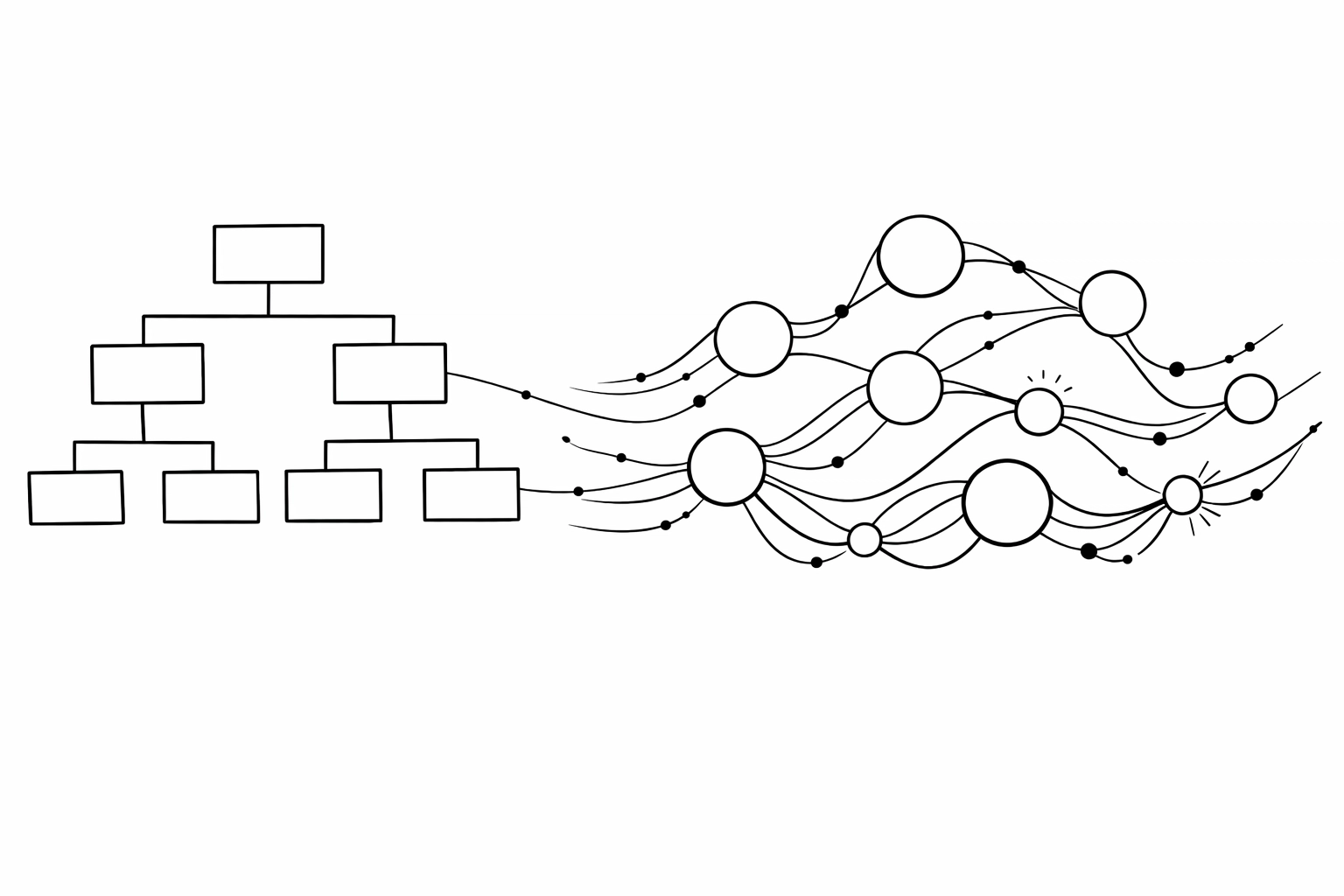
But here is the critical insight: AI only enables this elevation if leaders are willing to redefine their role. The technology creates possibility. Leadership psychology determines whether that possibility becomes reality.
The Human Competencies That Matter More Than Ever
The irony of AI-driven leadership evolution is that success depends less on technological savvy and more on deeply human capabilities.
Emotional intelligence moves from valuable to essential. As AI handles more analytical processing, the leader's differentiating value lies in reading team dynamics, managing change resistance, and building trust across diverse stakeholders. A machine can identify that employee engagement scores are declining. Only a human leader can discern whether the cause is workload stress, cultural misalignment, or inadequate recognition: and craft an appropriate response.
Strategic foresight becomes the primary leadership deliverable. When AI manages operational optimization, leaders must focus on questions machines cannot answer: What markets should we enter? What capabilities must we build? What existential threats are we not seeing? This requires synthesizing weak signals, challenging assumptions, and making judgment calls under uncertainty.
Cross-functional integration emerges as a critical competency because AI applications rarely respect organizational silos. An AI system that optimizes supply chain operations touches procurement, manufacturing, logistics, finance, and sales. Leaders must orchestrate across these domains, translating between technical capabilities and business impact.
Responsible innovation demands leaders balance AI's potential with its risks. This means understanding algorithmic bias, data privacy implications, workforce displacement concerns, and societal impacts. Leaders cannot delegate these considerations to technical teams: they are strategic governance issues requiring executive judgment.
These competencies share a common thread: they require stepping back from doing to focus on guiding, connecting, and sense-making.
The Midlevel Leadership Challenge
While much attention focuses on C-suite AI adoption, the most critical leadership evolution may be happening at the middle management level. These leaders sit at the intersection where strategy meets execution: precisely where AI integration creates the most pressure and opportunity.
Midlevel leaders drive how AI embeds into daily workflows. They translate strategic AI initiatives into team practices. They manage the human side of technological change, addressing fears about job security and competence. They identify use cases where AI can eliminate friction and create capacity.
But midlevel leaders also face the greatest identity threat. These are often individuals who earned their roles through superior execution. Their career trajectory rewarded doing better than others. AI directly challenges the skills that made them successful, while demanding capabilities they may never have developed.
Organizations that invest in deliberate development pathways for midlevel leaders: building AI literacy, strategic thinking, and change management skills: create sustainable competitive advantage. Those that leave middle managers to figure it out alone create a layer of resistance that suffocates AI initiatives regardless of executive enthusiasm.

The Developmental Journey
The evolution from doing to guiding follows a predictable maturity curve, but the pace varies dramatically based on intentional development.
Building foundational knowledge means understanding AI capabilities, limitations, and use cases relevant to your domain. This is not about becoming a data scientist: it is about developing informed judgment. Leaders need enough literacy to ask good questions, evaluate vendor claims, and spot opportunities.
Cultivating an AI-first mindset requires shifting default assumptions. Instead of "How do I solve this problem?" the question becomes "How might AI help solve this problem?" This mental pivot sounds simple but requires consistent practice to overcome decades of ingrained patterns.
Honing AI-specific skills involves learning to work with AI tools, interpret outputs critically, and integrate machine insights with human judgment. This is hands-on development: using AI assistants, experimenting with analytics platforms, and building comfort with augmented decision-making.
Leading with confidence represents the mature state where AI integration becomes second nature. Leaders at this stage use AI insights to think strategically about market forces, pivot business models nimbly, and anticipate disruptions before they materialize.
The journey takes time, requires support, and benefits enormously from coaching. Leaders attempting this evolution in isolation often stall at awareness or adopt AI superficially without fundamentally changing their leadership approach.
What This Means for You Right Now
If you are leading a growing business, the question is not whether AI will reshape your leadership role: it is whether you will lead that reshaping or have it imposed on you by competitive pressure.
The leaders who thrive in this transition share common characteristics: They acknowledge discomfort with letting go of the doing while committing to the evolution anyway. They invest in developing strategic and human capabilities with the same rigor they once applied to operational excellence. They build systems and teams capable of executing without their constant involvement. They get out of the weeds not through neglect but through intentional design.
This is fundamentally an EOS conversation. The principles that drive sustainable business growth: clear accountability, disciplined execution, strategic focus: become both more important and more achievable when leaders embrace AI-augmented oversight rather than AI-resistant doing.
The evolution requires courage. It asks you to redefine how you create value, measure contribution, and find meaning in your work. But the alternative: clinging to a leadership model that AI is actively rendering obsolete: leads to organizational stagnation and personal burnout.
The shift from doing to guiding is not about working less. It is about working differently, leveraging both human wisdom and machine capability to create outcomes neither could achieve alone.
Ready to explore how AI integration fits into your growth strategy? Whether you are wrestling with the doing trap or looking to build leadership capabilities for an AI-augmented future, let's talk. Email Ryan at ryan@flaglinestrategy.com to start the conversation.


Comments