· 7 min read
The 4 Intangible Capitals: Why Your V/TO is the Key to Unlocking Hidden Wealth
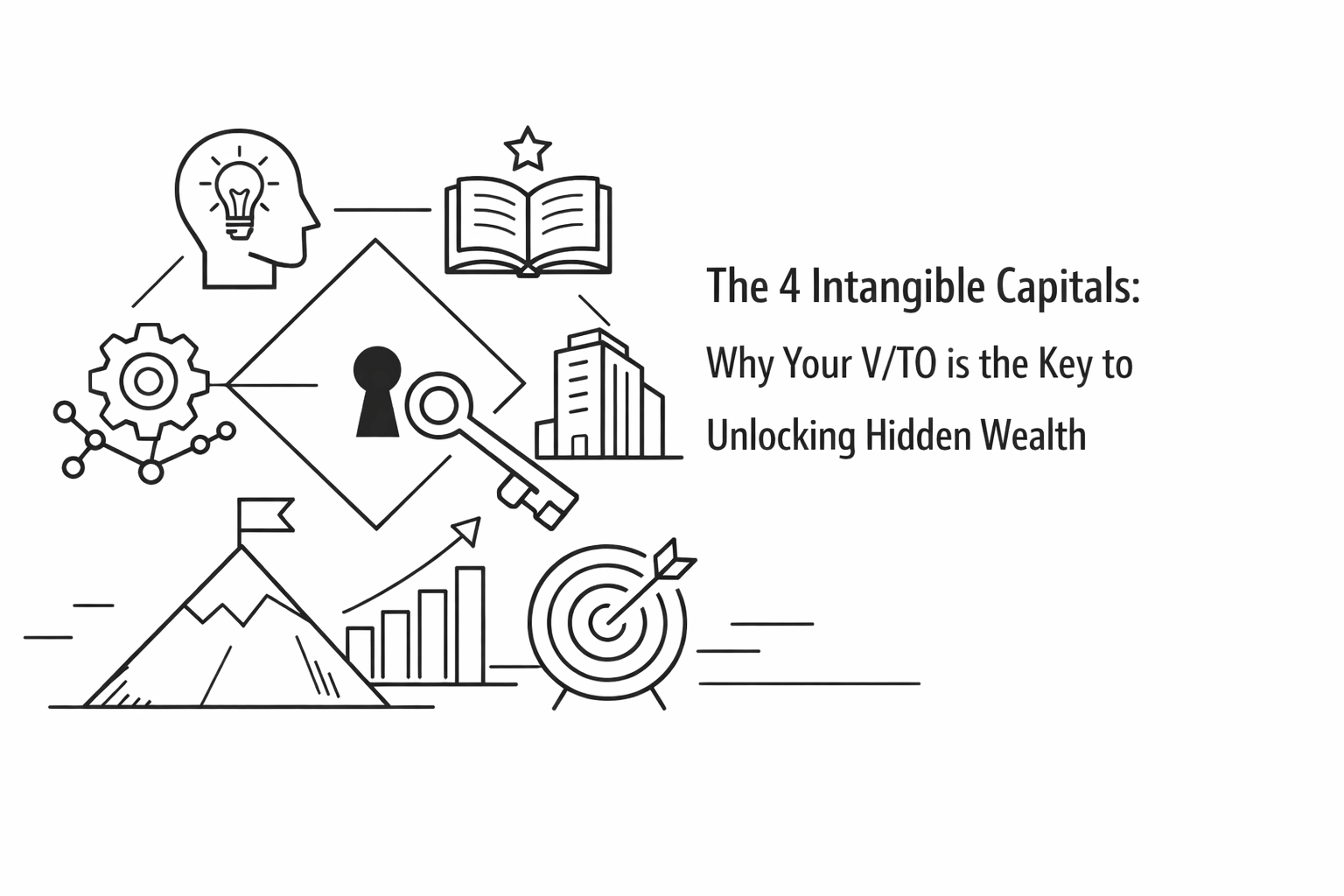
For many business owners, the true value of their company is a ghost: an invisible figure that only takes shape during a valuation or a potential sale. We often obsess over the tangible: the cash in the bank, the fleet of trucks, the real estate, or the proprietary software. Yet, as Christopher Snider argues in his seminal work Walking to Destiny, these tangible assets typically account for only 20% of a company’s actual enterprise value.
The remaining 80%? It is locked within the “Four Intangible Capitals.”
This is where many leaders feel a sense of misalignment. They sense the value is there, but they lack the framework to capture it, measure it, and: most importantly: scale it. At Flagline Strategy, we’ve found that the Entrepreneurial Operating System (EOS®) isn’t just a way to run a better meeting; it is the ultimate engine for building these four capitals. By using tools like the V/TO (Vision/Traction Organizer™), the People Analyzer™, and the Process Component™, you aren’t just “managing” a business: you are systematically manufacturing wealth.
The Value Acceleration Methodology: A New Lens on Growth
The central thesis of Snider’s “Value Acceleration” is simple yet profound: exit planning is not an event that happens at the end of your career. It is a strategy for running a business that is “transferable” at any moment. A transferable business is one that is highly valuable because it does not rely on the owner to function.
To reach this state, a leader must focus on the four pillars of intangible value: Human, Structural, Customer, and Social Capital. When these are strong, the “private equity multiple” applied to your earnings skyrockets. When they are weak, the business is seen as a high-risk asset: one that might crumble the moment the founder walks out the door.
Let’s break down how the tools you are already using in your weekly pulse are actually building these four types of wealth.

1. Human Capital: Beyond “Right People, Right Seats”
Human capital is the talent, knowledge, and execution capability of your team. In a low-value business, the “knowledge” resides almost exclusively in the founder’s head. In a high-value business, the team is empowered, autonomous, and aligned.
The risk here is owner dependency. If you are the primary problem-solver, the primary salesperson, and the primary visionary, your human capital is effectively trapped. A buyer isn’t buying a business; they are buying a job they have to pay you to keep doing.
The EOS Solution: The People Analyzer and GWC™ To build Human Capital, you must utilize the People Analyzer. This isn’t just a HR tool; it is a value-building tool. By ensuring everyone in the organization fits the Core Values (Right People) and truly “Gets, Wants, and has the Capacity” (Right Seats) to do their job, you are building a self-sustaining organism.
When your leadership team can execute the 1-Year Plan without your daily intervention, your Human Capital value triples. You are demonstrating to the market that the business has the “bench strength” to survive and thrive under new ownership.
2. Structural Capital: Turning Instinct into Assets
Structural capital is the “secret sauce” of your company. It is everything that stays at the office when the employees go home: your documented processes, your technology, your data, and your intellectual property.
As Snider points out, structural capital makes business outcomes predictable and repeatable. Without it, your company is a collection of individual heroics. With it, your company is a machine.
The EOS Solution: The Process Component Many founders find documentation tedious, but in the world of business valuation, “Documented” equals “De-risked.” The Process Component: identifying the 20% of processes that get you 80% of the results: is the direct path to building Structural Capital.
When you document your “Way” (The Sales Way, The Marketing Way, The Operations Way), you are converting “founder instinct” into a “company asset.” A buyer can look at a well-documented Process Component and see exactly how the business generates a profit. They aren’t guessing; they are calculating. This clarity is what allows for higher multiples during an exit.
3. Customer Capital: The Power of the Niche
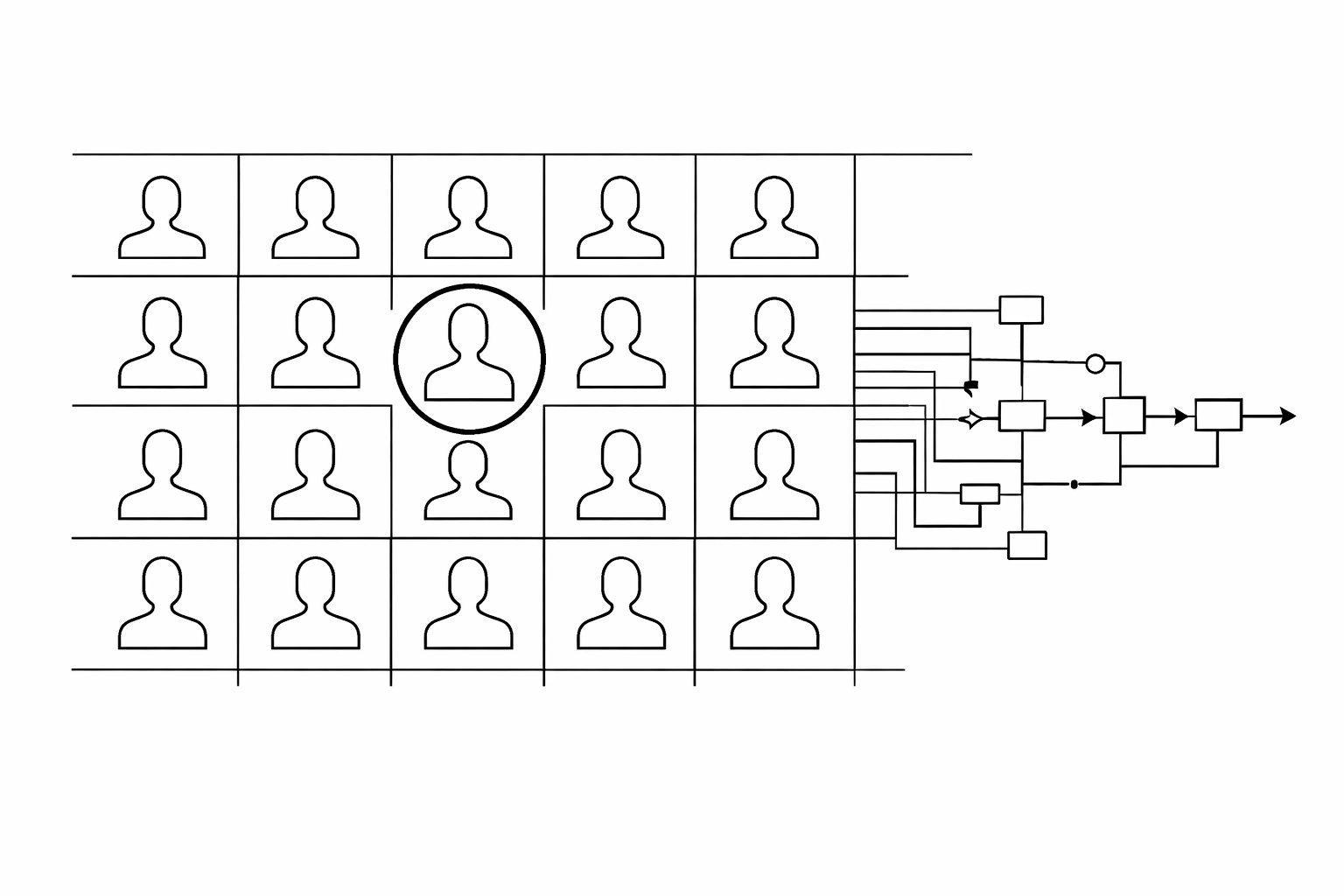
Customer capital is the strength, depth, and diversity of your relationships with those who buy from you. High customer capital exists when your clients are deeply integrated into your systems, when you have high retention rates, and: crucially: when no single customer accounts for more than 15% of your revenue.
The threat here is concentration risk. If one or two customers “own” your revenue, they essentially own your business.
The EOS Solution: The Marketing Strategy in the V/TO The V/TO forces a level of discipline that naturally builds Customer Capital. By defining your Target Market (The “List”) and your 3 Uniques, you are choosing to be “meaningfully specific” rather than “efficiently liberal.”
When you focus on a specific niche, you become indispensable to those customers. You build proprietary knowledge about their problems that competitors can’t easily replicate. This creates “stickiness.” By using the V/TO to align your entire team around these 3 Uniques, you ensure that the customer experience is consistent, regardless of who is handling the account. This consistency is what builds the brand equity that buyers crave.
4. Social Capital: The Culture Multiplier
Social capital is often the most misunderstood of the four. It is the “glue”: the company culture, the internal communication, and the shared belief system. It is how Human, Structural, and Customer capital interact.
A high-trust culture is a fast culture. As many leadership experts have noted, when trust goes up, speed goes up and costs go down. Conversely, a toxic or “siloed” culture acts as a tax on every transaction within the company.
The EOS Solution: Core Values and the Visionary/Integrator Dynamic Your Core Values, documented on the first page of your V/TO, are the foundation of your Social Capital. They define the “rules of the game.” When combined with a healthy Visionary/Integrator™ dynamic, you create a culture of accountability and transparency.
High Social Capital means your team is rowing in the same direction without constant friction. This cultural alignment is a massive intangible asset because it guarantees that the “Human Capital” you’ve built won’t jump ship the moment a transition occurs. It creates a stable environment that can withstand the turbulence of growth or sale.
The V/TO: Your Map to the “Master Plan”
If the 4 Intangible Capitals are the fuel for your company’s value, the V/TO is the engine. It synthesizes all four capitals into a single, two-page document that everyone in the company understands and follows.
- Human Capital is reflected in your Accountability Chart and your 1-Year Plan.
- Structural Capital is reinforced by your commitment to the “Core Processes” section.
- Customer Capital is driven by your Marketing Strategy and 3 Uniques.
- Social Capital is anchored in your Core Values and your Core Purpose (Your “Why”).
When you sit down for your Quarterly Pulsing session, you aren’t just checking off “Rocks.” You are incrementally increasing the value of your life’s work. You are moving from a business that “works because of you” to a business that “works for you.”
Why This Matters Now (Even if You Aren’t Selling)
The paradox of “Walking to Destiny” is that the best time to build a business that is ready to sell is years before you actually intend to leave. A business that is “ready for exit” is, by definition, a business that is highly profitable, easy to manage, and fun to lead.
Building these 4 Intangible Capitals through the EOS framework isn’t just about a future payday. It’s about the Real Value of Business Coaching: gaining the freedom to choose your next move. Whether you want to scale to the next level, transition to a Chairman role, or sell and move to the beach, these capitals provide the leverage you need.
Your Value Acceleration Checklist
To start unlocking this hidden wealth today, ask yourself these four questions based on your current EOS implementation:
- Human: Does my Accountability Chart show that I am the “owner” of too many seats? Who is being groomed to take over my current responsibilities?
- Structural: If my top three employees left tomorrow, would our “Way” of doing business leave with them, or is it documented in our Process Component?
- Customer: Looking at our V/TO, is our Target Market specific enough to make us “un-fireable” to our clients?
- Social: Are our Core Values just words on a wall, or are they the primary filter for how we hire, fire, and reward?
At Flagline Strategy, we help leaders in Central Oregon and beyond navigate these exact shifts. We don’t just want you to have a better business; we want you to have a more valuable life. By focusing on the 4 Intangible Capitals today, you are securing your destiny for tomorrow.
Ready to see how your current strategy stacks up? Explore our insights on Unleashing Growth Potential and start building a legacy that lasts.