· 6 min read
The Wooden-Sinek Playbook: How Legendary Leadership Principles Fuel EOS Success
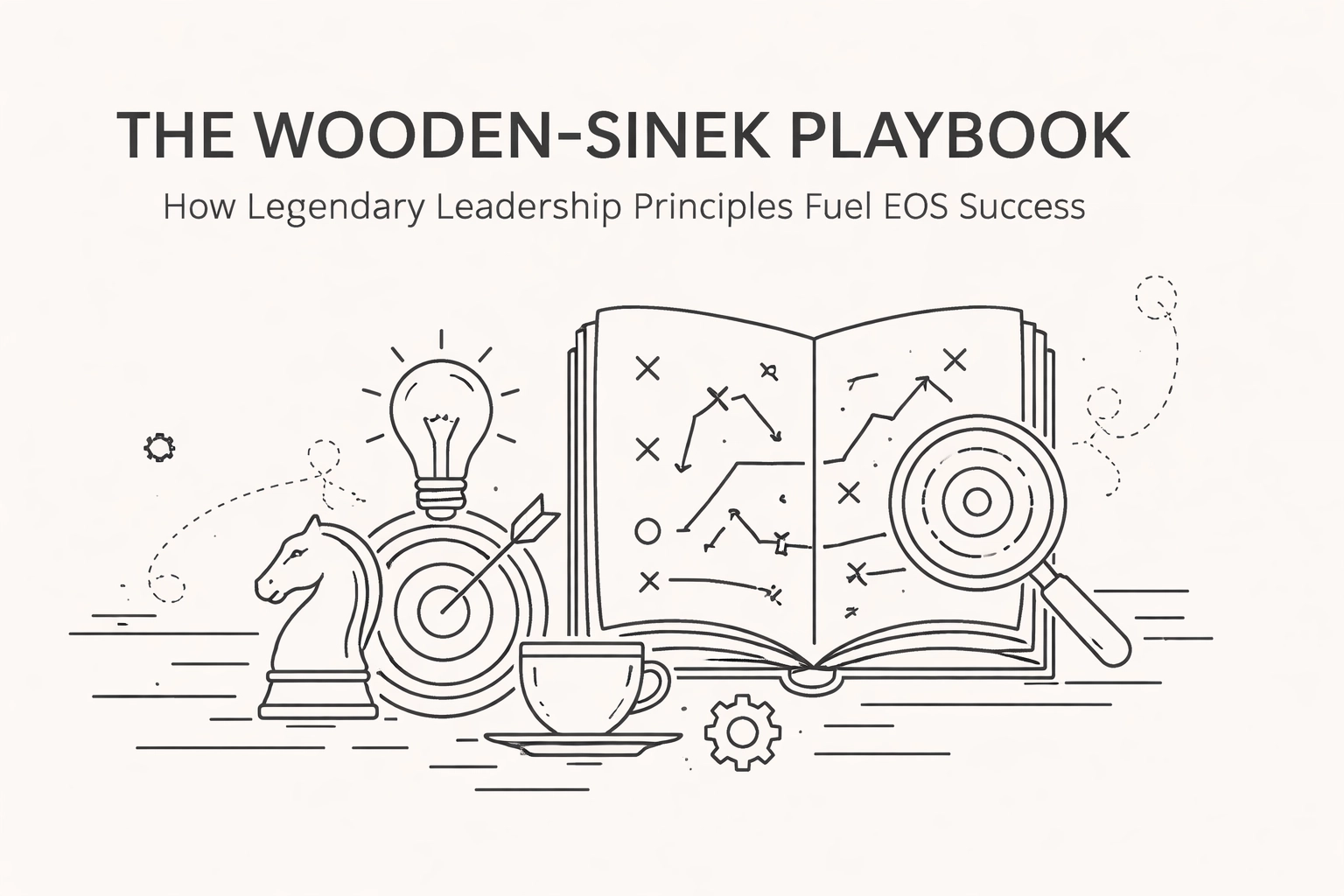
Two names dominate conversations about leadership excellence: John Wooden, the legendary UCLA basketball coach who won ten national championships in twelve years, and Simon Sinek, the modern voice of purpose-driven leadership. At first glance, a college basketball coach from the mid-20th century and a contemporary thought leader might seem like an unlikely pairing. But their philosophies share a profound truth: one that maps remarkably well onto the Entrepreneurial Operating System (EOS).
Success isn’t about chasing wins. It’s about building the character, clarity, and consistency that make winning inevitable.
For business owners running on EOS, this insight isn’t just inspirational: it’s operational. The three pillars of EOS: Vision, Traction, and Healthy: find deep roots in the combined wisdom of Wooden and Sinek. Understanding these connections transforms EOS from a management system into a leadership philosophy.
Start With Why: Sinek’s Golden Circle Meets EOS Vision
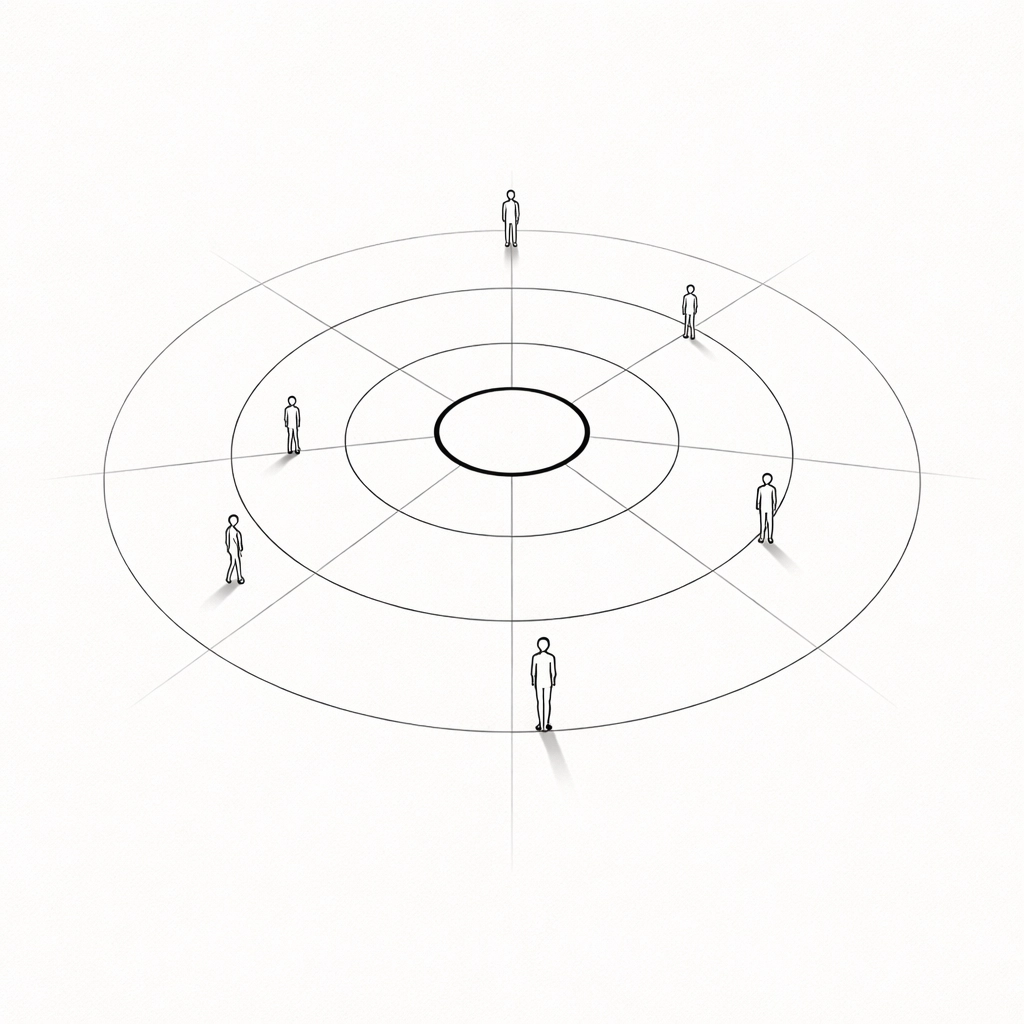
Simon Sinek’s breakthrough concept, the Golden Circle, argues that exceptional organizations don’t start with what they do or how they do it. They start with why. This innermost circle: the purpose, cause, or belief that drives everything: is what separates companies that inspire from companies that simply transact.
The parallel to EOS Vision is unmistakable.
The Vision/Traction Organizer (V/TO) begins with precisely this question: Why does your organization exist? What’s your core purpose beyond making money? EOS demands that leadership teams articulate their core values, core focus, and 10-year target before they ever touch quarterly rocks or weekly metrics.
This isn’t accidental. Gino Wickman, the architect of EOS, understood what Sinek later popularized: people don’t buy what you do: they buy why you do it. The same holds true for employees. A clearly articulated “why” creates alignment that no amount of process can manufacture.
Consider the difference between two companies:
- Company A tells employees: “We provide accounting services to small businesses.”
- Company B tells employees: “We exist to give entrepreneurs their weekends back by eliminating financial chaos.”
Both might offer identical services. But Company B has a vision that recruits believers, not just workers. Their “why” becomes a filter for every decision: hiring, marketing, product development, customer service.
The V/TO isn’t just a strategic planning document. It’s the organizational translation of Sinek’s Golden Circle into something actionable. When leadership teams struggle to complete their V/TO, the root cause is almost always the same: they haven’t done the hard work of defining their “why.”
The Pyramid of Success: Wooden’s Process Obsession Meets EOS Traction
John Wooden famously never talked about winning. In fact, he rarely mentioned the scoreboard at all. His focus was relentlessly on the process: on the daily habits, character traits, and disciplines that made excellence possible. His Pyramid of Success didn’t have “championships” at the top. It had “competitive greatness”: the ability to be at your best when your best is needed.
The journey to that peak required mastering foundational blocks: industriousness, enthusiasm, self-control, alertness, initiative, intentness. These weren’t basketball skills. They were character qualities that created the conditions for basketball excellence to emerge.
This is precisely the philosophy embedded in EOS Traction.
Traction is where vision meets reality. It’s the system of rocks, scorecards, meeting pulses, and accountability structures that translate aspirations into execution. But here’s what many business owners miss: Traction isn’t about achieving goals. It’s about building the organizational muscle that makes achieving goals routine.
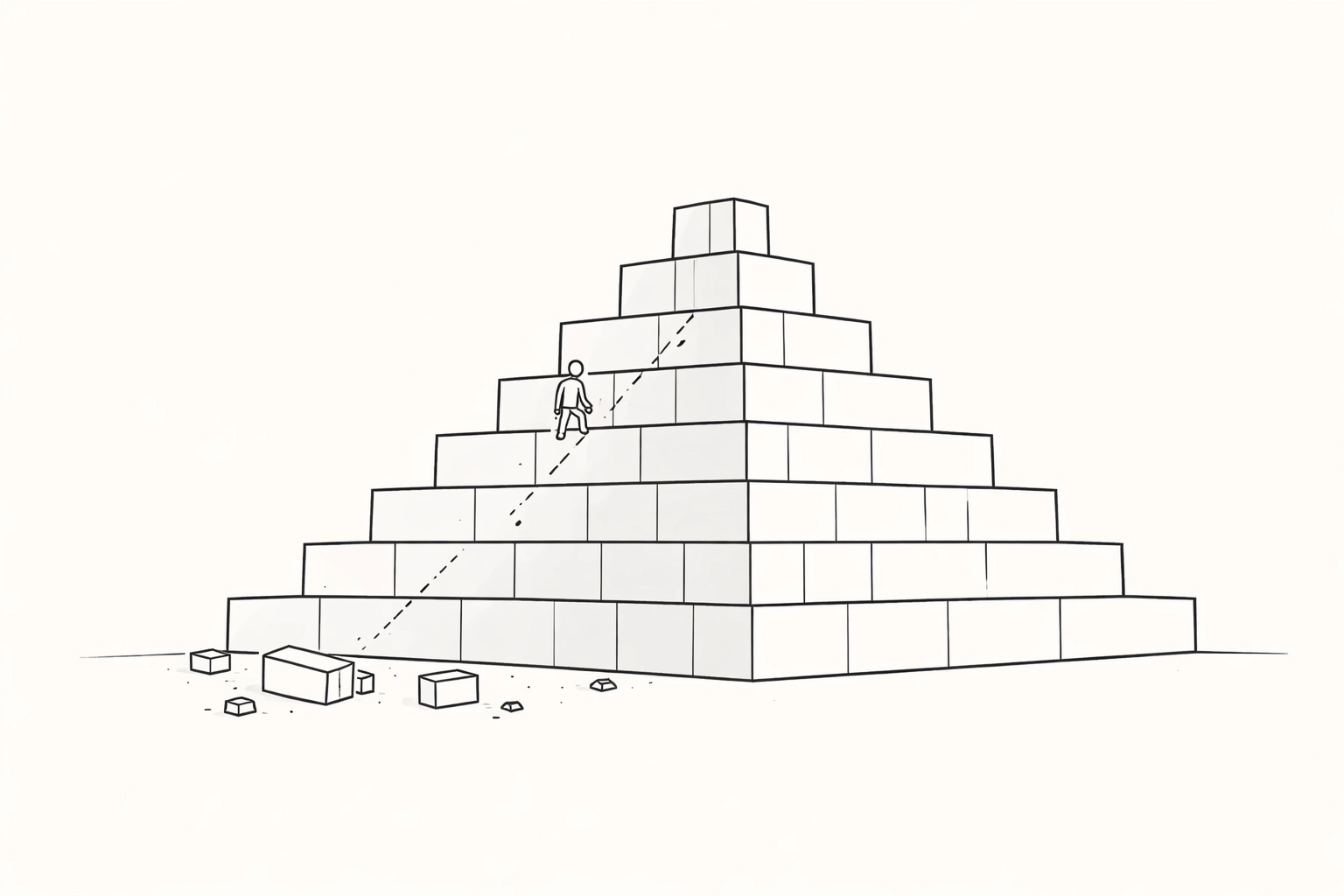
Wooden’s four rules of learning: explanation, demonstration, imitation, repetition: mirror the EOS implementation journey perfectly:
- Explanation: Leadership teams learn the EOS tools and their purpose
- Demonstration: They see the tools modeled in session
- Imitation: They practice running Level 10 meetings, setting rocks, and using scorecards
- Repetition: They execute weekly, quarterly, annually until the system becomes second nature
The magic happens in the repetition. Wooden’s teams weren’t great because they knew more plays. They were great because they executed fundamentals with unconscious competence. Similarly, companies running on EOS don’t succeed because they have better strategies. They succeed because they’ve built the discipline to execute any strategy consistently.
Success, as Wooden defined it, is “peace of mind which is a direct result of self-satisfaction in knowing you made the effort to become the best of which you are capable.” Replace “self” with “organization,” and you have the EOS philosophy in a sentence.
Leaders Eat Last: Building a Healthy Leadership Team
Simon Sinek’s book Leaders Eat Last draws its title from a Marine Corps tradition: officers eat after their troops. The principle is simple but profound: leadership is about sacrifice, not privilege. When leaders prioritize the safety and wellbeing of their teams, those teams respond with trust, loyalty, and extraordinary performance.
This principle sits at the heart of what EOS calls a Healthy leadership team.
Patrick Lencioni’s work on team dysfunction heavily influences the EOS definition of “healthy.” A healthy leadership team demonstrates vulnerability-based trust, engages in productive conflict, commits to decisions, holds each other accountable, and focuses on collective results. None of this happens when leaders prioritize self-preservation over team welfare.
The “leaders eat last” mentality creates what Sinek calls a “Circle of Safety”: an environment where team members feel protected from internal politics and can focus their energy on external challenges. Inside this circle, people take risks, share problems early, and collaborate without fear.
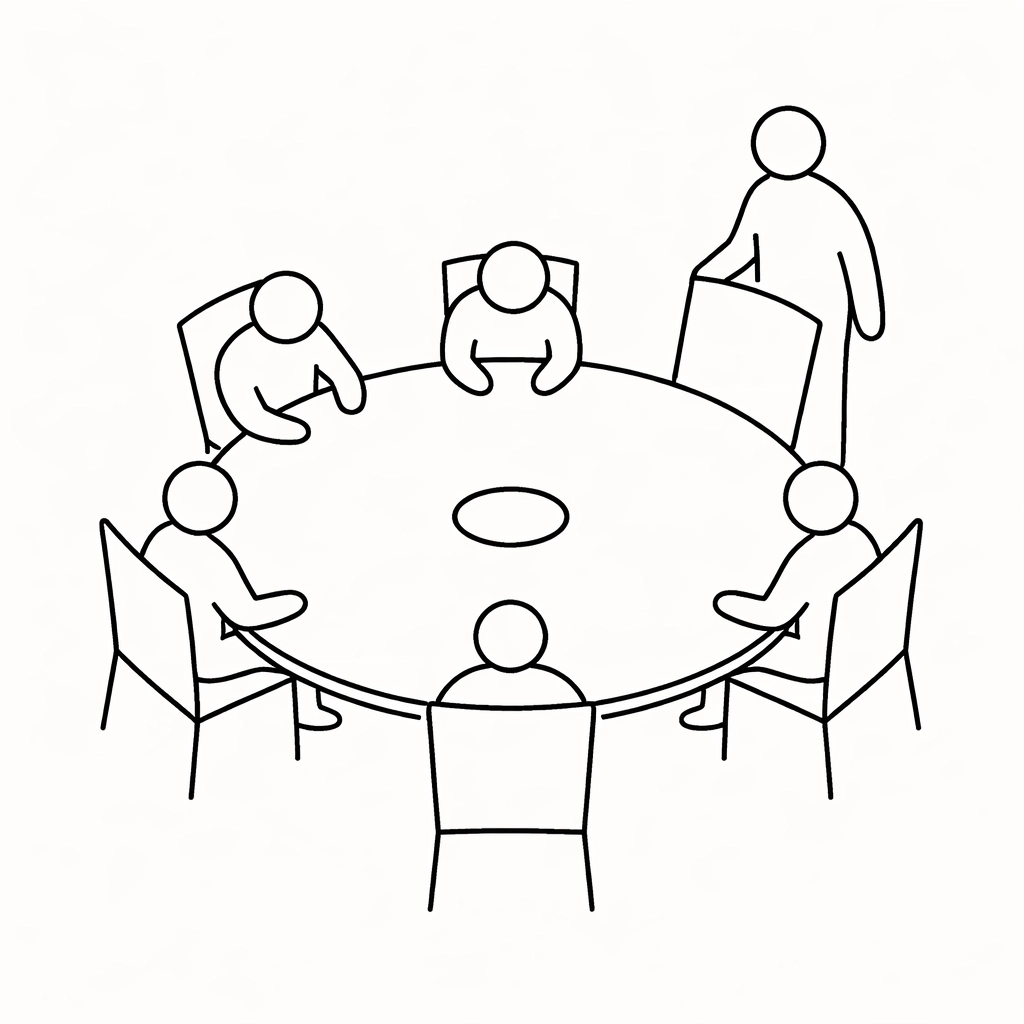
Consider the opposite: leadership teams where members compete for credit, hide mistakes, and optimize for individual advancement. These teams might look functional on the surface. They might even hit their numbers in the short term. But they’re fundamentally unhealthy: and that dysfunction cascades through the entire organization.
The research on leadership burnout confirms this: leaders operating in psychologically unsafe environments burn out faster and perform worse. The “healthy” component of EOS isn’t soft or optional. It’s the foundation that makes Vision and Traction sustainable.
Wooden understood this intuitively. He built loyalty through genuine care for his players as people, not just performers. His teams ran through walls for him: not because he demanded it, but because he had demonstrated through countless small actions that he would do the same for them.
The Compound Effect: Success as Byproduct
Here’s the counterintuitive truth that both Wooden and Sinek understood: the more directly you pursue success, the more elusive it becomes.
Wooden’s teams won championships by ignoring championships. They focused on preparation, on being better today than yesterday, on executing fundamentals with precision. The wins followed.
Sinek’s most successful case studies: Apple, Southwest Airlines, the Marines: didn’t start by asking “how do we win?” They started by asking “why do we exist?” Market dominance followed.
EOS operates on the same principle. Companies don’t implement EOS to grow 20%. They implement EOS to build organizational clarity, discipline, and health. Growth follows.
This is the compound effect in action. Small, consistent improvements in process create capabilities that compound over time. A 1% improvement in meeting effectiveness, multiplied across 52 weeks, transforms organizational culture. Quarterly rocks, executed consistently for three years, produce results that annual planning never could.
The business owners who struggle with EOS are often those who treat it as a growth hack rather than a discipline. They want the outputs without committing to the inputs. Wooden would have sent them back to practice fundamentals. Sinek would have told them they’re starting with “what” instead of “why.”
Bringing It All Together
The Wooden-Sinek playbook isn’t complicated:
- Start with why: Articulate a purpose that transcends profit
- Build the pyramid: Master the fundamentals through relentless repetition
- Eat last: Create psychological safety through servant leadership
- Trust the process: Let success emerge as a byproduct of doing the right things
EOS provides the structure to operationalize these timeless principles. Vision captures your “why.” Traction builds your pyramid. Healthy ensures your leaders eat last.
The companies that thrive on EOS aren’t the ones gaming the system for quick wins. They’re the ones who’ve internalized what Wooden and Sinek spent careers teaching: excellence is never an accident. It’s the result of high intention, sincere effort, intelligent direction, and skillful execution: repeated until it becomes who you are.
Ready to build a leadership team that embodies these principles?Email Ryan at Flagline Strategy to explore how EOS coaching can help your organization develop the vision, traction, and health that sustainable success requires.