
The Real Value of Business Coaching

The question lingers in the back of every entrepreneur's mind at some point: Do I actually need a business coach, or is this just another expense dressed up as an investment?
It's a fair question, and one that deserves a direct answer rather than a sales pitch.
The truth is nuanced. Not every business owner needs a coach. But a significant number are struggling alone when they don't have to be, white-knuckling their way through challenges that have well-documented solutions. The distinction matters: coaching isn't about weakness or inadequacy. It's about recognizing that the skills that got you here won't necessarily get you where you want to go.
The Signals That Shouldn't Be Ignored
Before diving into what coaching offers, it's worth examining the landscape of modern business leadership, because the data paints a sobering picture.
42% of business owners have experienced burnout in the past month. Not this year. This month. Meanwhile, 57% report being somewhat or extremely stressed, and more than half of small businesses find it difficult to fill open positions. These aren't isolated incidents, they're systemic indicators of leaders stretched too thin, operating without adequate support structures.
Jim Collins, in his research on great companies, consistently emphasized that the right people in the right seats make all the difference. But what happens when you, the leader, are the one in the wrong seat? Or more accurately, in every seat simultaneously?

The symptoms manifest in predictable ways:
Decision fatigue: Every choice feels heavy, and second-guessing becomes the norm
Growth plateaus: Revenue flatlines despite working harder than ever
Team dysfunction: The same problems resurface regardless of how many times you address them
Vision drift: The clarity you had when starting feels like a distant memory
Isolation: Your family doesn't understand your choices, your employees can't be fully candid, and you're navigating alone
Patrick Lencioni writes extensively about organizational health, arguing that it's the single greatest competitive advantage a company can achieve. Yet organizational health requires a leader who isn't drowning, and drowning is precisely what many entrepreneurs are doing while maintaining the appearance of control.
What a Business Coach Actually Does: Separating Myth from Function
The term "business coach" carries baggage. For some, it conjures images of motivational speakers with empty platitudes. For others, it sounds like an expensive therapist who happens to know accounting terms.
Neither characterization captures the reality of effective coaching.
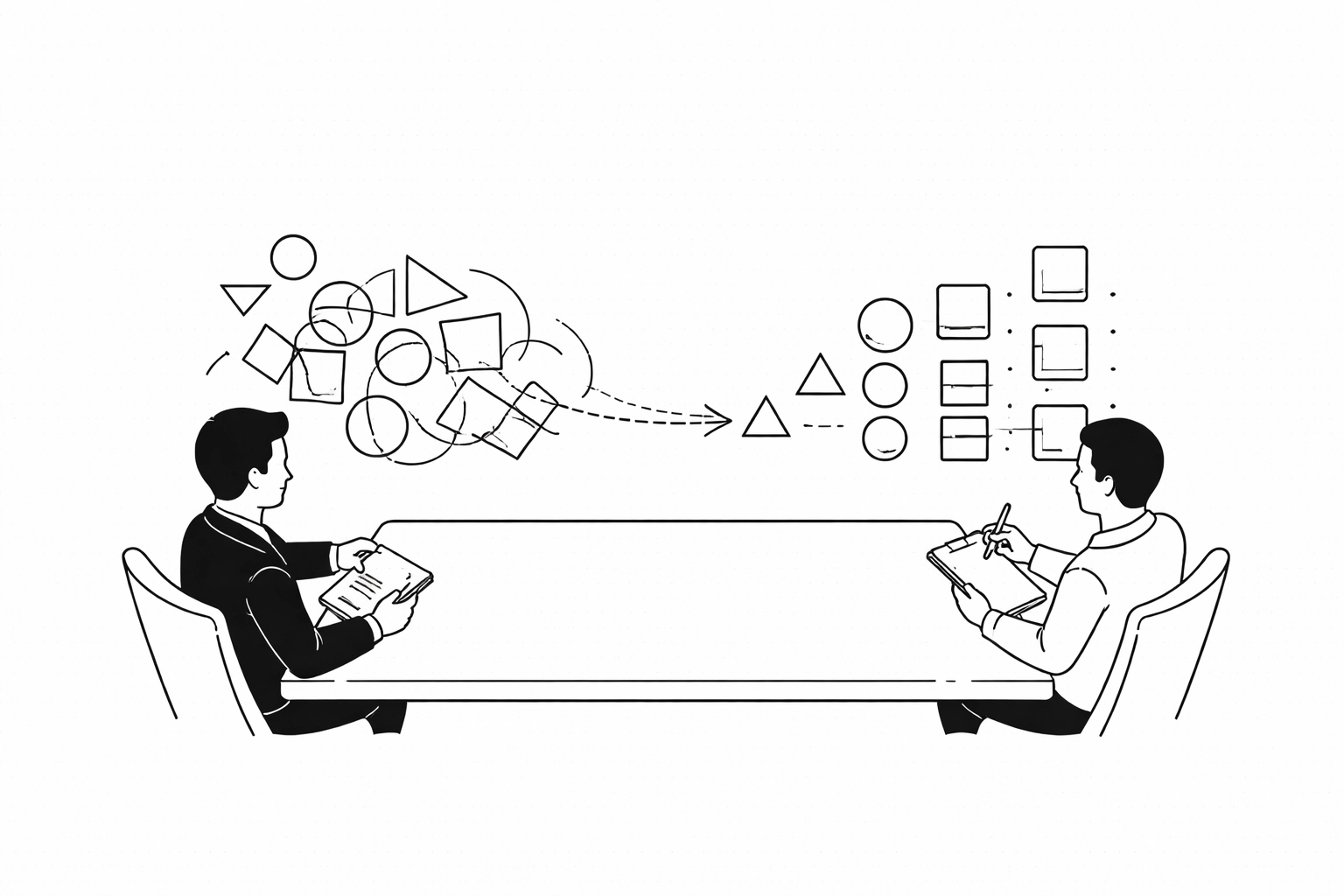
A skilled business coach functions as a strategic partner and accountability mechanism, someone who clarifies thinking, sharpens problem-solving skills, and accelerates decision-making. The relationship isn't about being told what to do. It's about having a confidential sounding board who has navigated similar terrain and can help you move from reacting to daily fires to proactively building your company's future.
The coaching relationship addresses several critical functions:
Financial clarity: Analyzing cash flow, identifying expense reduction opportunities, and uncovering new revenue streams
Strategic focus: Cutting through noise to identify the 20% of activities driving 80% of results
Leadership development: Building the skills to manage teams rather than tasks
Systems implementation: Creating repeatable processes that don't depend on heroic individual effort
External perspective: Seeing blind spots that are invisible from inside the organization
Simon Sinek often speaks about the importance of finding your "why", but what happens when the daily grind has buried that why under layers of operational chaos? A coach helps excavate it.
The Numbers Don't Lie: Measurable Coaching Outcomes
Skepticism about coaching often stems from a perception that results are intangible, feelings rather than figures. The research tells a different story.
Studies on business coaching reveal quantifiable improvements across key metrics:
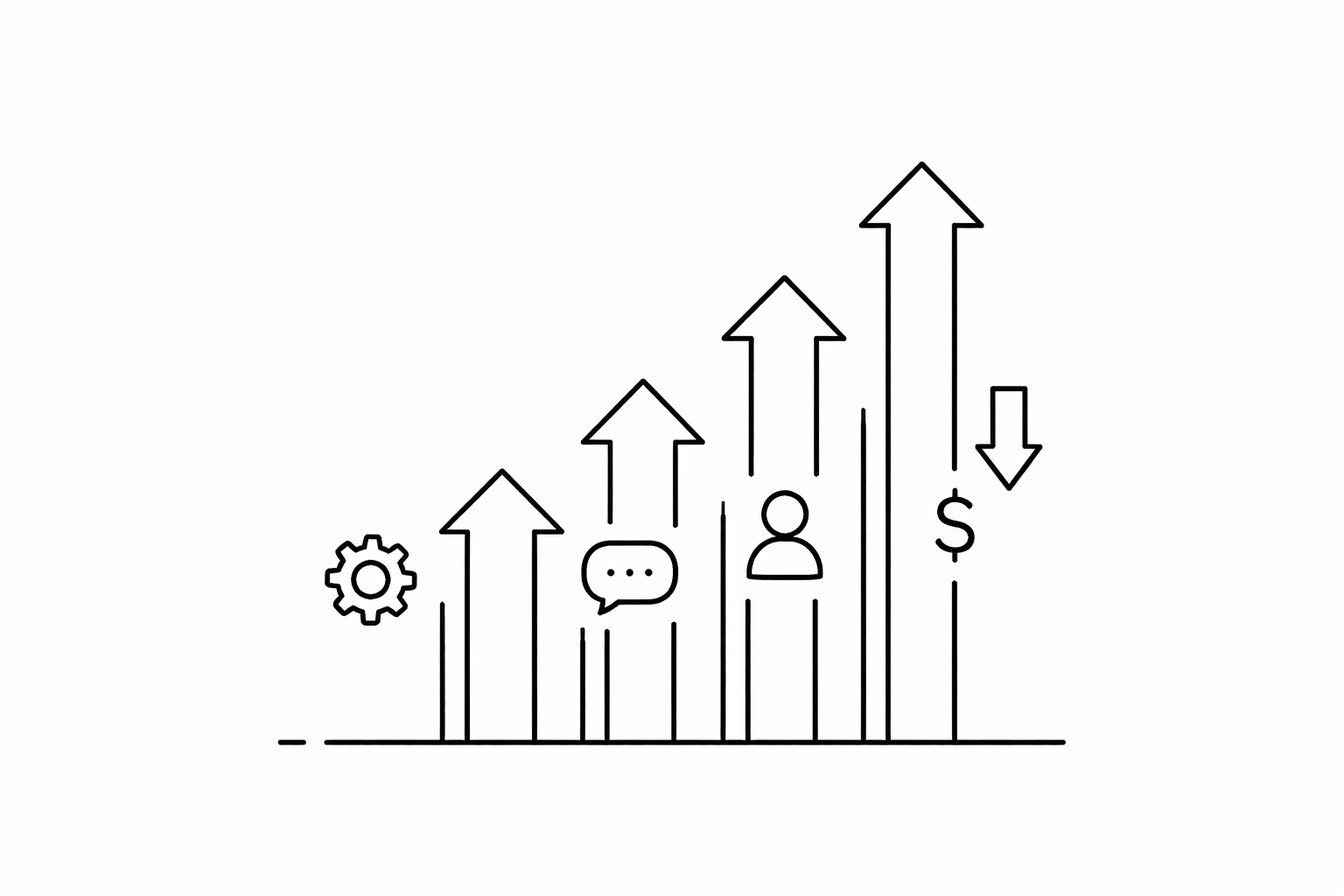
Metric | Improvement |
Productivity | 53% increase |
Customer Service | 39% improvement |
Senior Staff Retention | 32% increase |
Operating Costs | 23% reduction |
These aren't marginal gains. A 53% productivity increase fundamentally changes a business's trajectory. A 32% improvement in retaining senior staff, arguably your most expensive and difficult-to-replace asset, has cascading effects on institutional knowledge, team morale, and hiring costs.
The ROI calculation becomes clearer when framed this way: coaching isn't an expense to be justified. It's a lever that amplifies everything else you're doing.
When You Don't Need a Coach: Honest Assessment
Intellectual honesty demands acknowledging that coaching isn't universally necessary.
You likely don't need a business coach if:
You already have strong operational systems in place and documented
You have access to experienced mentors who provide regular, candid feedback
Your business is growing at a pace you're comfortable with
Your leadership team is aligned and executing effectively
You have clear visibility into your financials and strategic direction
If these statements ring true, a coach may be superfluous, or at minimum, a lower priority than other investments.
But here's the catch: most leaders who believe these statements apply to them are operating on incomplete information. The blind spots that coaching addresses are, by definition, invisible to the person who has them. It's worth sitting with genuine discomfort when honestly evaluating whether your "systems" are actually systems, or just habits you've grown accustomed to.
The EOS Framework: A System That Scales
Among the various methodologies available to business coaches, the Entrepreneurial Operating System (EOS) has emerged as a particularly powerful framework for growth-oriented companies.
EOS provides a complete set of simple, practical tools that address the six key components of any business: Vision, People, Data, Issues, Process, and Traction. Rather than relying on abstract principles, EOS gives leadership teams concrete practices, like the Level 10 Meeting structure, that create rhythm, accountability, and forward momentum.
The framework's power lies in its simplicity. As Gino Wickman, EOS's creator, emphasizes: complexity is the enemy of execution. Most struggling businesses don't need more ideas. They need better implementation of fewer priorities.
An experienced EOS Implementer doesn't just teach the system, they guide your leadership team through adopting it, troubleshooting the inevitable resistance, and embedding it into your company's DNA until it becomes how you operate rather than something you're trying to remember to do.
The Flagline Approach: What Sets This Apart
At Flagline Strategy, the coaching philosophy rests on three pillars that differentiate it from generalist approaches:
20+ Years of Battle-Tested Experience: Theory matters less than pattern recognition. Two decades of working with entrepreneurs across industries creates an intuition for what works, what fails, and what's likely to happen next, even when clients can't see it coming.
EOS Implementation Expertise: Rather than offering vague strategic advice, the focus is on implementing a proven operating system that thousands of companies have used to achieve traction. This isn't about motivational speeches. It's about building the infrastructure for sustainable growth.
Guaranteed Results: The commitment isn't just to show up, it's to deliver measurable outcomes. That guarantee creates alignment: both parties succeed or neither does.
The entrepreneurs and leadership teams who benefit most from this approach share common characteristics. They're not looking for someone to validate their existing choices. They want a partner who will challenge them, hold them accountable, and help them build something that doesn't require their constant presence to survive.
The Decision Framework: Moving Forward with Clarity
If you've read this far, the question isn't really whether business coaching works. The research is clear. The question is whether it's right for you, right now.
Consider these diagnostic questions:
Are you working more hours but seeing diminishing returns?
Has your growth stalled despite efforts to break through?
Do you lack a leadership team that can execute without your direct involvement?
Is hiring, and keeping, great people a persistent challenge?
Have you lost clarity about where the business should go next?
If multiple answers are yes, the cost of not getting support likely exceeds the investment in coaching. The burnout statistics aren't just numbers: they represent real entrepreneurs who pushed too long without help, often until the damage became irreversible.
The path forward isn't about admitting defeat. It's about recognizing that sustainable success requires leverage: and a skilled coach provides exactly that.
Ready to explore what's possible?Email Ryan and find out whether coaching is the right next step for your business.



Comments