
The Habit Loop Your Leadership Team Cannot Break: Why You Keep Firefighting (And What to Replace It With)

You know the pattern. An urgent email lands. A customer escalation surfaces. A vendor misses a deadline. And before you've had your second coffee, you're already wrist-deep in the problem: solving, directing, fixing.
By 3 PM, you've put out six fires. By Friday, you can't remember what you were supposed to accomplish this week. The Quarterly Plan you set in January? Gathering dust. The strategic project you swore would get your attention? Still on the back burner.
This isn't a time management problem. It's not even a delegation problem. According to Charles Duhigg's research in The Power of Habit, this is a habit loop: and your leadership team is trapped inside it.
The Habit Loop: Cue, Routine, Reward
Duhigg's framework is deceptively simple. Every habit, whether personal or organizational, operates in three stages:
The Cue: A trigger that kicks off the behavior. It could be a time of day, an emotional state, a specific location, or the presence of certain people.
The Routine: The behavior itself: the action you take in response to the cue.
The Reward: The payoff your brain craves, which reinforces the loop and ensures the behavior repeats.
Most leaders think firefighting is a necessary evil, a symptom of running a complex business. But Duhigg would argue it's something more insidious: it's a deeply entrenched organizational habit that your leadership team unconsciously perpetuates because the reward is so intoxicating.
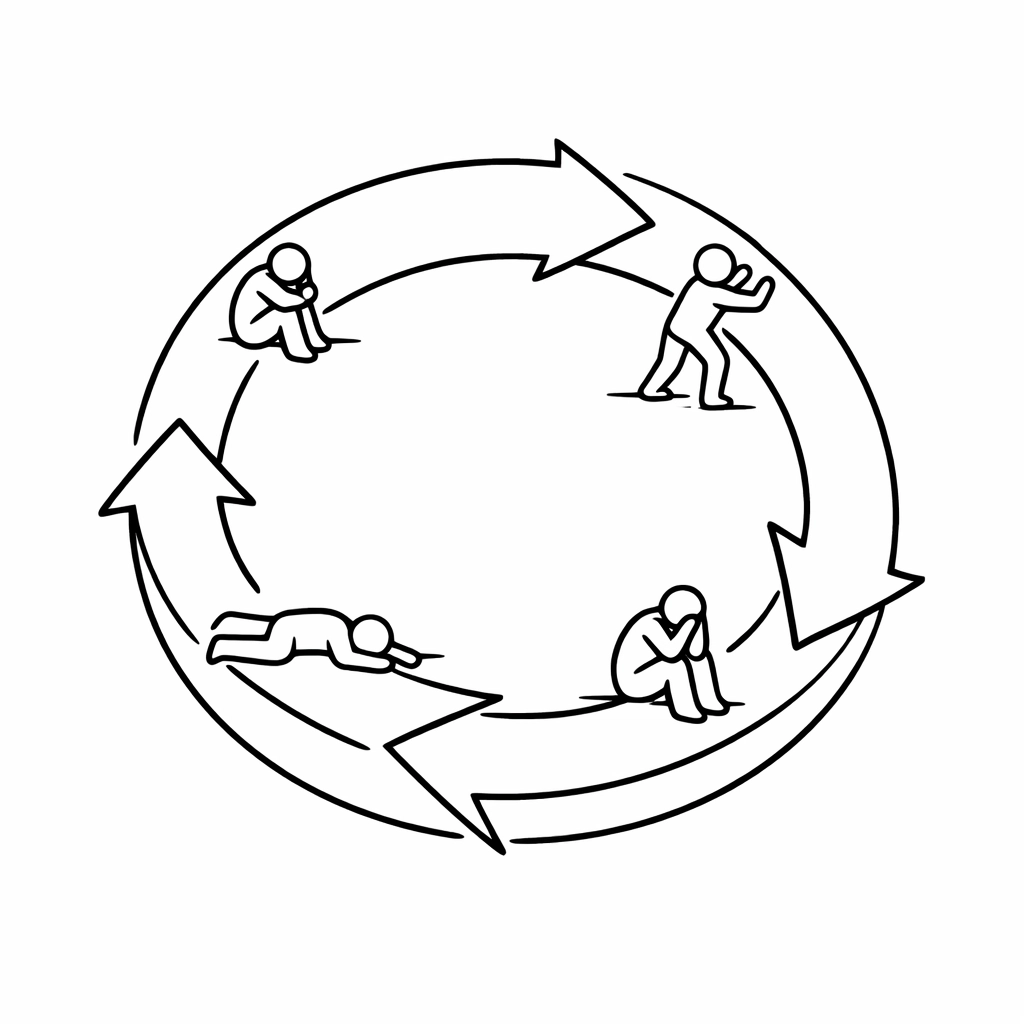
Firefighting as a Habit Loop: How It Works
Let's map the firefighting cycle onto Duhigg's framework:
Cue: A problem surfaces: an angry client, a broken process, a team conflict, a missed deadline. Chaos emerges, and someone sounds the alarm.
Routine: The leader (often the CEO, founder, or most senior operator) drops everything, jumps into the fray, and personally resolves the issue. They make the call, smooth over the relationship, fix the error, or redirect the team.
Reward: The problem is solved. The tension dissipates. The leader feels a surge of competence, control, and necessity. I'm needed. I'm good at this. I saved the day.
That last part: the dopamine hit of being the hero: is the fuel that keeps the loop running. Your brain registers resolution as success, and success feels good. So the next time a cue appears (and it will, daily), your default routine is already hardwired: jump in and solve it.
The problem isn't that you're solving issues. The problem is that you've trained your organization to produce problems that require your intervention. You've become the reward.
Why This Loop Is So Hard to Break
Firefighting feels productive. It feels urgent. It feels like leadership.
But here's what's actually happening beneath the surface:
You're reinforcing learned helplessness. Every time you swoop in to solve a problem, you signal to your team that they don't need to develop problem-solving capacity. They learn to escalate instead of resolve. Over time, your team becomes passive, reactive, and dependent on you for answers.
You're starving strategic work. Urgent always defeats important. If your calendar is clogged with firefighting, there's no room for the work that actually grows the business: developing leaders, refining systems, identifying new market opportunities, building culture.
You're creating a bottleneck. The business can't scale beyond your personal capacity to intervene. Growth stalls. Opportunities slip through the cracks. You become the constraint.
You're burning out. The reward loop that once felt energizing starts to feel suffocating. The hero routine that gave you purpose now feels like a trap. But you can't stop: because if you stop, who will solve the problems?
The research bears this out. Studies on reactive leadership cultures: particularly in high-stress environments like emergency services: show that organizations stuck in firefighting mode suffer from siloed operations, fragmented decision-making, and an inability to pursue long-term strategic goals. They survive, but they don't thrive.
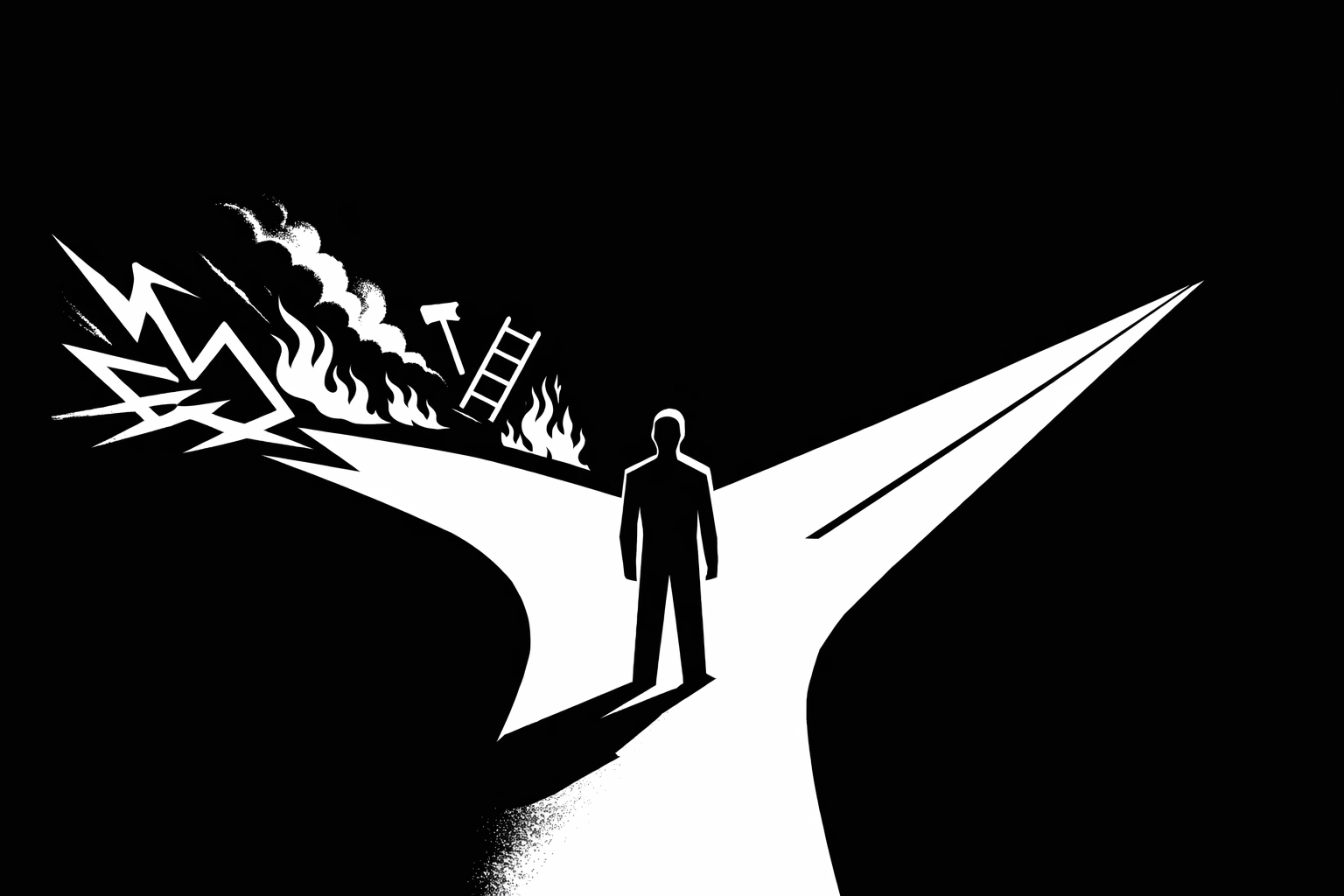
The Solution: Swap the Routine, Keep the Reward
Here's the insight from Duhigg that changes everything: You don't have to eliminate the habit loop. You just have to replace the routine.
The cue (problems will always surface) and the reward (the feeling of resolution and progress) can stay the same. What needs to change is the middle part: the action you take in response to the cue.
Instead of: Cue → Jump in and solve it yourself → Feel like the hero
Try: Cue → Empower the system or person closest to the problem → Feel progress through delegation and capability-building
This isn't semantics. It's a fundamental rewiring of how your leadership team responds to problems.
What the New Routine Looks Like
Breaking the firefighting loop requires intentional pattern replacement. Here's what that looks like in practice:
Step 1: Recognize the cue. When a problem surfaces, pause. Literally stop before you jump. Ask yourself: Is this actually my fire to fight, or am I just conditioned to grab the hose?
Step 2: Redirect the problem. Instead of solving it, send it back to the person or team closest to the issue. Ask: What do you think we should do here? or What options have you considered? Coach them through the decision rather than making it for them.
Step 3: Redefine the reward. The dopamine hit you used to get from solving the problem? Replace it with the satisfaction of watching someone else solve it. Track the number of times you successfully resist the urge to intervene. Celebrate moments when your team resolves issues without you.
Step 4: Build systems that prevent recurring fires. Every time a fire gets put out, conduct a brief post-mortem: Why did this happen? What system or clarity was missing? How do we make sure this doesn't happen again? Document the answer. Build it into a process.
Step 5: Protect strategic time ruthlessly. Block time on your calendar for the work that only you can do: setting vision, developing leaders, refining strategy. Treat that time as sacred. If a fire emerges during that block, apply Steps 1–2 before breaking focus.
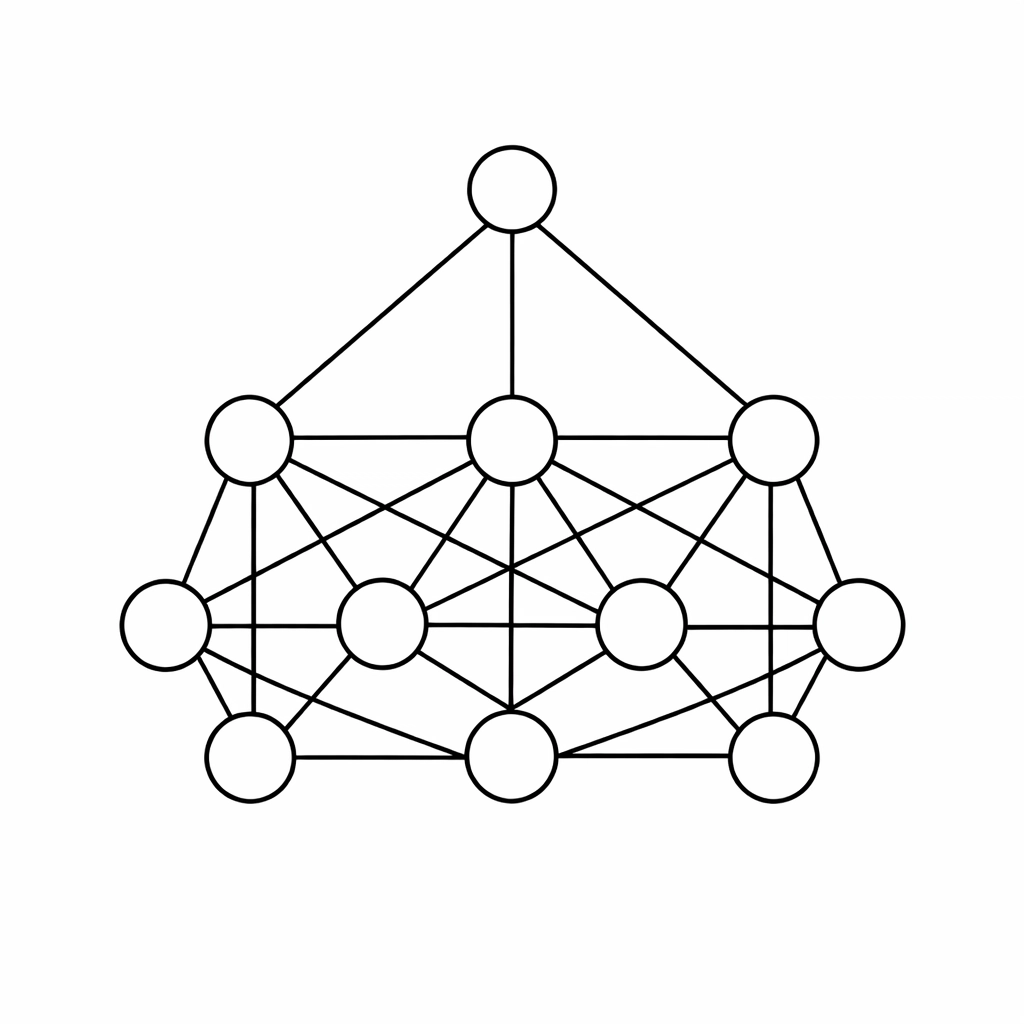
The Long Game: Building a Business That Runs Itself
The ultimate goal isn't just to stop firefighting. It's to build an organization that doesn't need you to function.
This is the paradox of great leadership: the more essential you make yourself, the weaker your business becomes. The more replaceable you make yourself, the stronger it grows.
Duhigg's habit research shows that sustainable behavior change happens when the new routine becomes automatic: when the replacement behavior is repeated enough times that it becomes the brain's default response. For most leadership teams, this takes 60–90 days of conscious, disciplined repetition.
But the payoff is transformative. Leaders who successfully break the firefighting loop report:
More discretionary time to focus on growth, innovation, and culture
Higher team accountability as people step into ownership and problem-solving
Faster decision-making because bottlenecks disappear
Improved retention as employees feel trusted and capable
Scalable operations that no longer depend on the founder's constant presence
This is what it means to move from operator to CEO. From bottleneck to architect. From hero to leader.
What's at Stake
If you don't break this loop, here's what happens:
Your best people leave: because capable, ambitious employees don't want to work in environments where they're not trusted to solve problems.
Your business plateaus: because growth requires strategic focus, and you don't have any bandwidth left for strategy.
You burn out: because the reward that once felt fulfilling now feels like a burden you can't escape.
The habit loop that made you successful in year one will suffocate you in year ten. The skills that got you here won't get you there.
The Next Fire
The next fire is already smoldering. Maybe it's in your inbox right now. Maybe it'll surface in tomorrow's team meeting.
When it does, you'll have a choice: run the old routine, or try the new one.
Grab the hose yourself, or hand it to someone else.
Be the hero again, or build a team that doesn't need one.
The cue will always come. The only question is: what happens next?


Comments