· 7 min read
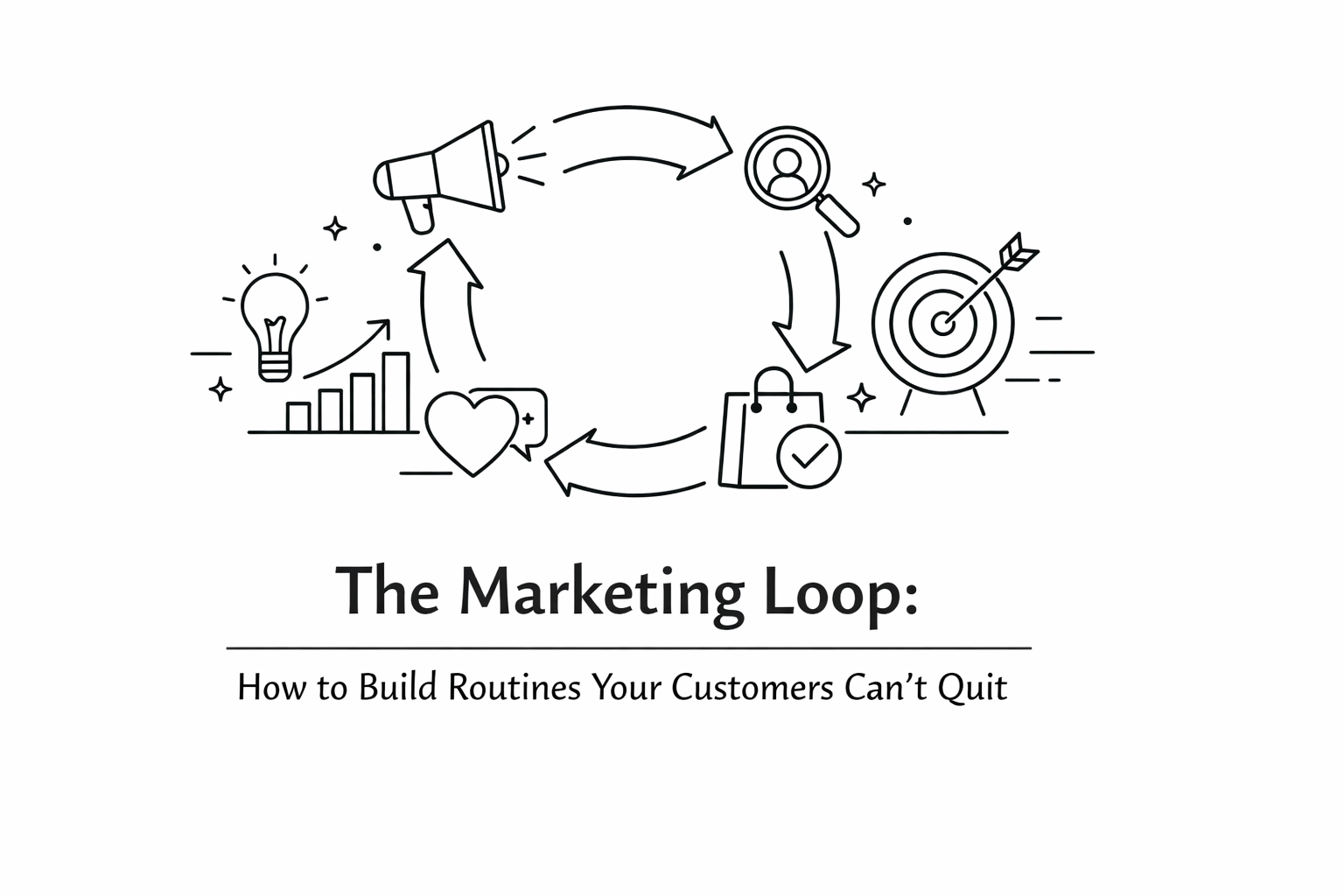
The Marketing Loop: How to Build Routines Your Customers Cannot Quit
Your marketing isn’t failing because your messaging is weak. It’s failing because it doesn’t create a habit.
Charles Duhigg’s The Power of Habit reveals a fundamental truth that most marketers ignore: behavior change: whether it’s brushing teeth or choosing your brand over a competitor: doesn’t happen through awareness alone. It happens through the construction of a neurological loop that becomes automatic. The companies that dominate their markets aren’t just selling products. They’re engineering routines their customers perform without conscious thought.
The framework is deceptively simple: Cue, Routine, Reward. But the execution: particularly in marketing: requires understanding what truly triggers behavior, what makes the behavior satisfying, and most critically, how to manufacture the craving that transforms casual users into habitual customers.
The Pepsodent Breakthrough: Manufacturing a Cue
In 1900, hardly anyone brushed their teeth. A decade later, toothbrushing had become a daily American ritual. The catalyst wasn’t dental education or health campaigns: it was Claude Hopkins’ marketing campaign for Pepsodent toothpaste, and it succeeded because Hopkins understood something about habit formation that his competitors missed.
Hopkins didn’t lead with cavity prevention or health benefits. He identified a cue that was universal, frequent, and impossible to ignore: the film on your teeth. “Just run your tongue across your teeth,” the ads instructed. “You’ll feel a film: that’s what makes your teeth look ‘off color’ and invites decay.”
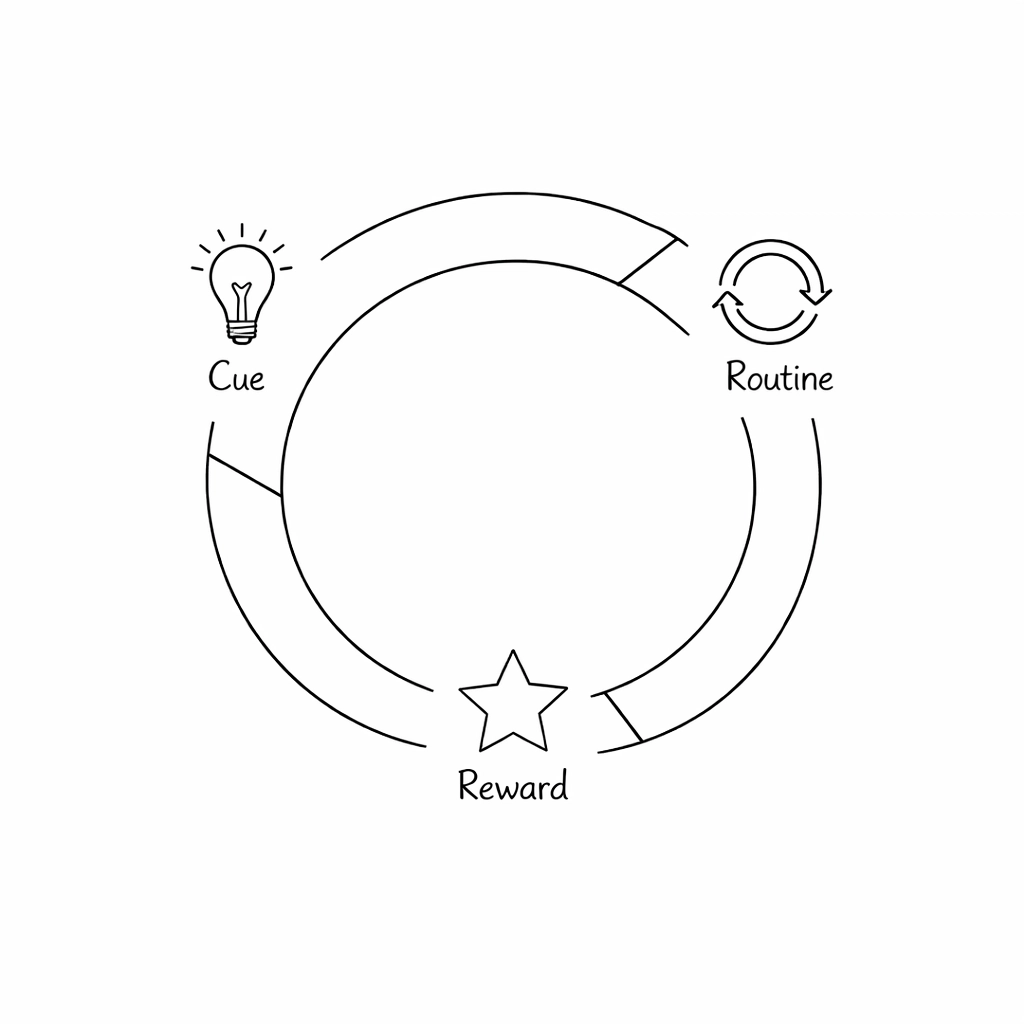
The genius wasn’t that the film was harmful (it largely wasn’t). The genius was that Hopkins made people notice it constantly. The cue was tactile, immediate, and once you were aware of it, unavoidable. Every time someone ran their tongue across their teeth: which happens dozens of times daily: the cue triggered the routine: brush with Pepsodent. The reward? That tingling, fresh sensation from the mint and citric acid Hopkins added to the formula.
Within ten years, more than half of Americans had adopted the toothbrushing habit. Pepsodent became one of the best-known products in the world. The behavior wasn’t rational; it was automatic.
The Three Components of Marketing Habituation
The Cue: Make It Obvious and Unavoidable
A cue must be frequent enough to create repetition and specific enough to trigger the same behavior consistently. Pepsodent’s cue: the film on your teeth: occurred naturally throughout the day. Febreze’s initial failure demonstrates what happens when the cue is wrong.
Procter & Gamble developed Febreze to eliminate odors, marketing it to people with chronic smell problems: pet owners, smokers, people with musty homes. Sales bombed. The issue? People with chronic odor problems become nose-blind to them. The cue: noticing a bad smell: didn’t exist for the very audience most likely to need the product.
The turnaround came when P&G repositioned Febreze not as odor elimination but as the final touch in a cleaning routine. The new cue: completing a cleaning task. After making the bed, spray Febreze. After vacuuming, spray Febreze. The cue became the completion of an existing habit, making it frequent, predictable, and tied to a moment of accomplishment.
Your marketing must identify or create cues in your customers’ existing routines:
- Time-based cues: Morning coffee, lunch breaks, end-of-workday transitions
- Location-based cues: Entering the office, arriving home, passing a specific landmark
- Emotional cues: Stress, boredom, celebration, frustration
- Preceding action cues: Finishing another habit, completing a task, receiving a notification
The strongest cues are environmental and automatic: they don’t require customers to remember your brand. The environment itself triggers the thought.
The Routine: Make It Simple and Satisfying
The routine is the behavior you want customers to repeat: opening your app, visiting your website, ordering your product, choosing your service. The critical principle: reduce friction to near zero.
Duhigg’s research shows that habits form fastest when the routine is simple enough to perform without significant cognitive effort. This is why one-click ordering transformed Amazon’s business. The routine: making a purchase: became so frictionless that the behavior could occur almost unconsciously.
Consider Starbucks’ mobile order-and-pay feature. The routine isn’t “go to Starbucks.” It’s “tap phone, walk in, pick up coffee.” The simplification of the routine: eliminating the line, the decision-making at the counter, the payment transaction: made the habit easier to form and repeat.
The trap most marketers fall into: making the routine too complex or too novel. If your desired behavior requires customers to learn something new, change their environment significantly, or exert substantial willpower, habituation fails. Attach your desired behavior to something customers already do, then simplify it until it becomes automatic.
The Reward: Create the Craving
The reward is where most marketing misses the mark. The reward can’t just be functional: it must be neurologically satisfying in a way that creates anticipation. This is the craving that Duhigg identifies as the critical component of habit formation.
Pepsodent’s reward wasn’t whiter teeth (that took weeks). It was the immediate tingling sensation. That tingle became synonymous with clean, even though it had nothing to do with cleaning efficacy. Customers began to crave that feeling: the sensory signal that the routine worked.
Febreze’s reformulation included adding perfume. The scent became the reward: the sensory confirmation that cleaning was complete. Users began to associate that fresh scent with accomplishment and cleanliness, creating a craving for the feeling of a “finished” clean space.
The reward structure in habituation marketing has three levels:
Immediate sensory reward: The instant feedback that the behavior occurred: visual, tactile, auditory, olfactory. This is the ping of a notification, the swipe animation, the sound of a successful transaction, the taste of your coffee exactly how you like it.
Emotional reward: The feeling the behavior provides: control, accomplishment, status, relief, pleasure. This is checking something off a list, seeing your order confirmed, receiving recognition for a milestone.
Identity reward: The reinforcement of how customers see themselves: efficient, sophisticated, responsible, connected. This is the highest level of reward and the most powerful for long-term habituation. When customers begin to identify with the routine (“I’m a Starbucks person,” “I use Apple products”), the habit becomes self-reinforcing.
Engineering the Craving: The Missing Ingredient
Duhigg’s most powerful insight: the cue and reward aren’t enough until the customer begins to crave the reward. The craving is what transforms a behavior from conscious choice to automatic routine.
This explains why brand loyalty often seems irrational. Customers aren’t choosing your brand because it’s objectively superior: they’re choosing it because their brain has learned to anticipate the reward, and the craving has become automatic.
Netflix’s autoplay feature creates craving. The cue is the end of an episode. The routine is continuing to watch. The reward is the dopamine of new content and the avoidance of decision fatigue. But the craving: the anticipation of that next episode: is what keeps users engaged for hours. The autoplay countdown isn’t a feature; it’s a craving mechanism.
Amazon’s subscribe-and-save creates craving through negative reinforcement. The cue is running low on a household item. The routine is automatic reordering. The reward is never running out. The craving? The anxiety avoidance of not having to think about reordering. Customers begin to crave the peace of mind that comes from automation.
Applying the Loop: Four Marketing Strategies
1. Audit Your Current Customer Journey for Existing Cues
Map every touchpoint where customers interact with your brand. Identify which environmental, temporal, or emotional cues already exist. Where are customers when they think of you? What are they doing right before they engage with your product or service?
If no natural cue exists, you must manufacture one: but tie it to something that already happens in their lives.
2. Simplify the Routine Until It’s Unconscious
Count the steps between the cue and the completion of your desired behavior. Every additional step is friction that prevents habituation. One-click, one-tap, one-minute routines form habits. Ten-step routines require motivation, which is unreliable.
3. Design Multi-Layered Rewards
The immediate sensory reward confirms the behavior. The emotional reward makes it satisfying. The identity reward makes it self-reinforcing. Strong habituation requires all three layers working in concert.
Test your current reward structure: Is there an immediate, visceral signal that the behavior worked? Does it make customers feel something positive about themselves? Does it reinforce their identity in a way they value?
4. Manufacture Anticipation
The craving doesn’t come from the reward itself: it comes from the anticipation of the reward. This is why countdown timers, progress bars, streaks, and notifications are so powerful. They create the neurological anticipation that drives the automatic behavior.
Consider implementing mechanisms that make the reward more anticipated, not just more valuable. Scarcity creates anticipation. Personalization creates anticipation. Consistency creates anticipation.
The Long Game: Habits Compound
The companies that win through habituation understand that each completed loop strengthens the neural pathway. The tenth time a customer performs the routine, it requires less cognitive effort than the first. The hundredth time, it’s automatic. The thousandth time, it’s identity.
Your competitors are fighting for attention and consideration. You should be fighting to become unconscious: to engineer the cue-routine-reward loop so effectively that customers choose you without choosing at all.
The question isn’t whether your marketing is clever or creative. The question is: What habit are you building?
Action Checklist:
- Identify the environmental or temporal cue that most frequently occurs for your target customer
- Map the number of steps in your current customer routine and eliminate at least one point of friction
- Design an immediate sensory reward that customers can experience within seconds of completing the behavior
- Create one mechanism that builds anticipation between the cue and the reward
- Measure repeat engagement rate, not just conversion rate( habituation shows up in frequency)