
Stop Competing Harder: Using the Four Actions Framework to Escape the Red Ocean

Your leadership team is exhausted. You've benchmarked against competitors, matched their features, undercut their pricing, and outworked them on hustle. And yet, margins keep shrinking, differentiation feels impossible, and growth requires an ever-increasing amount of effort for diminishing returns.
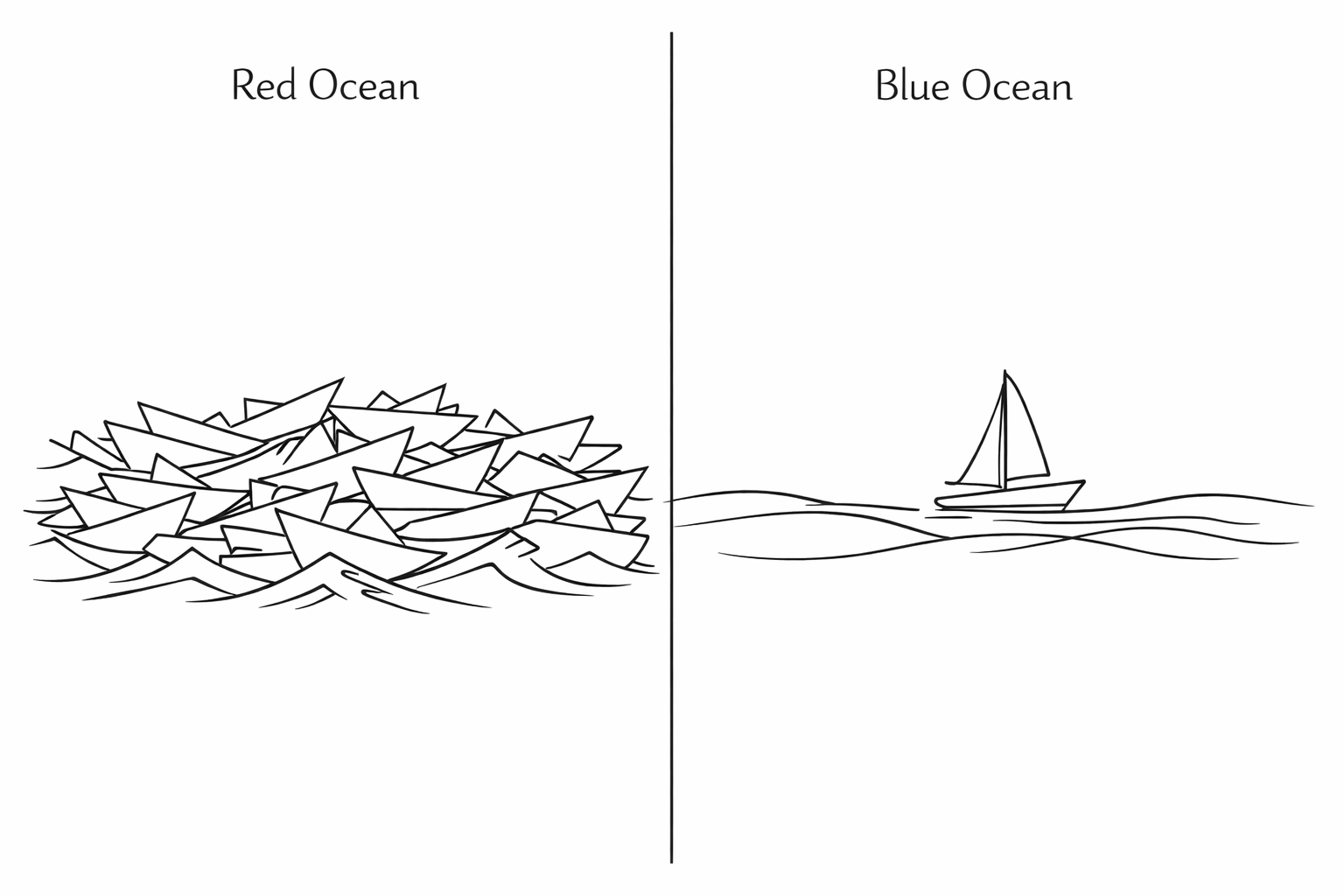
Welcome to the Red Ocean. It's bloody, crowded, and commoditized. Every player fights over the same customers with the same value propositions, turning innovation into a race to the bottom.
W. Chan Kim and Renée Mauborgne named this trap in their seminal work Blue Ocean Strategy. The core insight remains radical: most businesses default to competing harder within existing market boundaries rather than redefining those boundaries altogether. They optimize execution, sharpening their saw, as Stephen Covey would say, without questioning whether they're cutting down the right tree.
The alternative isn't to compete better. It's to make competition irrelevant by creating uncontested market space where demand expands and margins breathe. That's the Blue Ocean. And the tool that gets you there is deceptively simple: the Four Actions Framework.
The Value Innovation Logic
Before diving into the framework itself, you need to understand the economic mechanism that powers it. Traditional strategy forces a trade-off: you either differentiate (and pay for it with higher costs) or you cut costs (and sacrifice uniqueness). Blue Ocean Strategy rejects this false choice through value innovation, the simultaneous pursuit of differentiation and low cost.
Here's the unlock: when you eliminate and reduce factors the industry over-serves, you fund the investment required to raise and create factors customers actually care about. You're not just trimming fat or adding features. You're reconstructing the entire value equation.
Consider Gino Wickman's concept of the Hedgehog from Traction, the intersection of what you're passionate about, what you're best at, and what drives your economic engine. The Four Actions Framework operationalizes that hedgehog by forcing brutal honesty about what you should stop doing, what you're over-delivering on, and where genuine differentiation lives.
The Four Actions Framework: ERRC
The framework poses four questions that leadership teams must answer to escape the Red Ocean. These aren't philosophical exercises, they're strategic decisions with P&L implications.
Eliminate: What Should You Stop Offering?
This is the hardest question because it challenges industry orthodoxy. Every sector accumulates sacred cows, features, services, or processes that "everyone does" but few customers genuinely value. These accretions bloat your cost structure, dilute your focus, and confuse your positioning.
Southwest Airlines eliminated assigned seating, meals, and hub-and-spoke complexity. Cirque du Soleil removed animals, star performers, and multiple-ring formats from the circus. These weren't cost-cutting measures, they were strategic choices that funded reinvestment elsewhere.
During an EOS Quarterly, this question surfaces in the Issues List as "Why are we still doing this?" Your leadership team likely knows the answer. You're doing it because you've always done it, because competitors do it, or because one vocal customer once asked for it three years ago.
The test: If you stopped offering this tomorrow, would target customers care or even notice? If the answer is "probably not," eliminate it.
Reduce: What Should You Offer Below Industry Standards?
Reduction differs from elimination. You still provide the factor, but you dial it down to a functional minimum rather than matching or exceeding industry norms. This creates cost savings without removing utility.
Netflix reduced video quality options in its early days to manage bandwidth costs. IKEA reduces sales assistance to near-zero in its stores. These aren't deficiencies, they're deliberate trade-offs that make the business model work.
In the EOS Vision/Traction Organizer, this shows up in your Marketing Strategy. What parts of the customer experience can you simplify without breaking the core promise? Where is the industry over-engineering solutions customers tolerate but don't love?
The test: Can you deliver 80% of the value at 40% of the cost by rethinking delivery, frequency, or scope?
Raise: What Should You Elevate Far Above Industry Standards?
This is where differentiation crystallizes. After eliminating waste and reducing over-delivery, you redirect resources to the factors that create disproportionate buyer value. You don't just improve them, you radically over-deliver relative to alternatives.
Apple raised design and user experience. Amazon raised delivery speed and selection. Zappos raised customer service responsiveness. These weren't incremental improvements, they were orders-of-magnitude shifts that became the reason customers chose them over competitors.
In your EOS Quarterly or Annual session, this question connects directly to your Core Focus and 10-Year Target. What capability, when raised to an extreme level, makes your value proposition undeniable?
The test: If you tripled investment in this area, would it fundamentally change how buyers perceive value? Would it become your story?
Create: What Should You Offer That No One Else Does?
Creation addresses the noncustomer, people who don't participate in your industry because existing solutions don't solve their job-to-be-done. These aren't better features; they're new factors that remove adoption barriers or unlock latent demand.
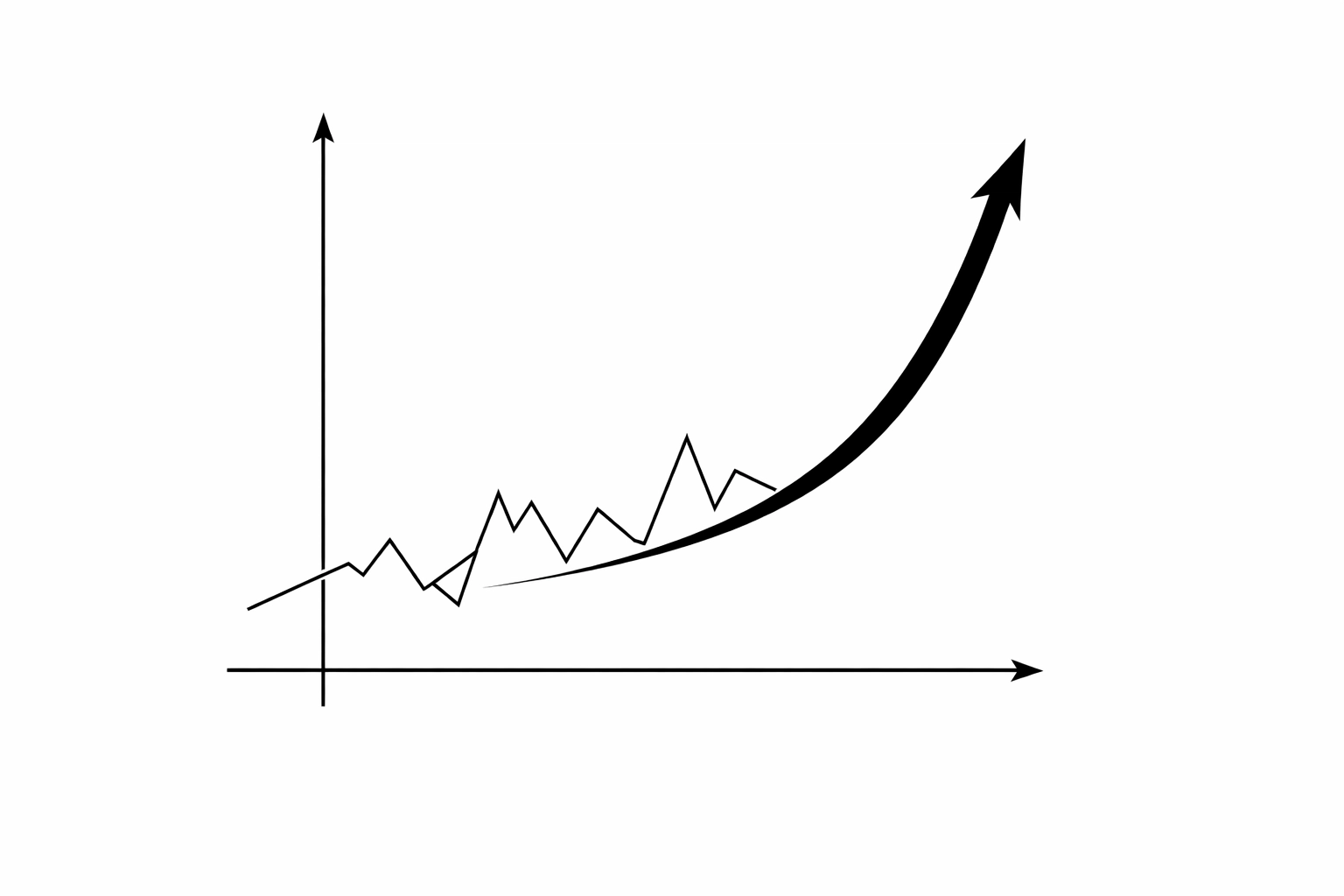
Yellow Tail created approachability in wine by eliminating intimidating varietals and regions. The Nintendo Wii created accessible gaming for families through motion controls. These innovations didn't come from benchmarking competitors, they came from observing noncustomers and asking why they stayed on the sidelines.
For EOS companies, this ties to your Three Uniques in the Marketing Strategy. What can you offer, whether a guarantee, a delivery method, a bundling approach, or a service wrapper, that redefines the buying criteria?
The test: Does this new factor attract people who previously chose not to buy from anyone in your category?
Applying ERRC in Your EOS Quarterly Session
The Four Actions Framework isn't an annual retreat exercise, it's a repeating filter you apply to strategy decisions. Here's how it integrates with EOS discipline:
In Quarterly Planning (Vision Building): Use ERRC to stress-test your Rocks. Are you adding capabilities you should eliminate? Are you pursuing parity when you need divergence? Your three to seven company Rocks should fund movement toward a new value curve, not incremental optimization of the old one.
In Annual Planning (Vision Refresh): Revisit your Marketing Strategy through the ERRC lens. Leadership teams often bloat this section over time, saying yes to everything rather than making trade-offs. Run each element through the framework: Eliminate outdated tactics. Reduce channels that deliver marginal ROI. Raise investment in owned platforms. Create new customer touchpoints that competitors can't copy.
In the Issues List: When debating "Should we add this feature?" or "Should we match competitor X's offering?", ask the ERRC questions first. Most issues resolve quickly when you apply this filter. If the answer isn't Raise or Create, the answer is probably no.

The strategic output is a new value curve: a visual plot showing how your offering differs from industry norms across key factors. Kim and Mauborgne argue this curve must demonstrate three qualities: focus (you've made choices, not tried to do everything), divergence (your shape looks different from competitors), and a compelling tagline customers grasp immediately.
When Gino Wickman talks about getting your leadership team 100% on the same page with where you're going and how you plan to get there, this is part of the "how." You're not just executing better: you're executing toward a fundamentally different competitive position.
Why This Matters Now
The Red Ocean is more exhausting than ever. Information transparency, global competition, and commoditization pressure accelerate every year. Companies respond by adding features, matching prices, and working harder: the very behaviors that trap them deeper in bloody waters.
Jim Collins documented this pattern in Good to Great. Comparison companies: those that never made the leap: kept benchmarking competitors and reacting to market shifts. The great companies built hedgehogs and ignored the noise. They eliminated, reduced, raised, and created based on their own strategic logic, not industry convention.
The Four Actions Framework gives your leadership team permission to stop. Stop adding complexity. Stop matching competitors. Stop mistaking activity for strategy.
Instead, you specialize. You focus your economic engine on uncontested space where margins expand because you've reconstructed the value equation. You grow not by fighting for share in a shrinking pond, but by creating a new pond where demand flows naturally.
Your Next Quarterly Should Start Here
Before your leadership team dives into Rock-setting or Scorecard refinement, spend 60 minutes with the ERRC framework:
The Red Ocean will always be there, crowded and bloody. Most of your competitors will stay there, fighting harder over shrinking margins.
But you don't have to. Blue Oceans aren't found: they're made. And they're made by leadership teams willing to eliminate what doesn't matter, reduce what's overdone, raise what creates value, and create what opens new demand.
Your next Quarterly is the perfect place to start.



Comments