· 6 min read
Power With, Not Power Over: Mary Parker Follett's Take on Leadership Teams That Actually Work
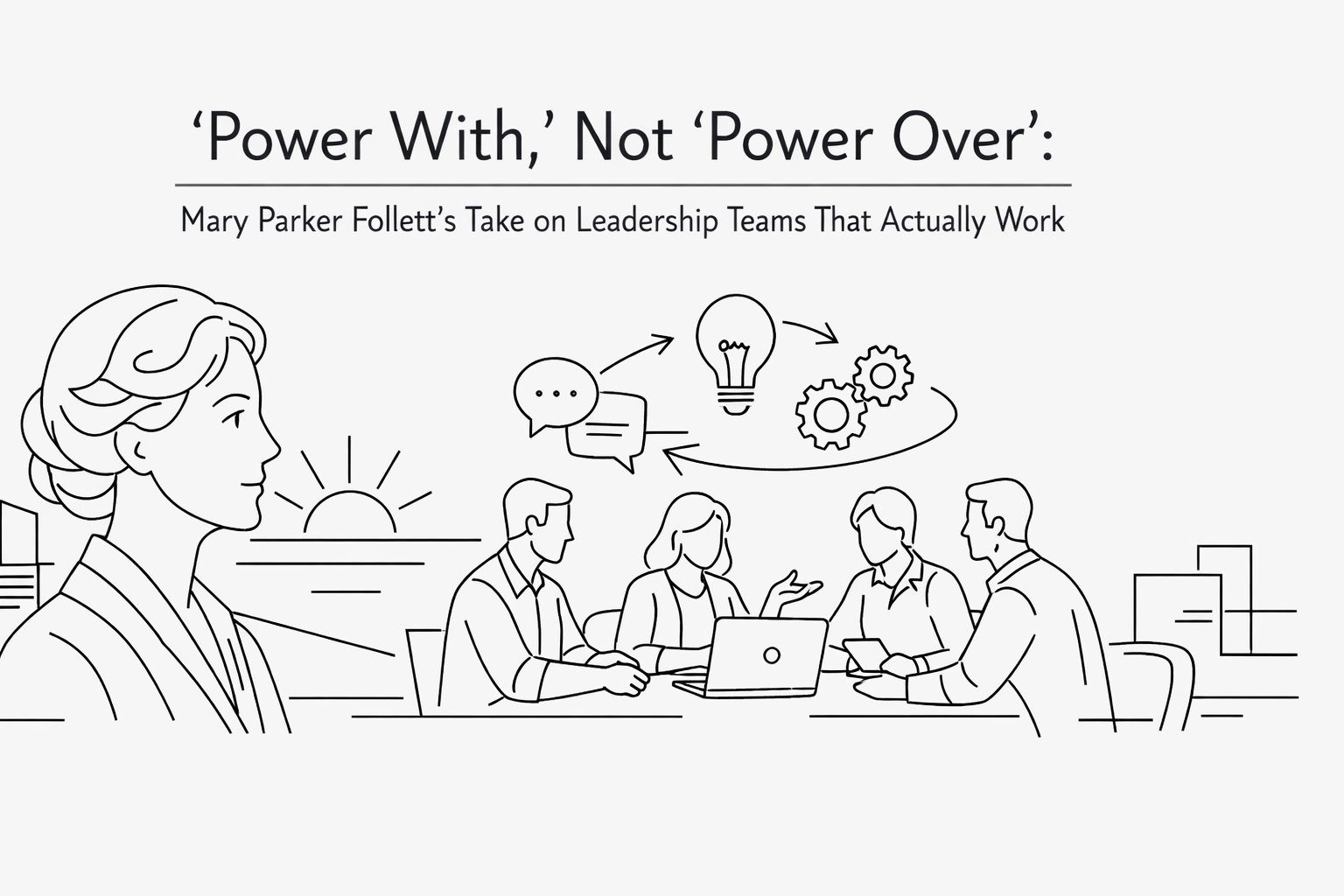
Nearly a century ago, a management consultant wrote something that still makes most leadership teams squirm: “Leadership is not defined by the exercise of power but by the capacity to increase the sense of power among those led.”
Her name was Mary Parker Follett. And while she’s been largely forgotten in mainstream business circles, her ideas about collaborative leadership: what she called “power with” versus “power over”: are more relevant today than ever. Especially if you’re trying to build a leadership team that actually functions.
Here’s the uncomfortable truth: most leadership dysfunction stems from the same root cause. Someone at the top is hoarding power, consciously or not. The result? A team that looks aligned on paper but operates like a collection of competing fiefdoms in practice.
Follett saw this coming. And she offered a framework that maps remarkably well onto what it takes to build a truly healthy leadership team: the kind that creates traction instead of friction.
The Problem With “Power Over”
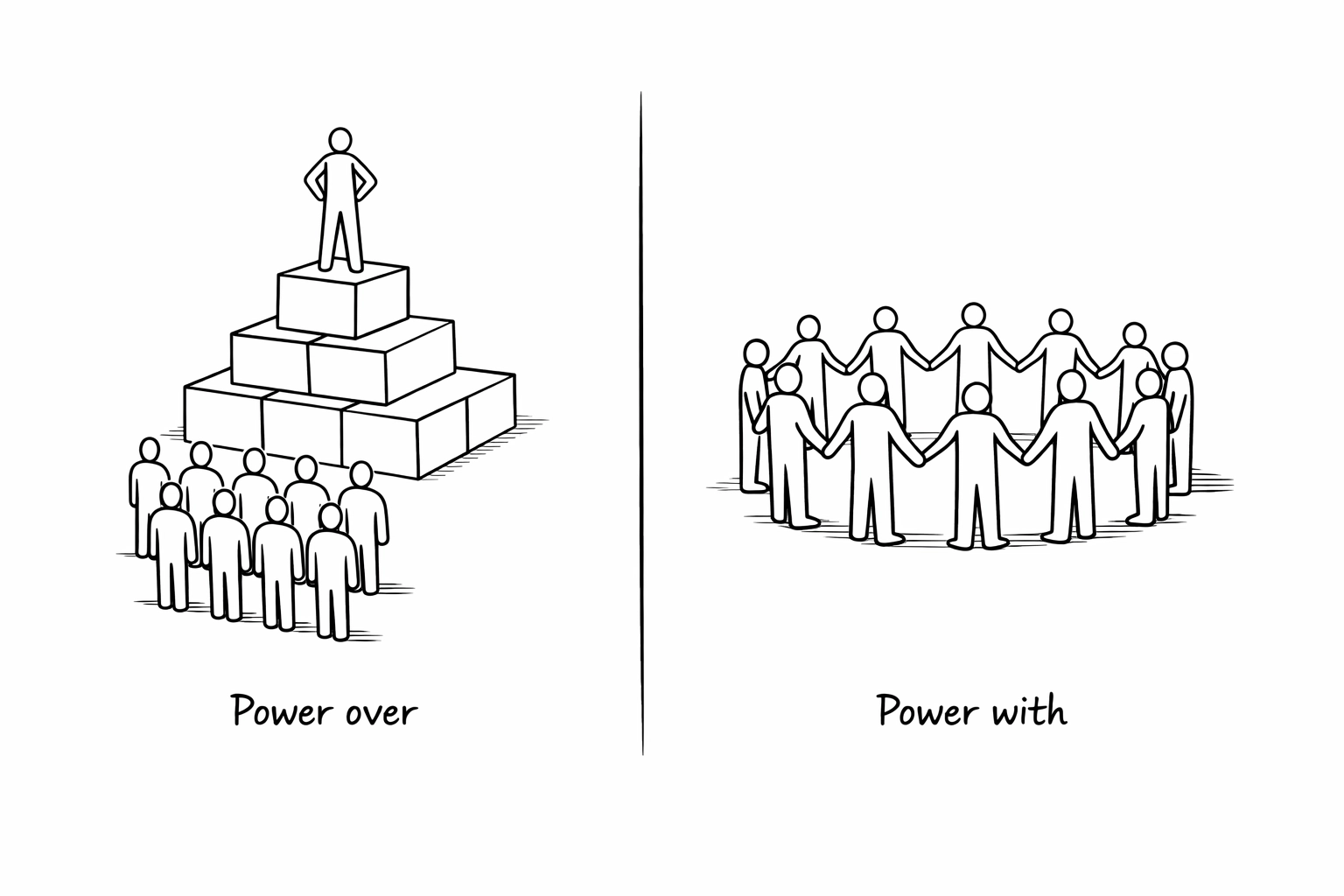
The traditional command-and-control model operates on a simple assumption: authority flows downward. Managers have power over employees. Executives have power over managers. The owner sits at the apex, issuing directives that cascade through the organization.
This model isn’t inherently evil. It’s just incomplete.
“Power over” creates three cascading dysfunctions:
- Information hoarding. When power concentrates at the top, so does critical information. Team members learn to protect their turf rather than share openly.
- Decision bottlenecks. Every meaningful choice flows upward, creating gridlock and leadership burnout.
- Passive accountability. People wait to be told what to do rather than owning outcomes. They execute tasks but don’t own results.
The irony is stark: leaders who grip power tightly often end up with less of it. Their organizations become brittle, slow, and dependent on a single point of failure: themselves.
Follett’s Radical Alternative: “Power With”
Mary Parker Follett proposed something counterintuitive for the 1920s (and still counterintuitive for many leaders today): power isn’t a zero-sum game.
“Power with” doesn’t mean abdicating authority. It means amplifying collective strength rather than dominating through position. The distinction matters enormously.
In Follett’s framework, the most essential work of a leader isn’t making decisions: it’s creating more leaders. Rather than hoarding authority, effective leaders develop their team members’ capacity to lead, multiplying organizational capability in the process.
This isn’t soft, feel-good management philosophy. It’s a strategic advantage.
Organizations built on “power with” principles move faster because decisions happen at the appropriate level. They adapt more readily because information flows freely. They retain talent because people feel genuine ownership over their work. As Patrick Lencioni would later articulate, healthy organizations outperform their competitors not because of superior strategy, but because they minimize the politics and confusion that drag most companies down.
The Four Pillars of “Power With” Leadership
Follett’s approach rests on four principles that translate directly into building a cohesive leadership team:
1. Unity of Direction
All activities align with shared organizational goals, creating collective responsibility. This isn’t about everyone agreeing: it’s about everyone understanding how their work contributes to larger outcomes and caring about those outcomes beyond their functional silo.
In the EOS framework, this shows up in the Vision/Traction Organizer. When a leadership team genuinely shares vision: not just nods along during annual planning: decisions become easier. The question shifts from “what do I want?” to “what does the organization need?”
2. Integration Over Domination
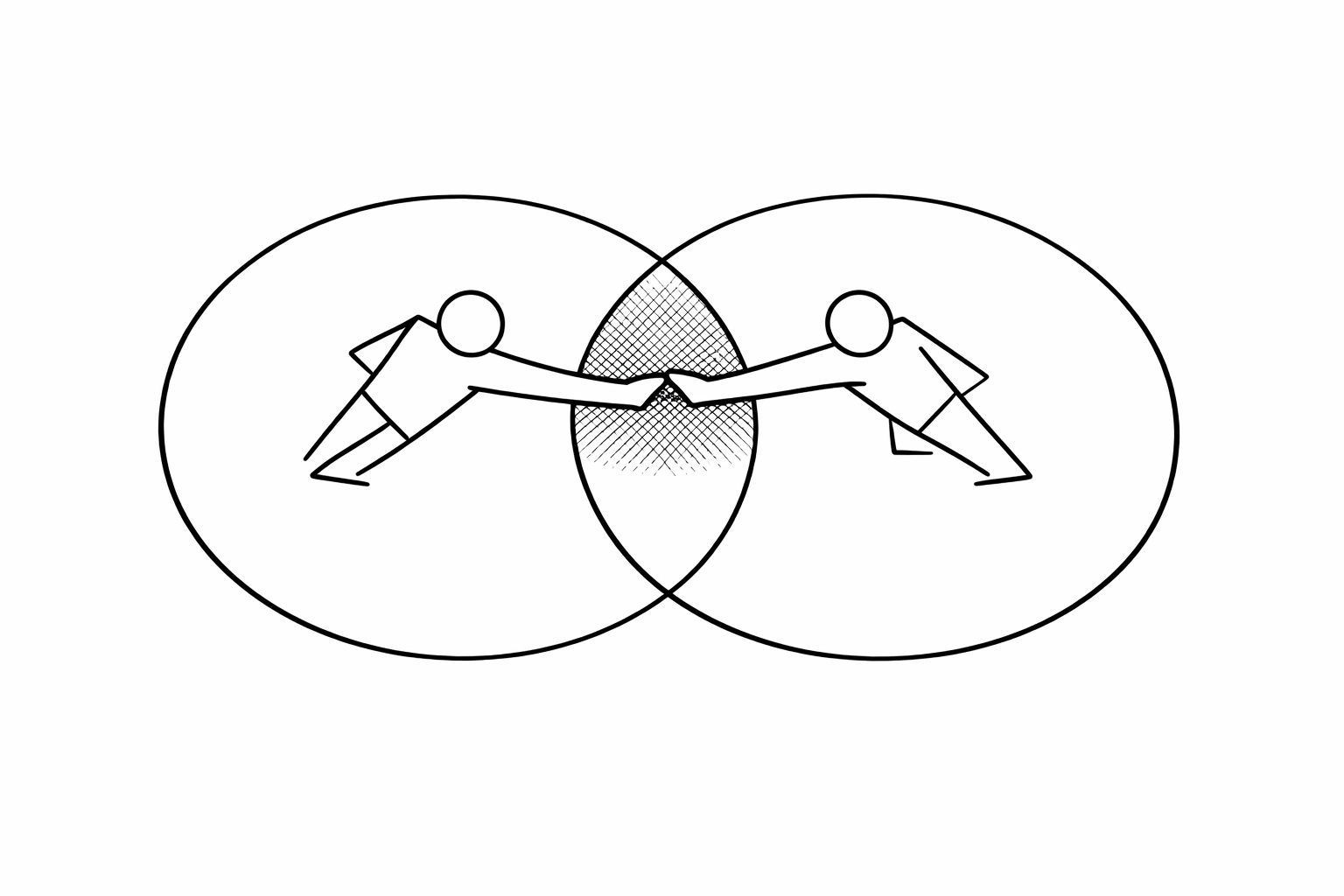
When conflicts arise (and they always do), Follett advocated for finding win-win solutions rather than forcing one side to concede. Her “push versus pull” concept means addressing underlying needs: not just stated positions.
Consider a common leadership team conflict: the head of sales wants aggressive growth targets while the head of operations worries about quality degradation. A “power over” leader picks a side. A “power with” leader facilitates integration: perhaps phased growth with quality gates, or investment in operations capacity to support the sales push.
The difference isn’t just diplomatic. Integrated solutions create buy-in. Dominated solutions create resentment that surfaces in a hundred subtle ways.
3. Group Power Over Personal Power
Leaders who practice “power with” value collective power over personal power. They recognize that the organization exists for the company and its customers, not for individual benefit or ego gratification.
This mindset creates team cohesion rather than internal competition. It’s the difference between a leadership team where members celebrate each other’s wins and one where they quietly (or not so quietly) undermine each other.

4. Direct Contact and Two-Way Dialogue
Effective leadership requires honest conversations where both leaders and staff discuss problems openly, build mutual trust, and address issues before they escalate. Follett insisted on confidential, direct dialogue rather than communication filtered through hierarchy.
This principle undergirds the concept of healthy conflict in leadership teams. Teams that can’t argue productively in the meeting room end up arguing unproductively in the parking lot. Transparency enables flexibility and creative problem-solving; opacity breeds politics and passive aggression.
Why This Matters for Traction
Here’s where Follett’s century-old philosophy connects to modern execution frameworks.
A leadership team operating on “power over” principles will struggle to gain traction: the disciplined execution that turns vision into reality. The reasons are structural:
Accountability becomes compliance. In a “power over” culture, people hit their numbers because they’re told to, not because they own outcomes. The moment pressure releases, performance drops. Sustainable traction requires people who care about results at a visceral level.
Meetings become theater. When the boss holds all the power, meetings devolve into reporting sessions where everyone performs competence rather than solving problems. Real issues stay hidden until they become crises.
Execution depends on the leader. If every decision flows through one person, that person becomes the constraint. The organization can only move as fast as its bottleneck allows. And that leader? They’re on a fast track to burnout.
“Power with” leadership teams operate differently. Accountability becomes ownership. Meetings become problem-solving sessions. Execution happens at the appropriate level because people have genuine authority: and responsibility: to make things happen.
Making the Shift: Practical Applications
Follett’s vision was radical for her era because she rejected the prevailing belief that effective leaders needed to be “aggressive, masterful, dominating.” Today, that rejection feels less radical but remains difficult to implement.
For leaders serious about building “power with” dynamics, several practices matter:
- Express genuine gratitude for unique contributions. This isn’t about generic praise: it’s about recognizing specifically how each person’s work advances shared goals.
- Establish personal ownership of outcomes while allowing flexible methods. Define what success looks like; let people figure out how to get there.
- Facilitate cross-functional collaboration. Create structures that encourage lateral problem-solving rather than everything flowing through the top.
- Listen before directing. The skillful leader, as Follett observed, makes people feel “I can do great deeds”: not “I must follow orders.”
The transition from “power over” to “power with” isn’t a single decision. It’s a thousand small choices about how meetings are run, how conflicts are resolved, how credit is distributed, and how accountability is framed.
The Leadership Team as the Lever
Jim Collins wrote about getting the right people on the bus. Follett would add: make sure they’re actually driving, not just riding along waiting to be told where to go.
A truly healthy leadership team: one that functions with “power with” rather than “power over”: becomes the primary lever for organizational performance. Strategy matters. Execution systems matter. But neither achieves its potential without a team that trusts each other, engages in productive conflict, commits to decisions, holds each other accountable, and focuses on collective results.
Mary Parker Follett saw this clearly a hundred years ago. The question is whether today’s leaders are willing to put it into practice.
Ready to build a leadership team that actually works? The shift from “power over” to “power with” doesn’t happen by accident: it requires intentional work on team health, trust, and accountability. If you’re serious about creating a cohesive leadership team that drives real traction, let’s talk.
Reach out to Ryan to start the conversation.