
From Owner to CEO: Letting Go of the Vine Without Losing Control

There's a moment every business owner faces: usually somewhere between exhaustion and exasperation: when a brutal truth becomes impossible to ignore: the very grip that built this company is now strangling it.
You started this thing. You poured in the nights, the weekends, the personal savings. You know every client quirk, every operational hiccup, every reason why "it's just easier if I do it myself." And for a while, that worked. It got you here.
But "here" has a ceiling. And that ceiling is you.
The transition from owner to CEO isn't about working harder or getting better at juggling. It's about a fundamental identity shift: moving from operator to architect, from the person who makes every decision to the one who designs the systems that make decisions possible without you in the room.
After more than 20 years of working with business owners navigating this exact crossroads, one thing has become crystal clear: the ones who successfully make the leap don't do it by white-knuckling through delegation. They do it by building a structure that makes letting go feel safe: even logical.
That structure, for many, is EOS.
The Fear Is Real: And It's Lying to You
Let's name the elephant in the room: the fear of losing control is not irrational. You've watched other leaders delegate too fast, hire the wrong people, and watch their standards slip. You've seen businesses lose their soul when the founder stepped back. The fear isn't made up: it's learned.
But here's where it lies to you: it tells you that control comes from involvement. That if you're not touching every decision, chaos will follow. That no one else cares as much as you do.
The research tells a different story. Studies on leadership transitions consistently show that founders who hoard decisions create bottlenecks, burn out faster, and ironically, lose more control over outcomes than those who distribute authority through clear systems. The paradox is stark: the tighter you grip, the less you actually steer.
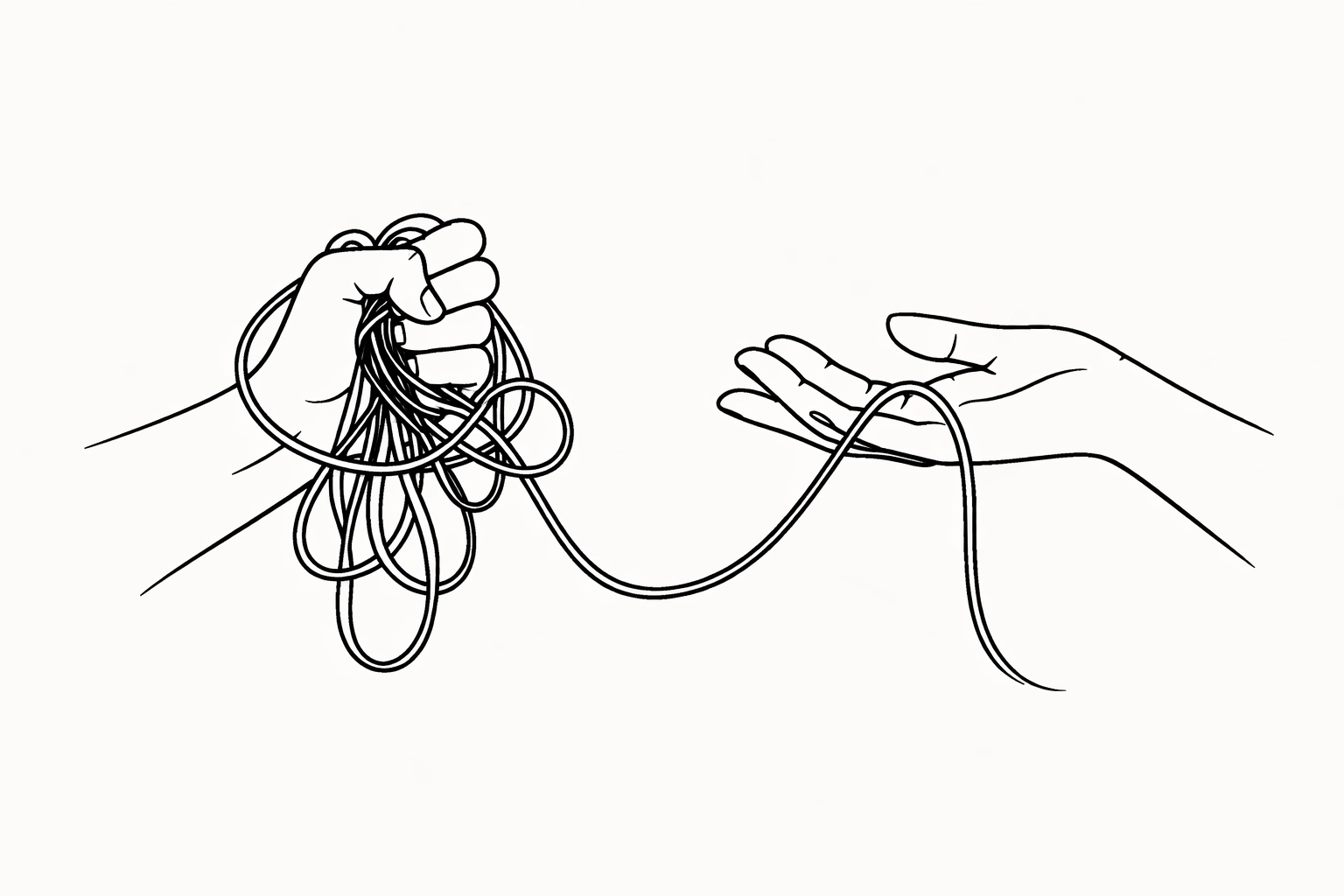
Jim Collins, in his work on enduring companies, emphasizes that the best leaders build organizations that don't depend on them. Patrick Lencioni echoes this in his framework for organizational health: the goal isn't to be indispensable, it's to be replaceable in the best way possible.
The fear of losing control isn't wrong. But the solution isn't more control. It's better structure.
EOS: The Architecture of Letting Go
This is where the Entrepreneurial Operating System earns its keep. EOS isn't a philosophy or a motivational framework: it's an operating system with three core components: Vision, Traction, and Healthy. Together, they create the scaffolding that allows you to release operational control while maintaining strategic authority.
Vision: The Compass That Guides Without You
Vision in EOS isn't a poster on the wall. It's a living document: your V/TO (Vision/Traction Organizer): that answers the fundamental questions: Where are we going? Why does it matter? How will we get there?
When your leadership team operates from a shared, crystal-clear vision, they don't need you to make every call. They can ask themselves, "Does this align with where we're headed?" and answer it confidently. The vision becomes the decision-maker, not you.
Simon Sinek's "Start With Why" maps beautifully here. When your team knows the why behind the business, they can navigate the what and how without constant input from the top.
Traction: Turning Vision Into Execution
Vision without execution is hallucination. Traction is where EOS gets practical: through Rocks (90-day priorities), Scorecards (weekly metrics), and the Level 10 Meeting structure that keeps everyone accountable.
This is the piece that makes delegation feel safe. When you have a Scorecard in front of you every week showing the numbers that matter, you're not flying blind. You're informed without being involved in every task. You can see if something's off-track before it becomes a crisis: and you can trust your team to course-correct because the system surfaces problems early.

The discipline of Traction institutionalizes accountability. It's not about you checking up on people; it's about the system holding everyone: including you: to clear expectations.
Healthy: The Leadership Team That Can Carry It
Here's a truth that took years to fully appreciate: you cannot delegate to a dysfunctional team. If your leadership team lacks trust, avoids conflict, or operates in silos, no system in the world will save you. You'll delegate, watch things fall apart, and conclude (incorrectly) that you just have to do it yourself.
EOS places enormous emphasis on building a healthy leadership team: one that's cohesive, aligned, and capable of productive debate. This isn't soft stuff. It's the foundation that makes everything else work.
Patrick Lencioni's work on team dysfunction is practically required reading here. The five dysfunctions: absence of trust, fear of conflict, lack of commitment, avoidance of accountability, and inattention to results: are the silent killers of delegation. Address them, and suddenly your team becomes a group you can actually trust with the business.
From Doing to Leading: The Identity Shift
The hardest part of this transition isn't tactical. It's personal.
For years, your identity has been wrapped up in being the expert, the problem-solver, the one who knows how to get things done. Moving from doing to leading means fundamentally redefining how you add value.
The shift looks like this:
From "How do I do this?" to "How should the system handle this?"
From managing employees to leading leaders
From making decisions to coaching others to decide
This requires restraint. When a problem lands on your desk, the old instinct is to solve it: fast. The new discipline is to ask, "What do you recommend?" and resist the urge to step in with a quick fix. It feels slower. It is slower: at first. But it builds stronger leaders and prevents the burnout cycle that traps so many owners.
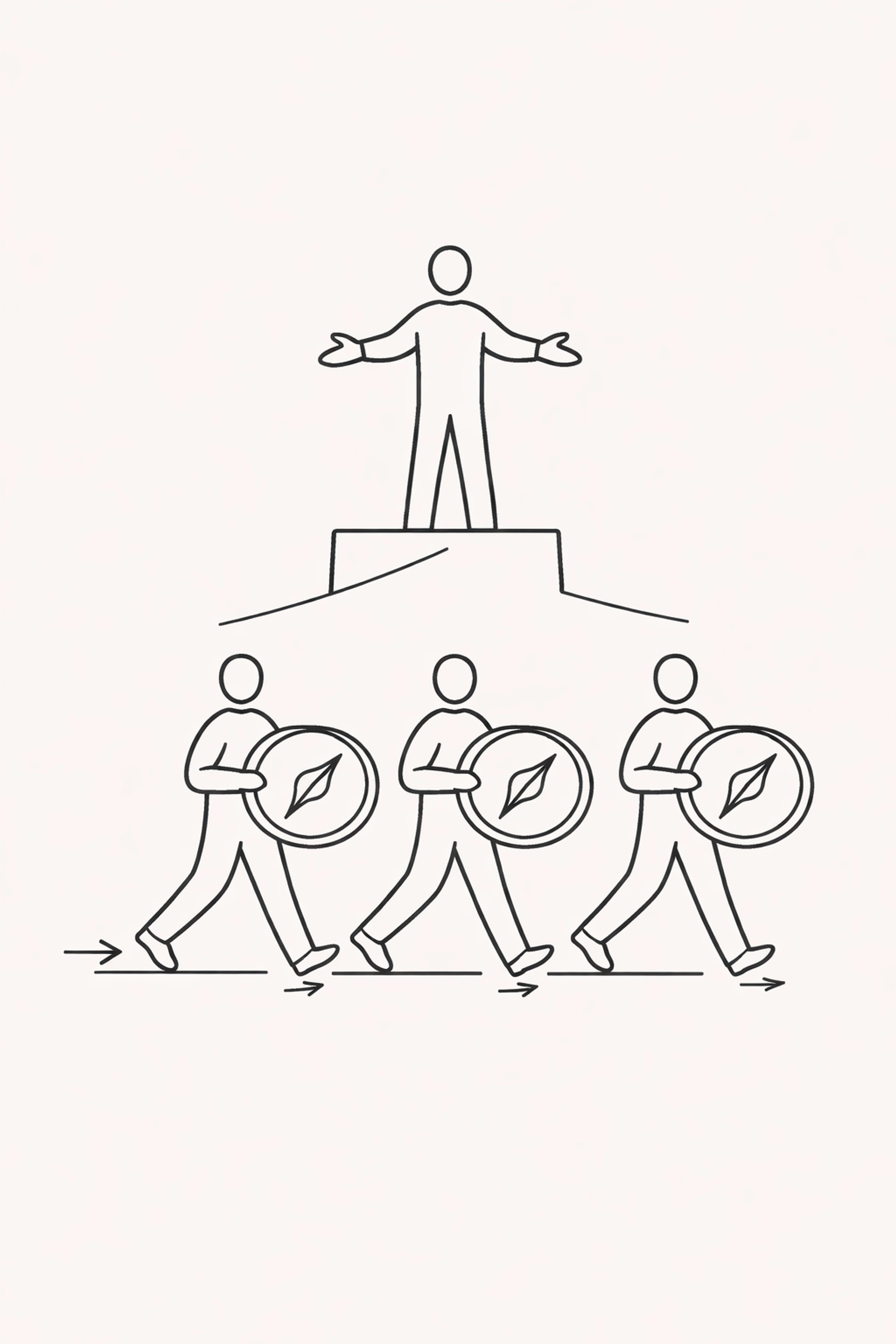
A practical tool here is the Decision Rights Matrix: a simple document that clarifies who owns what decisions. Department heads might own budget decisions up to a certain threshold; anything above requires executive sign-off. It's not about removing your authority. It's about embedding accountability so you're not the bottleneck on every choice.
The Discipline of Architecture
Instead of daily firefighting, your focus shifts to:
Governance: Are the right structures and rhythms in place?
Vision: Is the organization clear on where it's headed?
Strategy: Are we making the right long-term bets?
Leadership development: Am I building leaders who can carry this forward?
This is CEO work. It's less visible than jumping into operational problems, but it's infinitely more valuable. It's the difference between building a business that depends on you and building one that can thrive without you.
The research on sustainable leadership transitions is clear: founders who institutionalize processes through quarterly planning, dashboards, and governance rituals create organizations that don't depend on any single individual. Clear processes, documented workflows, and codified playbooks create consistency regardless of who executes them.
The Reward on the Other Side
Here's what no one tells you about letting go: it's not just about the business. It's about you.
Owners who successfully make this transition report something unexpected: they actually enjoy their work again. The constant weight of being the answer to every question lifts. The space opens up for strategic thinking, for creativity, for the kind of leadership that attracted them to entrepreneurship in the first place.
The leadership burnout crisis is real. But it's not inevitable. It's the predictable result of holding on too tight for too long. The cure isn't working harder: it's building smarter.
Your Next Step
If any of this resonates: if you're feeling the tension between knowing you need to let go and fearing what happens when you do: you're not alone. This is one of the most common and most critical transitions a business owner faces.
The good news? There's a path. It's been walked by thousands of entrepreneurs who faced the same fears, built the same systems, and came out the other side with businesses that run better and lives that feel more sustainable.
If you want to talk through what this transition might look like for your specific situation, I'd welcome the conversation. After 20+ years of helping business owners navigate this exact crossroads, I've seen what works: and what doesn't.
Reach out directly:ryan@flaglinestrategy.com
The vine you've been holding onto got you here. The structure you build next will take you further.


Comments