· 6 min read
Catching the Right Wave: Why Business Success Is a Game of Pattern Recognition
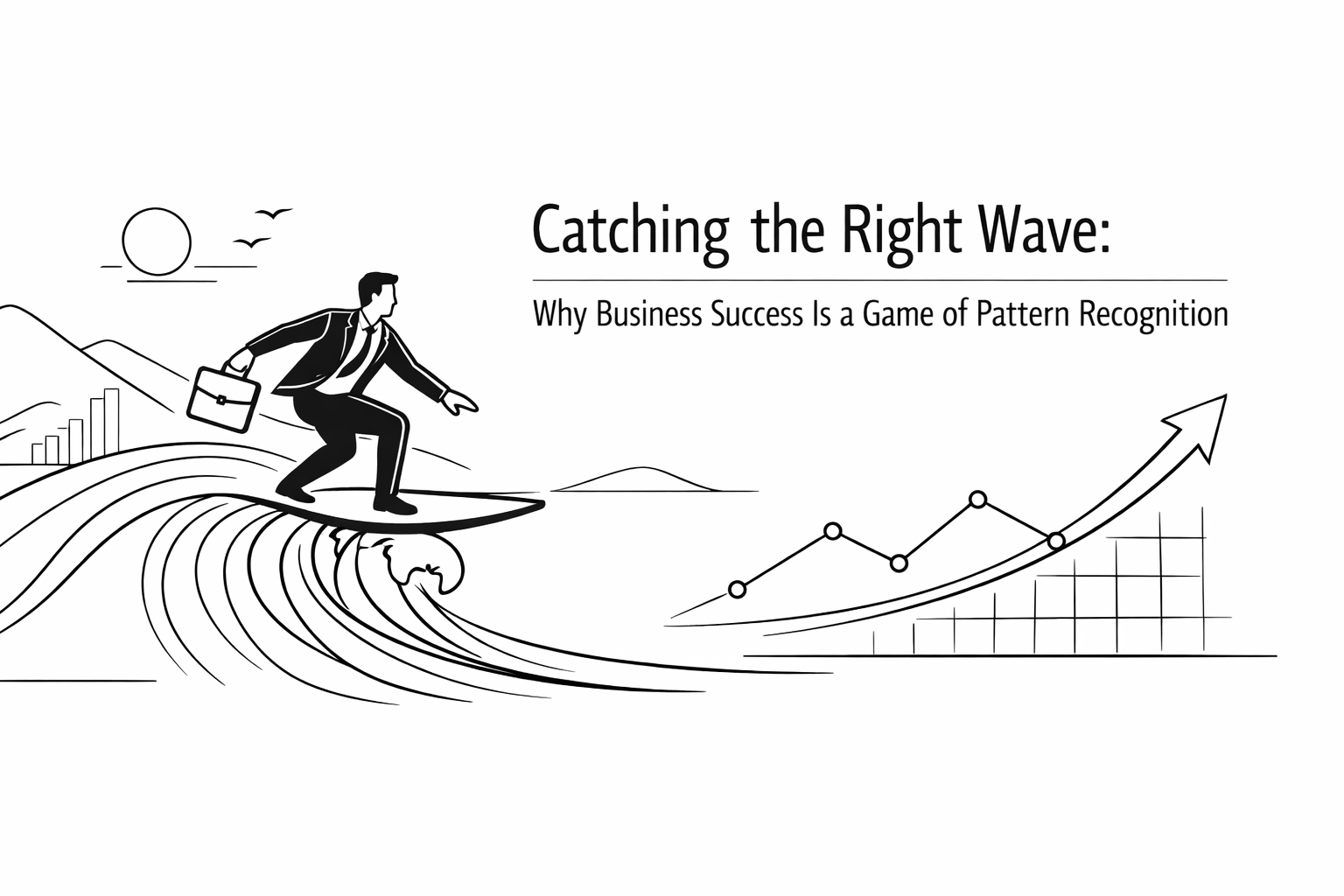
Every surfer knows the ocean doesn’t reward effort: it rewards timing.
You can paddle furiously into a dying swell and go nowhere. You can sit on your board for hours during a flat spell, burning energy on frustration. Or you can read the water, recognize the patterns, and position yourself exactly where the next big set will break.
Business works the same way.
The companies that win aren’t necessarily the ones working hardest. They’re the ones who’ve developed the pattern recognition to know when to paddle hard, when to conserve energy, and when to stay the hell out of the water entirely.
The Ocean Doesn’t Lie: But Most Leaders Don’t Know How to Read It
Pattern recognition is the ability to identify recurring structures, trends, and regularities in seemingly chaotic situations. In surfing, it’s reading how waves group into sets, how the tide shifts energy, how storms create conditions that either deliver opportunity or danger.
In business, it’s recognizing when market conditions align for explosive growth, when you’re spinning wheels on low-return activity, and when external forces require you to pull back and protect what you’ve built.
The problem: Most leaders treat every wave the same. They paddle for everything. They mistake activity for progress and confuse choppy water with momentum.
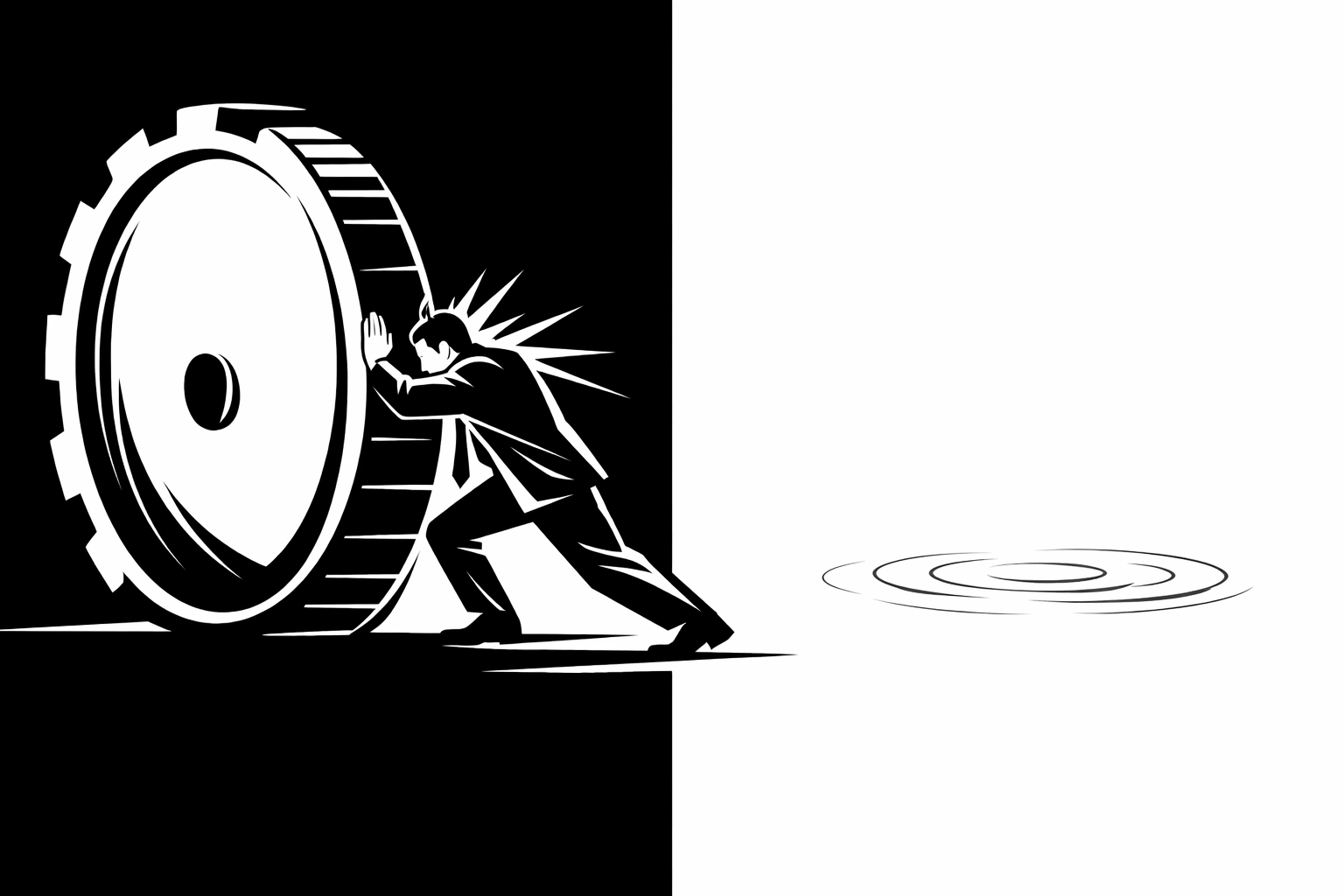
Jim Collins talks about the flywheel effect: the idea that breakthrough success comes from persistent effort in the right direction, building momentum over time. But even Collins would tell you: If you’re pushing the flywheel during a hurricane, you’re wasting energy that could be stored for when conditions favor you.

When There Are No Waves: Preparation Beats Panic
Here’s what average businesses do when the ocean goes flat: They panic. They pivot. They chase shiny objects. They convince themselves that something must be wrong because there’s no immediate momentum.
Here’s what great businesses do: They prepare.
No waves doesn’t mean no work: it means different work. This is when you:
- Build your infrastructure. Strengthen systems, refine processes, clarify roles. The businesses that scale fastest during boom cycles are the ones who built capacity during the lulls.
- Study the patterns. Analyze your data. What led to your last big win? What conditions were present? What early signals did you miss? Pattern recognition requires historical analysis.
- Develop your team. Training, coaching, strategic hiring: this is the foundation work that pays dividends when the next wave arrives.
- Conserve resources. Cash reserves, strategic partnerships, operational efficiency. Surfers don’t burn all their energy when the ocean’s flat. Neither should you.
Warren Buffett’s famous line applies here: “Be fearful when others are greedy, and greedy when others are fearful.” During flat spells, your competitors are often making desperate moves. You’re positioning yourself for what’s coming next.
Small Waves and Tidal Swells: The Busy Trap
This is where most businesses bleed themselves dry.
Tidal waves look like opportunity. There’s movement. There’s activity. You can paddle hard and technically catch them. But the payoff is disproportionately small compared to the energy expenditure.
In business, these are the opportunities that seduce you with motion but deliver minimal return:
- The mid-tier client who demands enterprise-level service
- The product extension that fractures your focus without expanding your market
- The partnership that sounds strategic but delivers no measurable lift
- The marketing channel that generates vanity metrics but no pipeline
The trap is mistaking effort for progress. You’re working. You’re sweating. You’re executing. But you’re not actually moving forward: you’re just exhausting yourself so you can’t capitalize when the real opportunity arrives.
Greg McKeown’s Essentialism confronts this head-on: “If you don’t prioritize your life, someone else will.” The same applies to your business strategy. If you don’t develop the pattern recognition to distinguish between tidal swells and real sets, you’ll waste your best resources on low-return activity.
The discipline required here is strategic saying no. Not every opportunity deserves your attention. Not every wave deserves your paddle.
Big Wave Sets: When Pattern Recognition Pays Off
Then the ocean shifts.
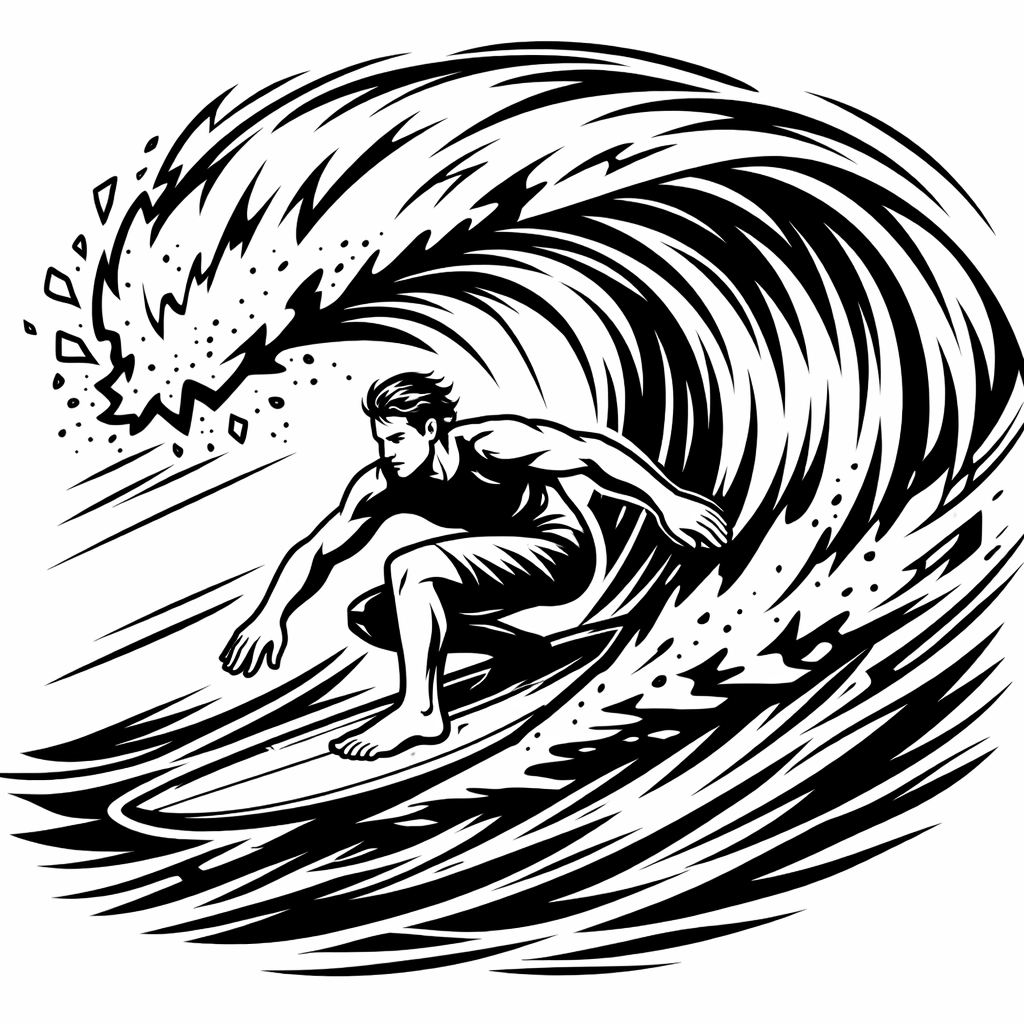
Experienced surfers can feel it before they see it. The energy changes. The lull between waves lengthens. The horizon line darkens. And then the first wave of a legitimate set rolls through.
This is when pattern recognition separates winners from everyone else.
Great businesses recognize the signals:
- Market demand isn’t just ticking up: it’s accelerating
- Multiple channels start converting simultaneously
- Customer acquisition cost drops while lifetime value climbs
- Your competition is scrambling to keep up rather than setting the pace
This is when you go all-in. Not recklessly: but decisively. You’ve been preparing during the flat spell. You’ve conserved resources by avoiding tidal swells. Now you paddle hard, position aggressively, and ride the momentum as far as it’ll take you.
Ray Dalio’s framework from Principles is instructive here: “Pain plus reflection equals progress.” The businesses that capitalize on big wave sets are the ones who’ve reflected on past misses, identified the patterns they failed to recognize, and built decision-making systems that allow them to act when conditions align.
The window doesn’t stay open forever. Big wave sets are finite. The businesses that hesitate: waiting for more certainty, more validation, more proof: watch the opportunity pass while they’re still analyzing it.
Storms: Knowing When to Stay on Shore
And then there are storms.
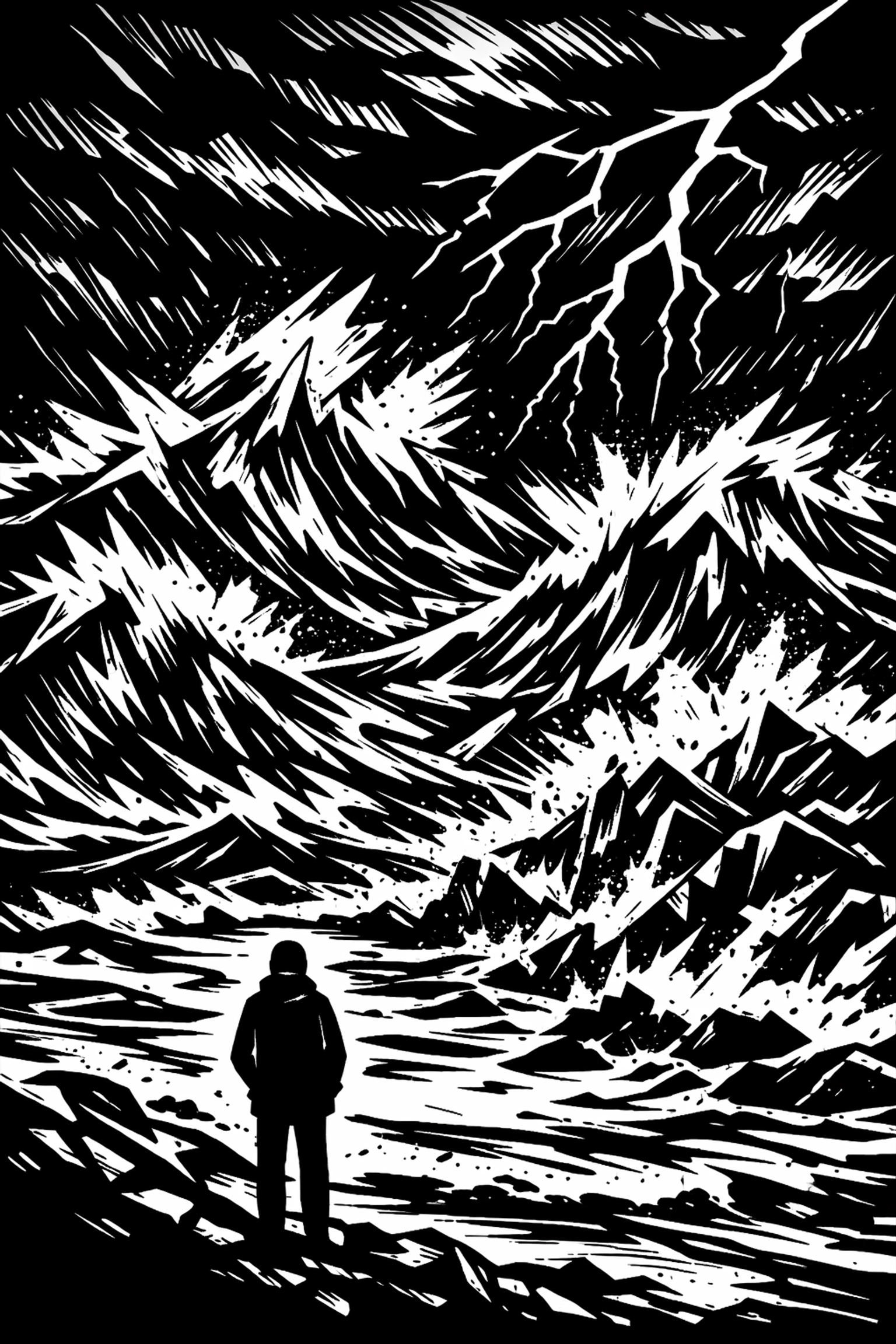
Storms create massive waves. From a distance, they look like opportunity. Big swells. High energy. The conditions that legends are made of.
But experienced surfers know: Storm waves are different. The risk-to-reward ratio shifts. The variables multiply. What looks like the ride of a lifetime can quickly turn into a survival situation.
In business, storms are:
- Economic recessions that crater demand across your sector
- Regulatory shifts that fundamentally alter your operating model
- Technology disruptions that make your core offering obsolete
- Competitive moves that turn your advantage into a liability
The discipline required here is the hardest: Knowing when not to compete.
This isn’t about fear or risk aversion. It’s about pattern recognition that tells you the variables are beyond your control, the downside exceeds the upside, and the smartest move is to protect what you’ve built rather than chase what you might gain.
Consider how Netflix navigated the storm of streaming competition. When every network and studio launched their own platform, many analysts predicted Netflix would collapse. Instead, Netflix recognized the pattern: Content is king. They shifted investment from licensing to originals, built a library competitors couldn’t replicate, and waited out the storm while weaker players burned cash.
They didn’t chase every wave. They identified which battles were worth fighting and which storms required patience.
Building Your Pattern Recognition System
Pattern recognition isn’t mystical: it’s trainable. But like surfing, it requires:
Repetition and exposure. You can’t read the ocean from the beach. You need time in the water, experiencing different conditions, building an intuitive sense of how patterns unfold.
Feedback loops. After every session, surfers reflect: What worked? What didn’t? What did I miss? Your business needs the same discipline: structured review of decisions, outcomes, and the patterns that connected them.
Mentorship and community. Local surfers know their break better than visitors. Experienced business leaders who’ve navigated multiple cycles see patterns you’re still learning to recognize. Find them. Learn from them.
Data and instinct working together. The best surfers combine ocean knowledge with real-time observation. The best business leaders combine quantitative analysis with experiential intuition. Neither alone is sufficient.
The Competitive Advantage No One Can Replicate
Here’s what makes pattern recognition so powerful: It compounds.
Every cycle you navigate builds your library of reference experiences. Every wave you catch or pass on informs your next decision. Over time, you develop instincts your competitors can’t shortcut.
They can copy your product. They can hire your people. They can replicate your processes.
But they can’t download your pattern recognition. That only comes from being in the water, reading the conditions, making the calls, and learning from what happens next.
The ocean doesn’t care about your business plan. It doesn’t reward your effort or validate your hustle. It responds to those who’ve developed the skill to read its patterns and position themselves accordingly.
Your market works the same way.
The Question That Matters
So here’s what you need to ask: Are you paddling for every wave that comes through? Or have you developed the pattern recognition to know which ones deserve your energy?
Because the businesses that scale aren’t the ones working hardest. They’re the ones working smartest: reading the conditions, recognizing the patterns, and catching the waves that actually matter.
The ocean’s always moving. The question is whether you know how to read it.